
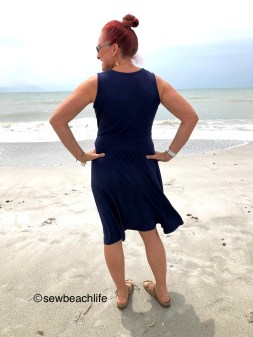
Twirly dresses just make me smile! As does Sinclair Patterns newest release, the Joanne Faux Wrap Dress & Top. This is one of those patterns that I will make again and again. The drafting is just so good. It was obvious during testing that the design was a winner, because after sewing it up, I had to struggle to think of anything that I would change. The only thing I could think of was to have the wrap swoop a little lower to get under the bust easier without causing pulling at the side seams, and that I would be comfortable with the skirt being an inch or two shorter.

Other testers struggled to find anything to critique as well. The dress just looks so good on everyone! It will be hard for you to see the differences in my periwinkle dress (version 1) and my blue dress (version 2). Very subtle changes were made to deepen the pleats a little bit so that the crossover was a smidge shorter at the side seams, and the skirt was shortened an inch or so. There is also a midi skirt cut line, so if you want a longer skirt you’re good to go. I literally couldn’t stop myself from twirling and swishing this skirt like a little girl! 🙂

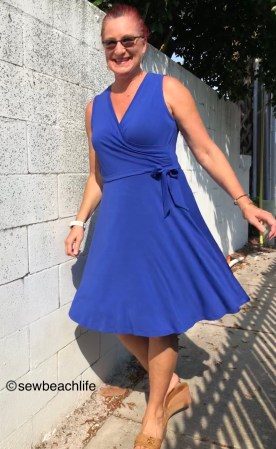
Both of my dresses are sleeveless, because Florida is hot. As in temperatures are still above 90*F in late September hot. For that one month of winter that we get, I would really like to make a Joanne with sleeves. Because there are options galore- short, 3/4, long and my personal favorite, a flounce sleeve!
Since the test went so well, Oxana (the designer at Sinclair Patterns) added a hi low peplum option and it is gorgeous! She also added the shaped tie belt, which I love. It really adds to the look of the dress and top.
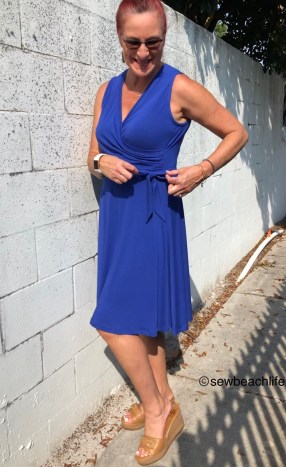
The genius secret behind having such a nice crisp bow? The pattern tutorial suggests using knit interfacing. If you’ve never used knit interfacing before, it’s a little different than the interfacing you use for woven fabrics. It’s an open weave knit, so it still has some stretch, and you just iron it on the wrong side of your fabric. Except you absolutely have to use a pressing cloth, or you will be spending some time cleaning your iron, and could ruin your garment with glue residue. Due to the open weave of knit interfacing, the glue will spread when heated, and if you don’t use a pressing cloth, the sticky glue will get all over your iron. Obviously, I am speaking from previous experience here! 🙂 The first time I ever tried it, I spent some quality time cleaning my iron after realizing that yes, you should read the directions included with your interfacing! Here’s my pro tip: If you don’t have a pressing cloth, use a paper towel. You will have to kind of peel your paper towel up after pressing, but the residue won’t come through the paper towel and it didn’t leave any paper fibers stuck to my belt.
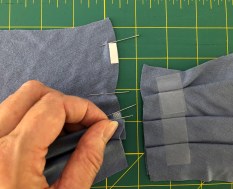
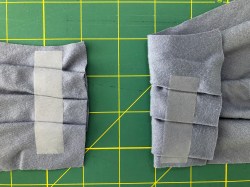
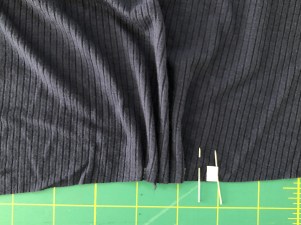
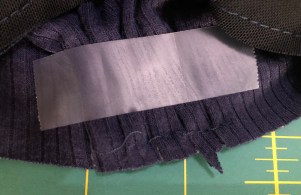
My other tip for sewing is the same as I mentioned for the Sinclair Yasmin Dress blogged here. Small pieces of Wash Away Wonder Tape are great for holding your pleats in place. I also used a strip of Scotch Tape to ensure that they stayed in place until the side seams were stitched.
The Joanne is a pretty quick sew, and with all of the options, it’s bound to be a staple in my closet! I’m envisioning a black or white rayon spandex hi low peplum top because it would go with literally everything! And of course a couple more dresses!
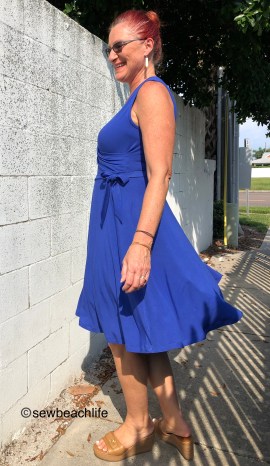

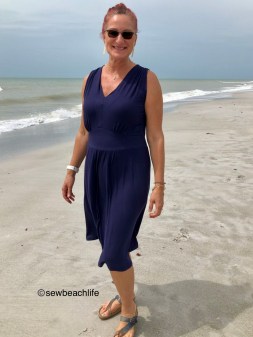
I know I’m gushing, and probably oversharing photos, but the fit is great whether you look at it from the back or side.

I am grinning in every photo, and twirling in most of them. It’s pretty obvious that I love this pattern! During the release sale is the perfect time to buy the Joanne Faux Wrap Dress & Top pattern, as it is on sale for $7.99 through Wednesday September 25, 2019. I hope you’ll check it out, and share photos of your makes!
I used Rayon Spandex from Phee Fabrics for both of my dresses. It’s a substantial 13oz. fabric and works perfectly for this (and every other tank, top, and dress) pattern I’ve ever used it for. The drape is perfect, and it has enough recovery to make excellent bands.
This post may contain affiliate links. This means that at no extra cost to you, I may receive a small commission/credit if you purchase through my links. As always, I only give my honest opinion. After all, it is my blog, which represents me! 🙂 Thank you for reading and sharing my love of sewing, patterns, and fabulous fabric. ❤
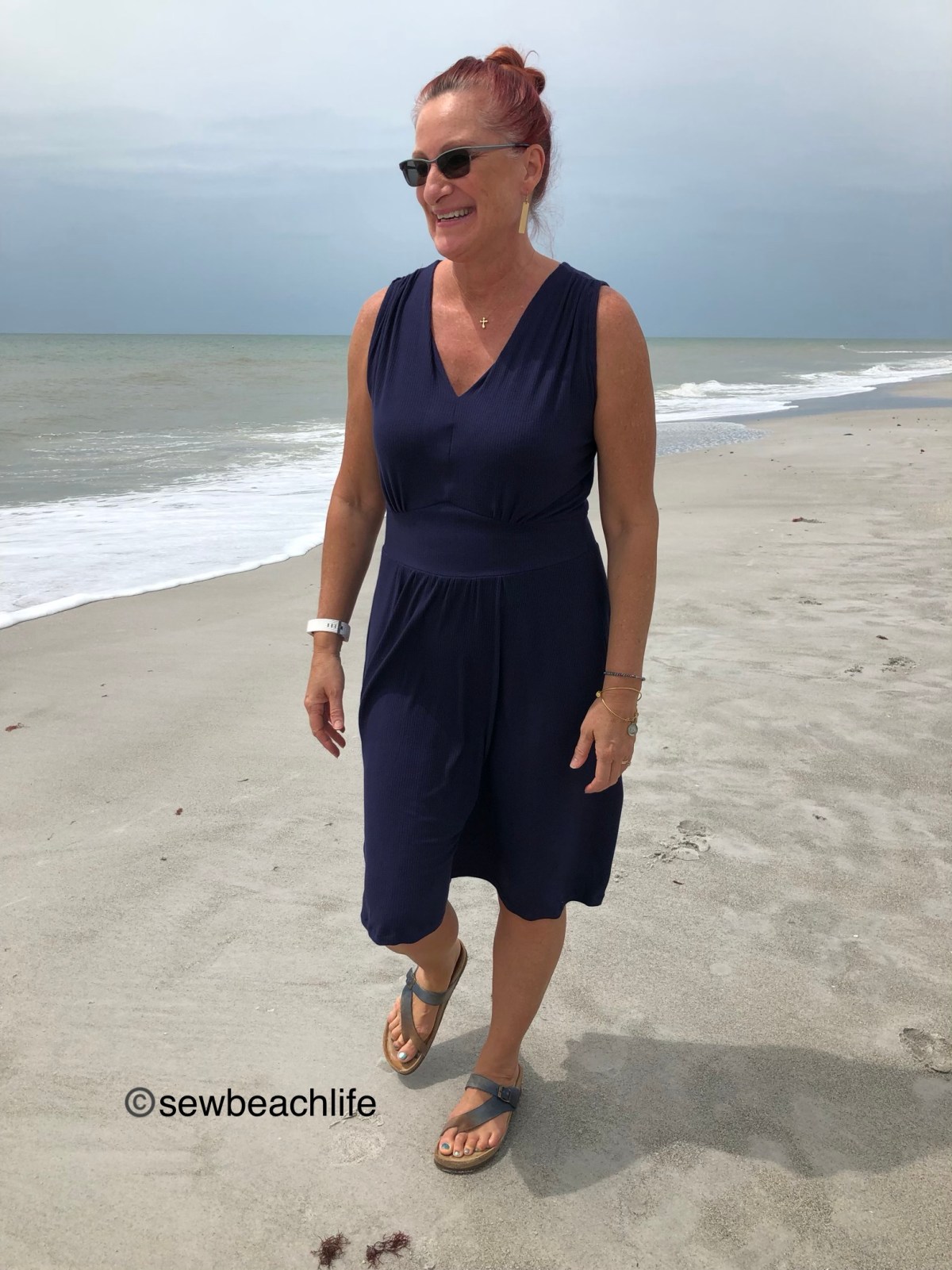






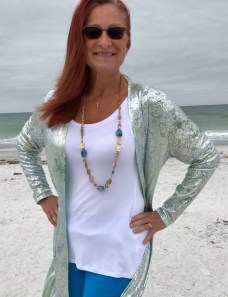
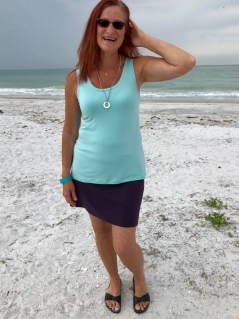

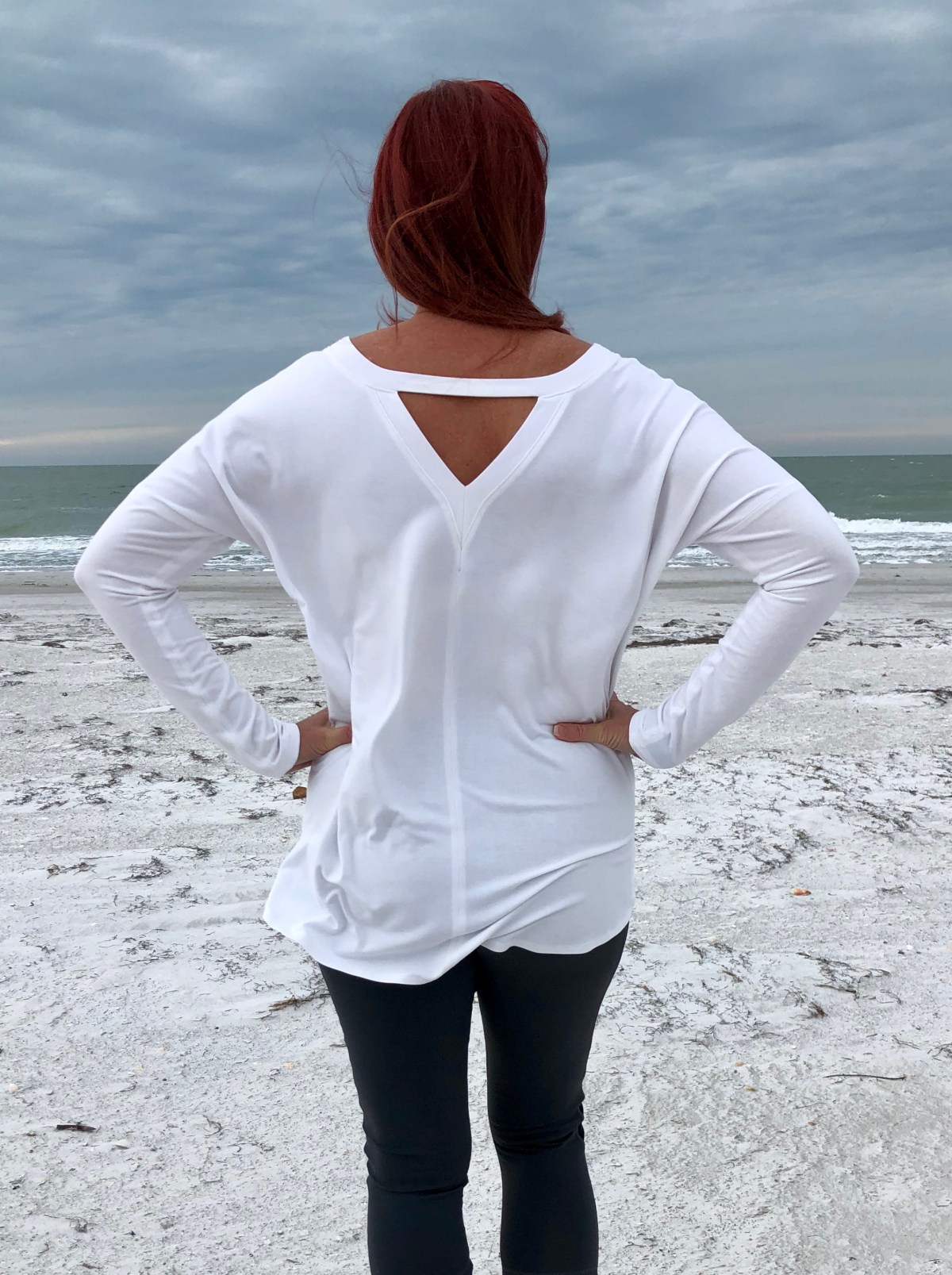
 It could have been the super stretchy fabric, but the size of this trendy style felt a little too slouchy for me. (Hey, I lived through the ’90’s already, the Flashdance look just isn’t my personality!) So for my next two tops I sized down to a Medium. That, and using high quality fabric, was just the change I needed to fall in love with this top.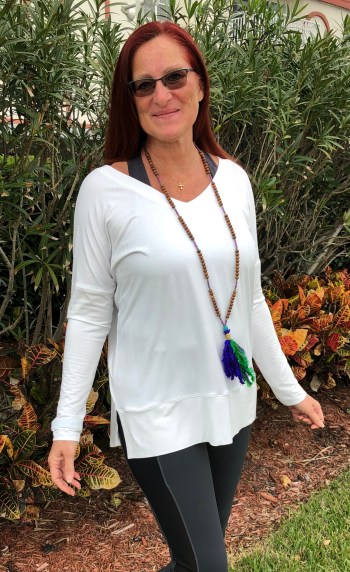

 Other than the straps, I sewed the bra together per pattern instructions. While I love the look of the double straps, they are more time consuming to construct. So I still cut out four strap pieces, but used them flat (as main fabric and lining fabric) rather than as double straps sewn to each shoulder. I used powernet in my straps rather than adding elastic.
 Once you’ve sewn your main and lining pieces together along the top, try the bra on, adjust the straps to length, then push the straps through the openings and stitch.
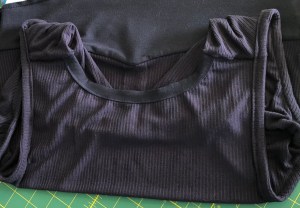
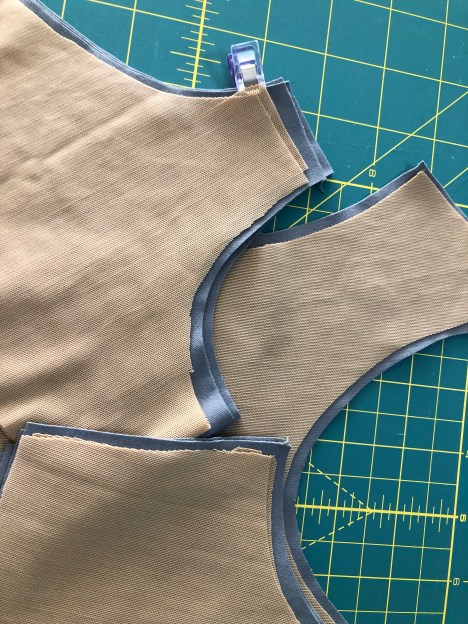
 To avoid bulk, be sure to trim the seam allowances at the back strap openings on an angle before turning the bra right side out. It’s important to press as you sew. It helps everything lay more smoothly, and gives your projects a more professional finish. See the difference pressing makes between the left and right straps in the photo below?
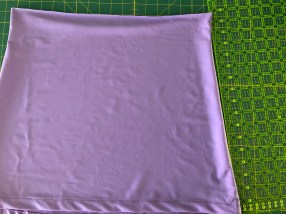 The Lille body was wider than my bra. If I were making the body out of Supplex, and wanted it more fitted, I would have slimmed the top of the body a bit. Since I was going for a drapier fit with ruching, I just matched up my quarter points and eased the body to fit the bra.
 I could have added a band with elastic on the inside at this point, but wanted to try something else. I used 3/8″ swim elastic cut to fit me at the snug yet comfortable length (just like you would trial fit the wider elastic in the band). I overlapped the elastic and stitched it together making a circle. Then I matched up my quarter points, and zig zagged the elastic to the seam allowance. After that, I flipped the seam allowance toward the bra, and top-stitched it in place.
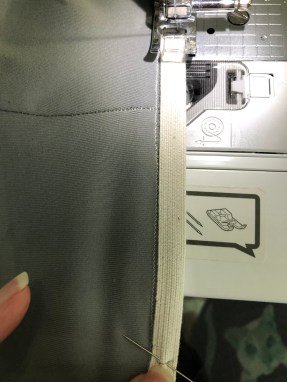 To ruche the sides, I cut two pieces of swim elastic a couple of inches shorter than my side seams. I zig-zagged the elastic to the side seams and ta-dah, instant ruching!
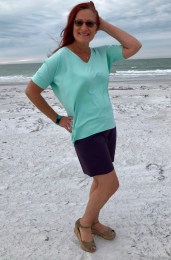
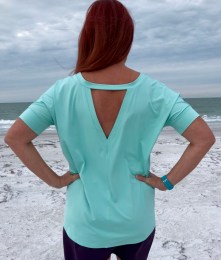
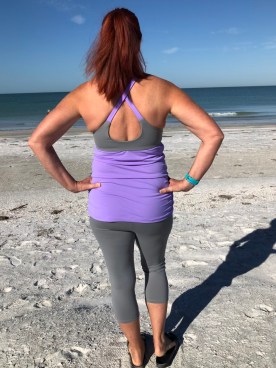 When I go to the beach to get photographs in my makes, sometimes silliness overtakes me. But we’ll just say I was jump testing the workout top to ensure that everything stays in place!