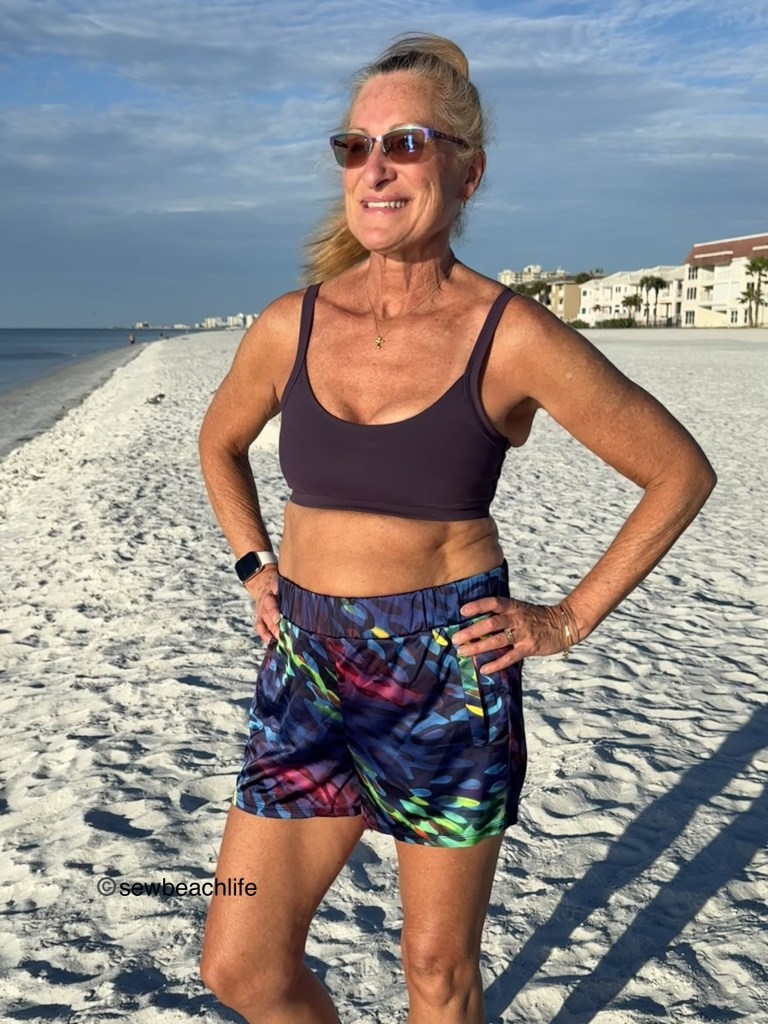
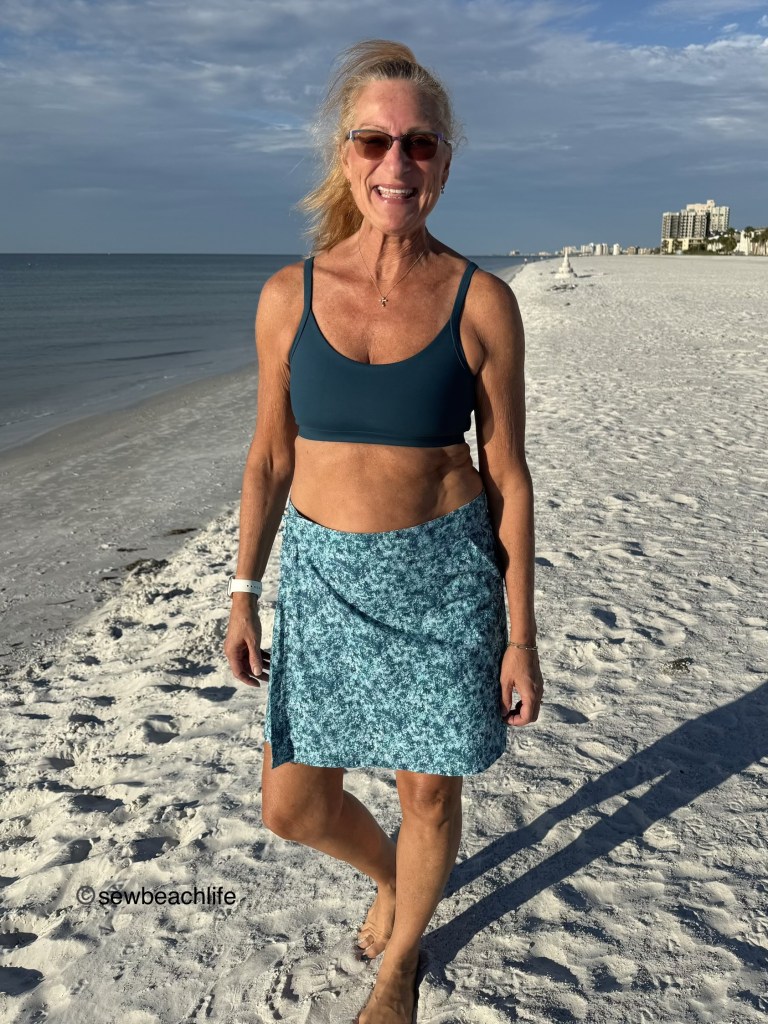
Delphi Sports Bra

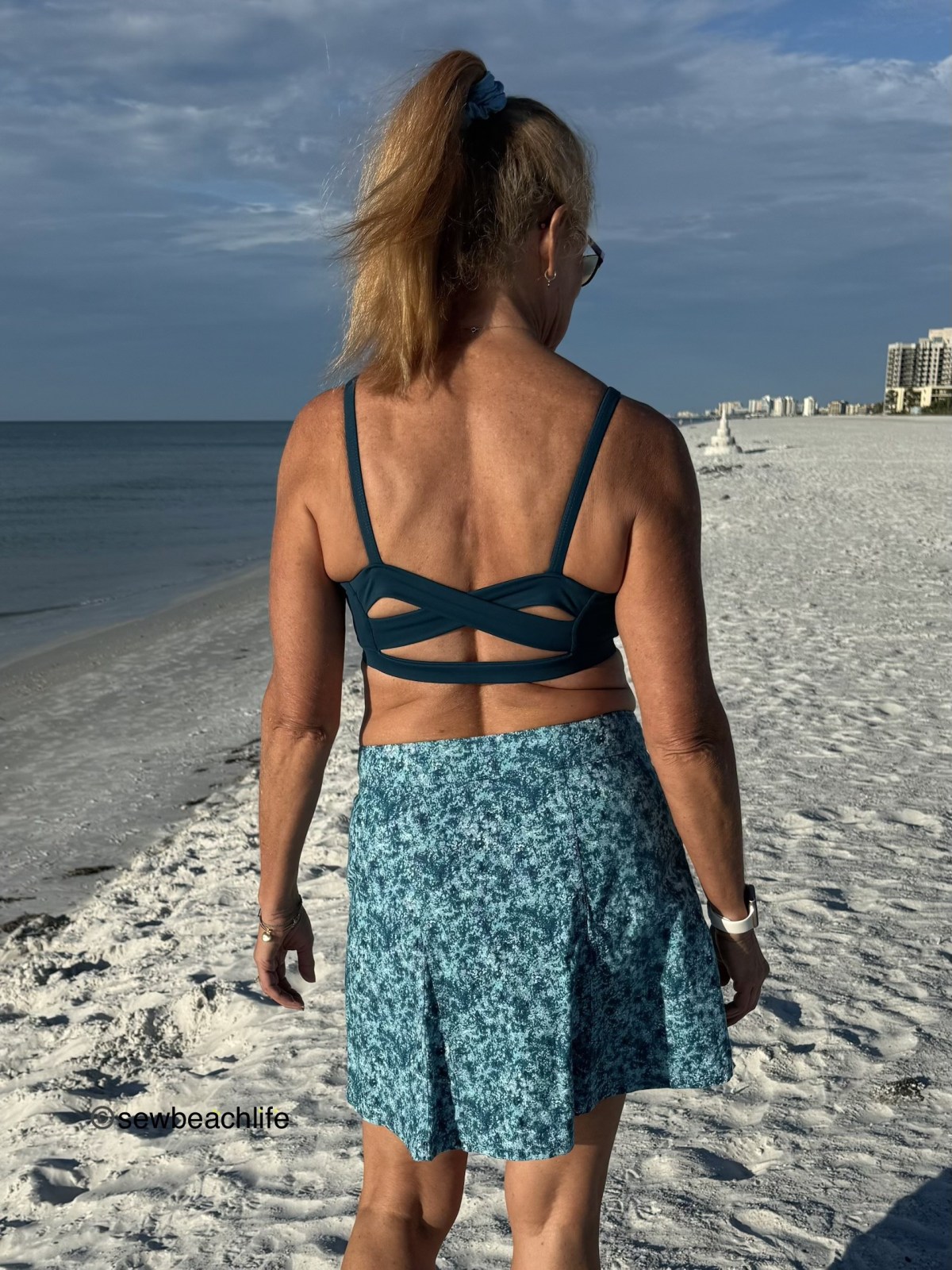
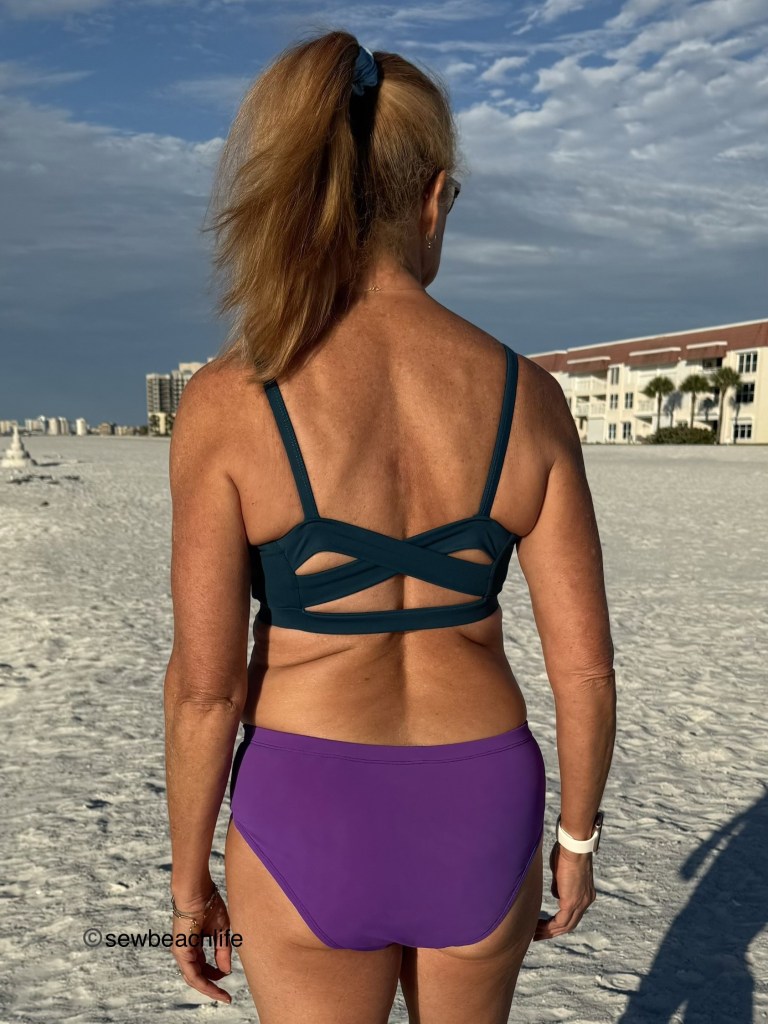
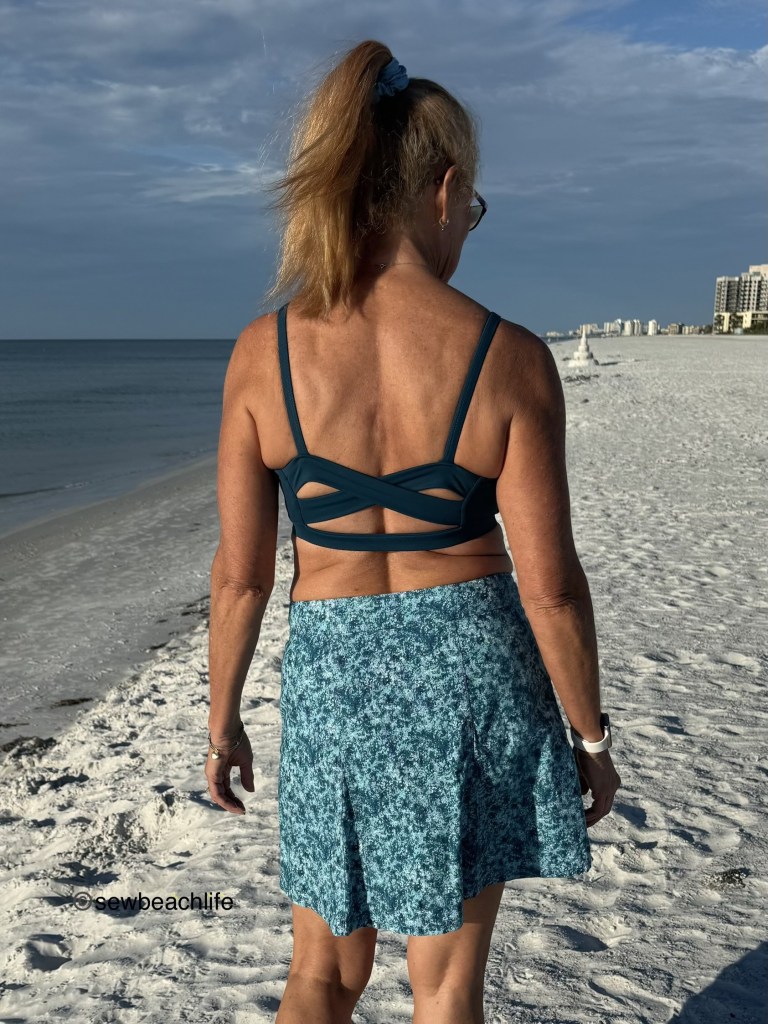
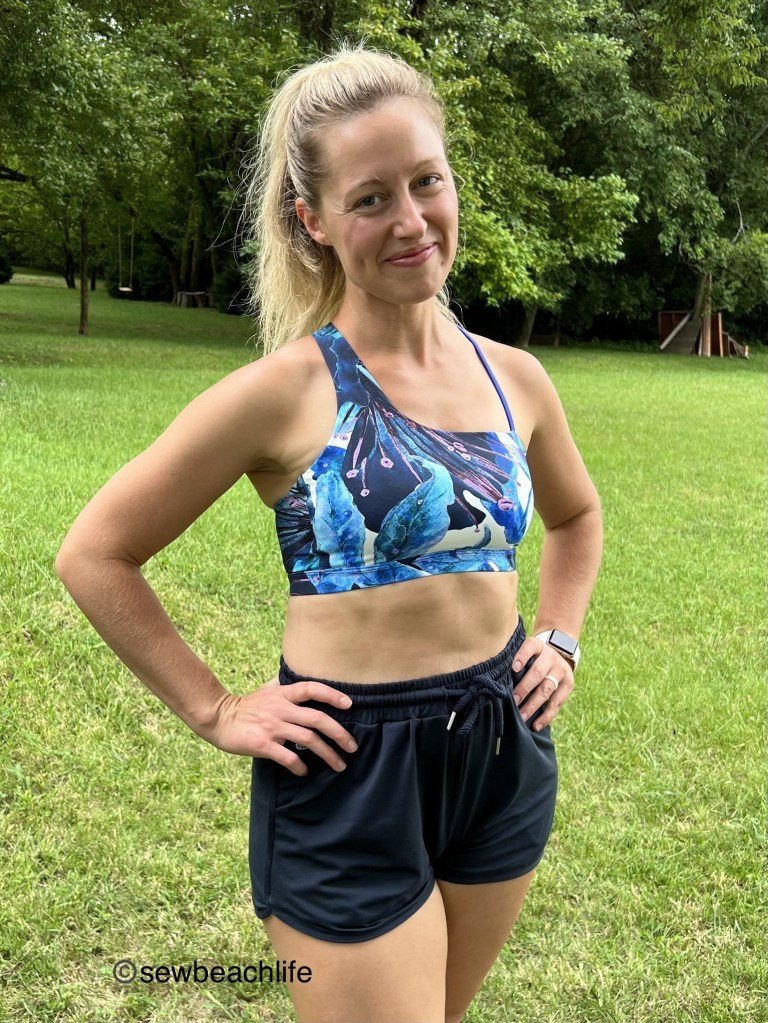
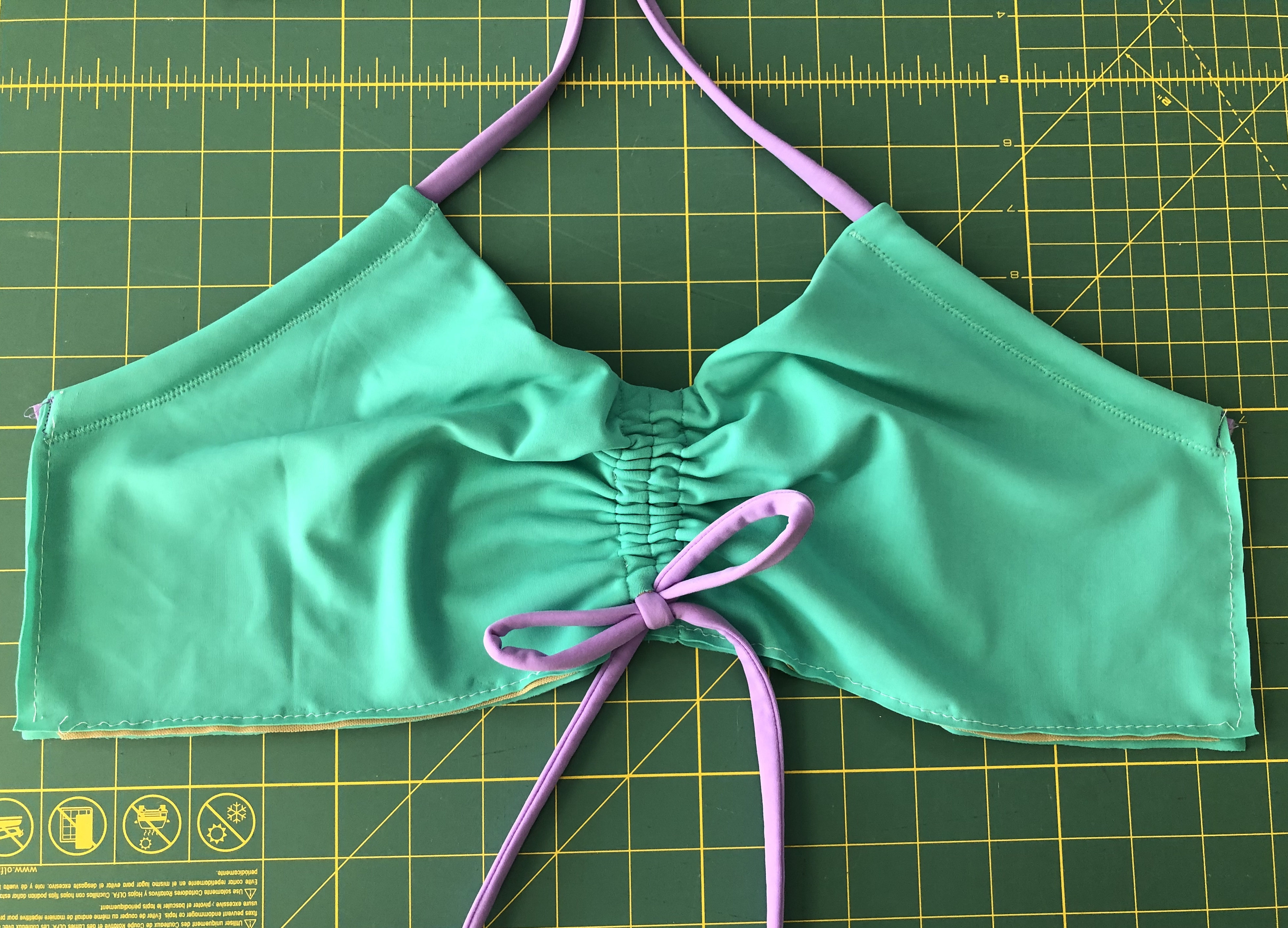
Who can resist a fun new sports bra? Especially with options for a super cute infinity, twist, or simple back design. I am all over trying new sports bra patterns, and the infinity strap design is just so unique and fun.

I don’t limit myself when it comes to wearing sports bras. They get worn to the gym, as a swim top at the beach and in the pool, and for everyday wear. They also get worn with shorts when I skate around my neighborhood, because that is #floridalife. 🙂

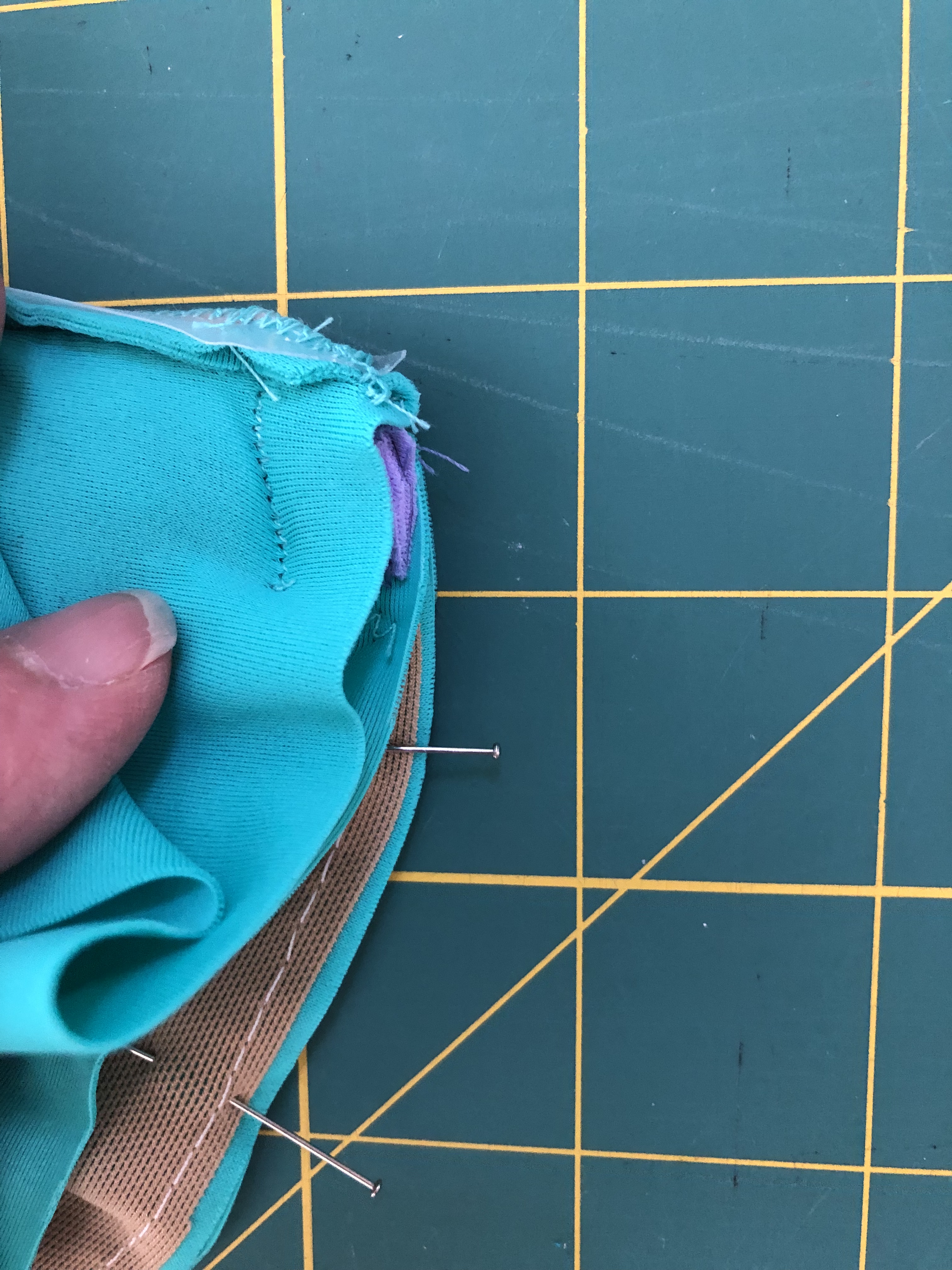
The Delphi Sports Bra pattern calls for athletic fabric. I used nylon/spandex Supplex and nylon/spandex Align 2 for my two bras. You could add powernet if you wanted, but I found that the compression and firmer rebound of Supplex and Align 2 were adequate for me. (For reference, I wear and buy a size 32D bra at Soma.)

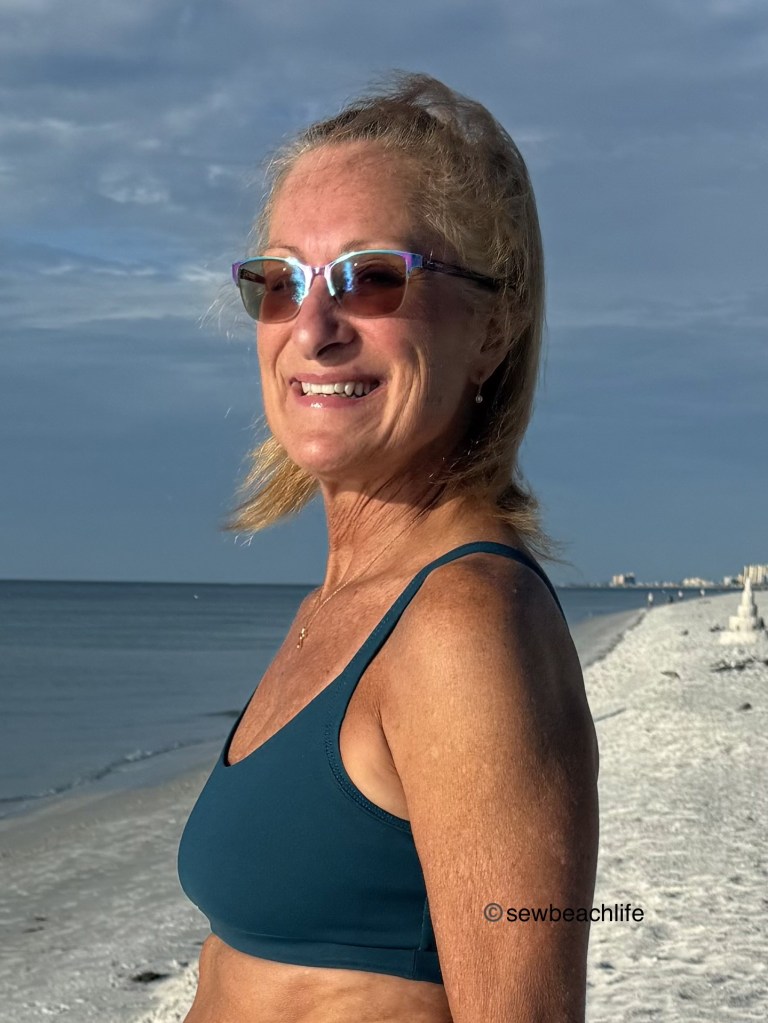
I wore one of my freshly made bras all day yesterday and it was super comfortable. The straps stay in place, and the neckline depth is perfect. It’s high enough to be supportive, but low enough to not show under a scoop or V-neck top.

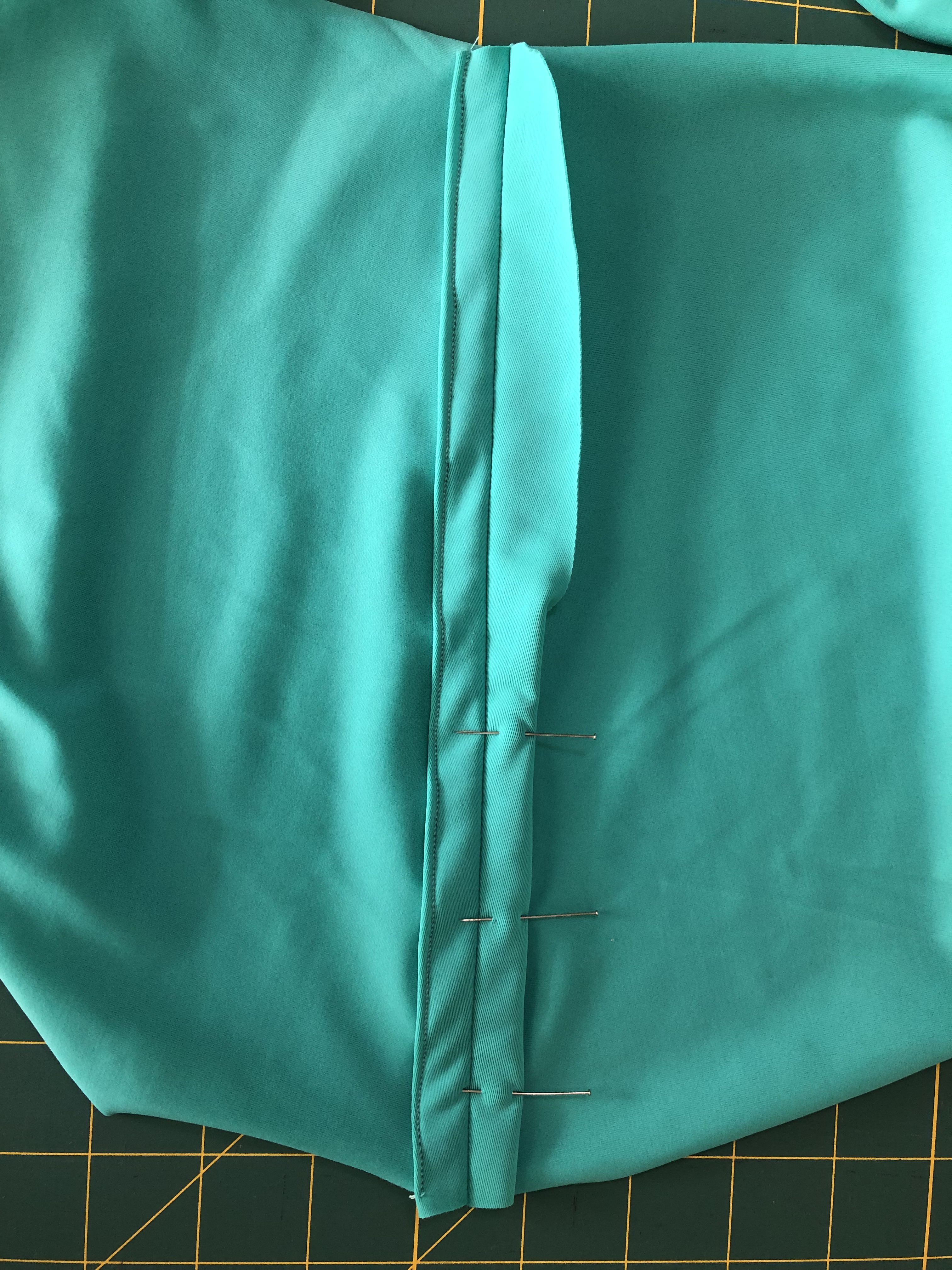
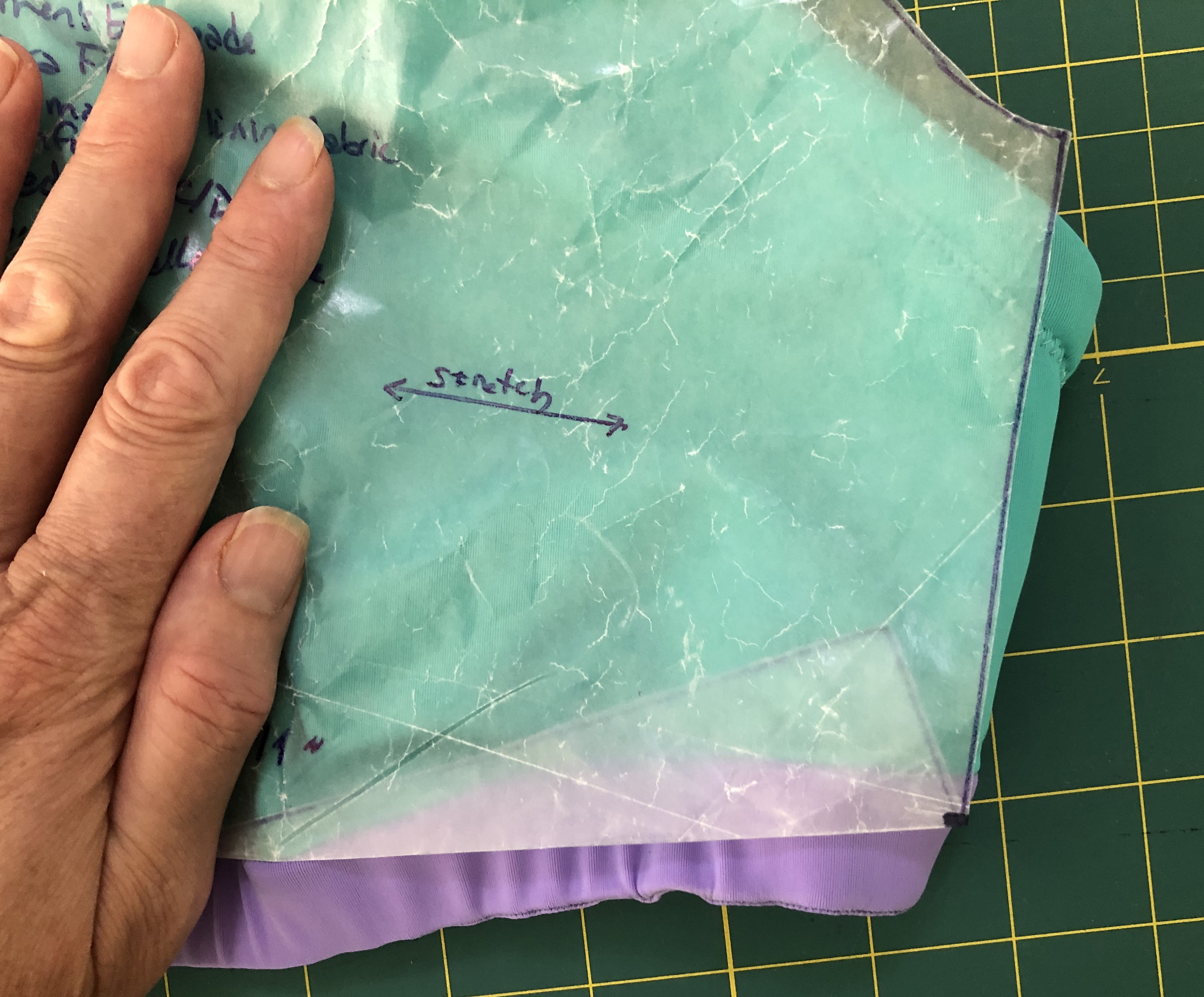
You can use 3/8″ or 1/2″ elastic in the straps. Although the pattern calls for 1-1/2″ or 2″ elastic in the band, because I am rather short-waisted (which seems weird for a tall girl, right?) I chose to use 1″ elastic in my band. Of course that meant adjusting my band height to 2-7/8″, but I love being able to personalize a pattern to fit my body. That’s one of the reasons that I sew my own clothes.

Greenstyle has once again nailed it on a fun, great-fitting, well-designed pattern with the Delphi Sports Bra. It doesn’t take a huge amount of fabric, and can be worn with shorts, skirts, leggings, and under your favorite top. Sizing ranges from 32″ to 61″ at the full bust. If you need it, there are 2″ and 4″ full bust adjustment pattern pieces for the front.

The details:

The Delphi Sports Bra pattern is one of the many awesome patterns by Greenstyle. I had some plum Supplex from Phee Fabrics in my stash for the first Delphi Bra I made. The teal Align 2 for my second bra was purchased from Greenstyle a while back. Although this particular color is no longer available, they have lots of pretty colors in stock. I also recommend the Signature fabric line, which is another high quality nylon/spandex athletic fabric.

For reference, I made a size C1 with the plum supplex. For the second bra, I again used size C1, but cut the front in size B2 width (keeping the C1 length), which feels more comfortable for my shoulder width and at the armscye. I dislike anything being too close in the armscye, and this combination works perfectly for me.

I can’t remember which pattern I used for the swim bottoms, but the Delphi Sports Bra is also shown worn with the Windward Shorts and Tidal Skirt, blogged here and here.

I purchased my 1/2″ and 1″ knit elastic at Wawak, along with the Maxi-Lock serger thread. There are steps in the pattern that I highly recommend using your sewing machine to stitch, such as the side seams, and attaching the back infinity straps. It’s also important to trim those seams to reduce bulk and help them lay more smoothly when turned out to the right side. I drive a Bernina sewing machine and LOVE it! Other seams and the cover-stitching on the straps were done on my Babylock Triumph, which I also love.

I cannot stress strongly enough how much easier and more fun it is to sew when you use high quality patterns, fabrics, and machines. It isn’t that you can’t sew with a cheaper machine, because I sewed for decades on much, much less expensive machines. But once I had saved enough money to purchase my current machines, I really feel like the quality of my work, and ease of sewing (due to less frustration with machine capacity, bobbin struggles, lack of foot height, and motor strength) has greatly improved.

Thank you for reading and sharing my love of patterns, sewing, fabric, and cute sports bras! The links to GreenStyle may be affiliate links (if I did them properly!) which means that I may earn a few pennies if you use my links without it costing you anything extra. Since this is my blog and represents me, I always give my honest opinion about any patterns, fabric, or supplies that I talk about. I do like knowing whether the time I spend writing posts actually interests people enough that they take a look at the patterns I review, but I write for me. It’s one more creative pursuit that I hope is helpful or interesting to others. I write to share my love of sewing and to encourage others to love it as much as I do! ❤

Tangled Swim Top and Bottoms by GreenStyle

And a pattern hack and sewing tips!

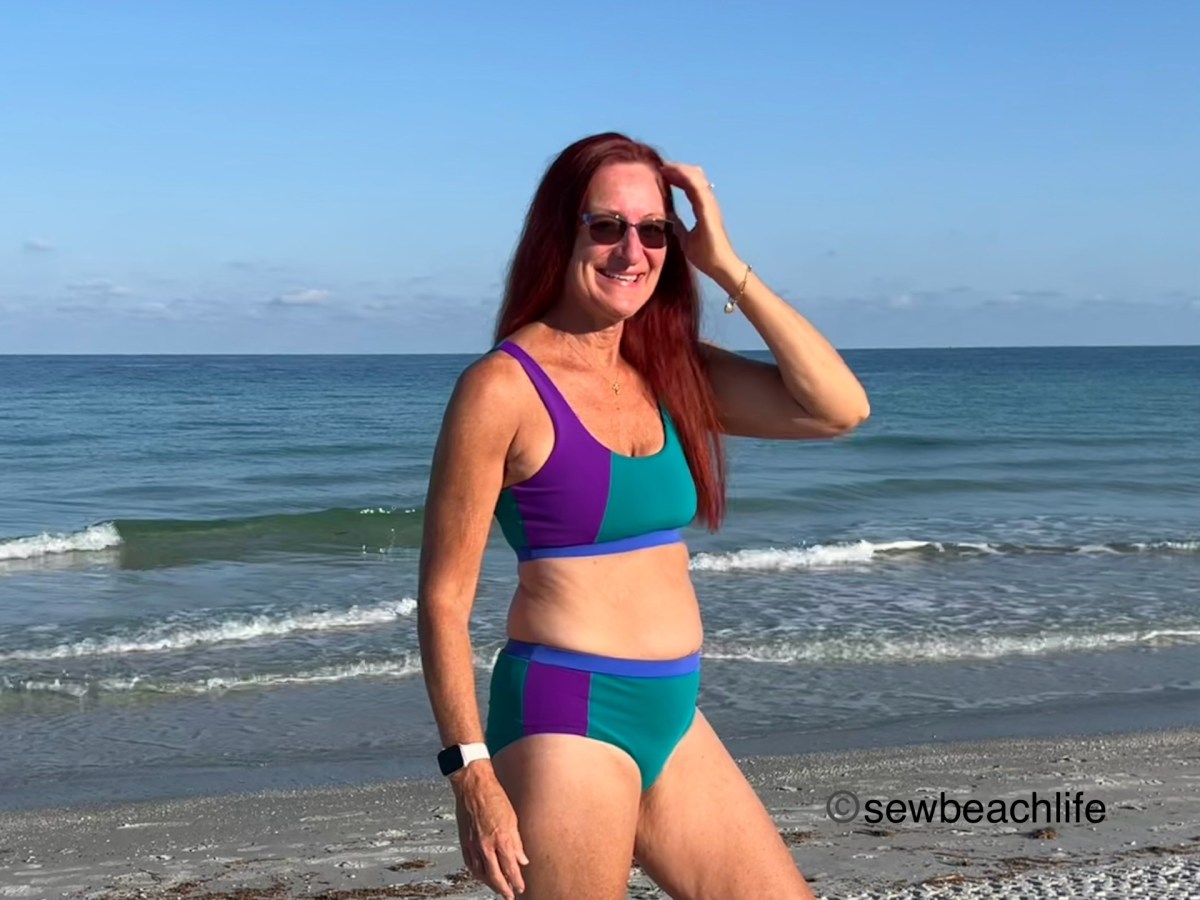
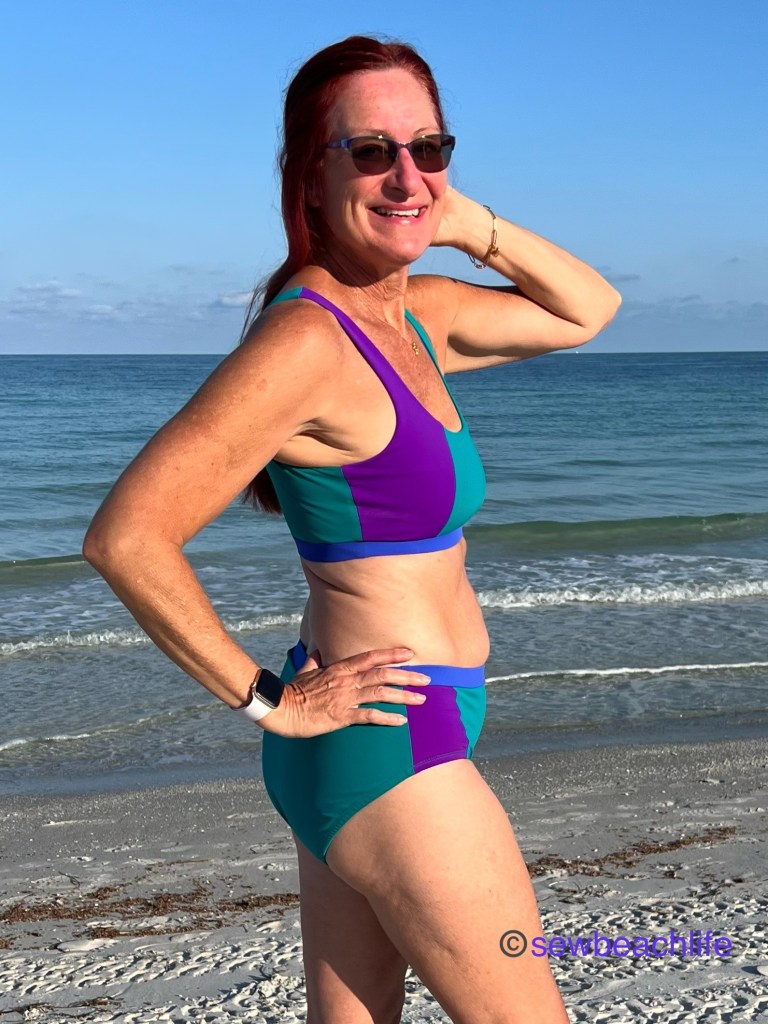
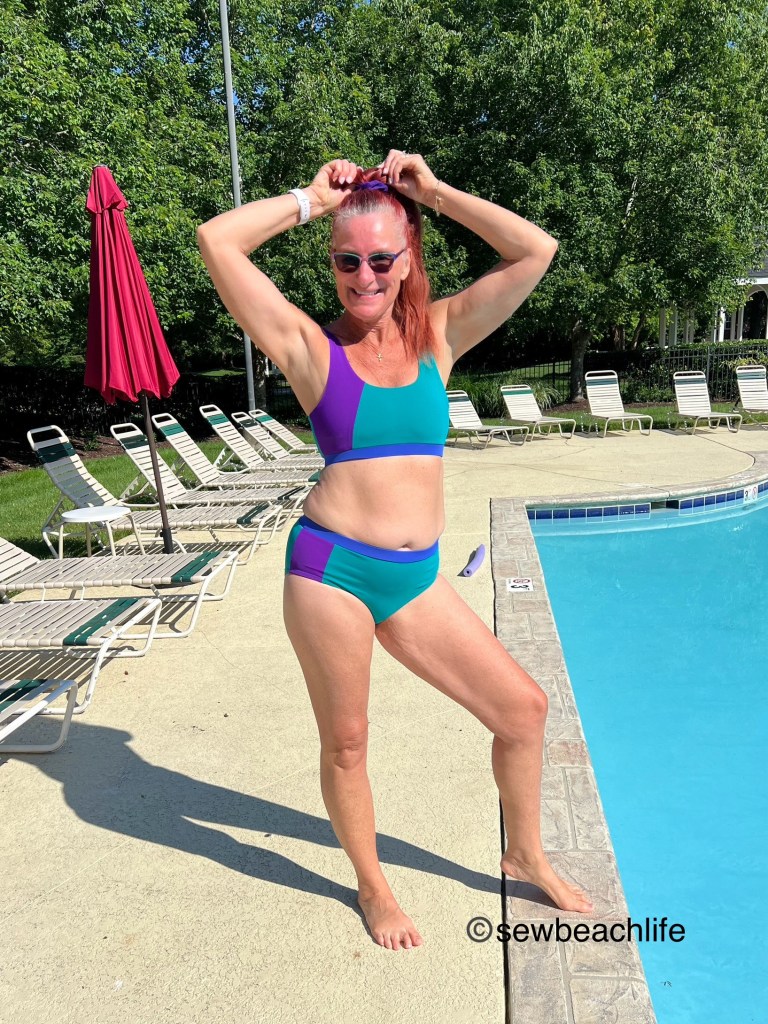
Summer time means new swimwear is in order, and the Tangled Swim Top and Tangled Swim Bottoms have some super fun color-blocking options! The hardest part will be choosing which fabrics and options to use. The top has a scoop neck front, with back options of full coverage, high scoop, and low scoop. Everything from a simple front and back to multiple color-blocked designs give you the chance to use those smaller scraps of fun swim fabrics you’ve been saving.

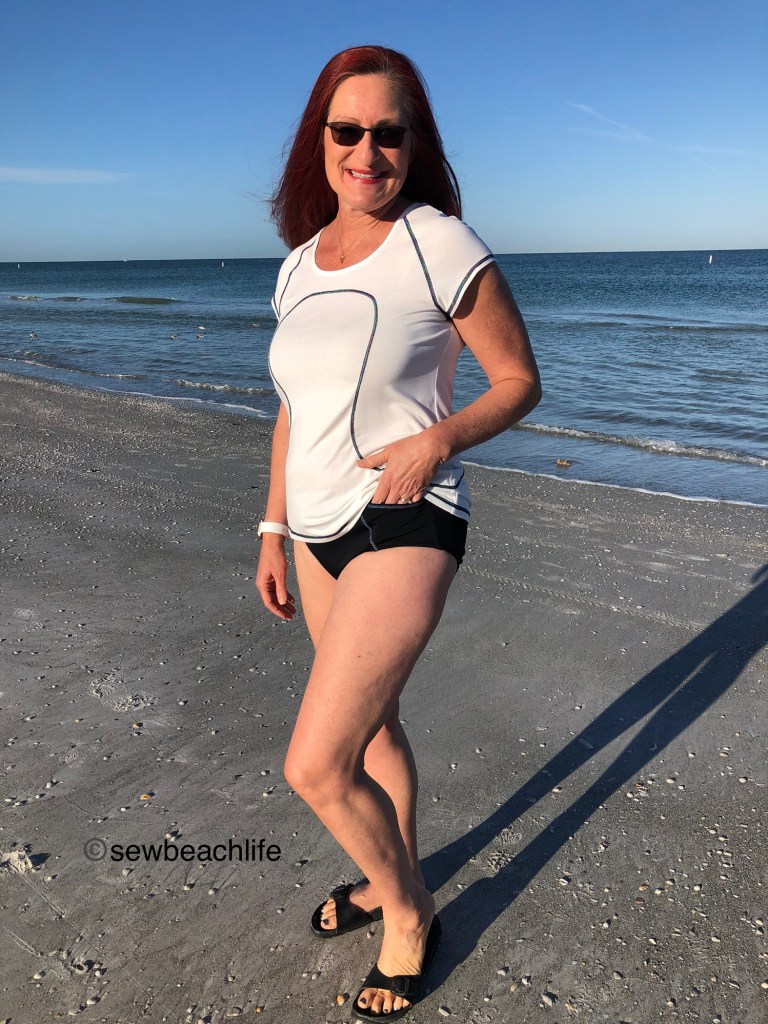
This shot makes me feel skinny. 🙂 That intermittent fasting is starting to pay off! Don’t get me wrong, healthy eating and exercise are part of the deal.

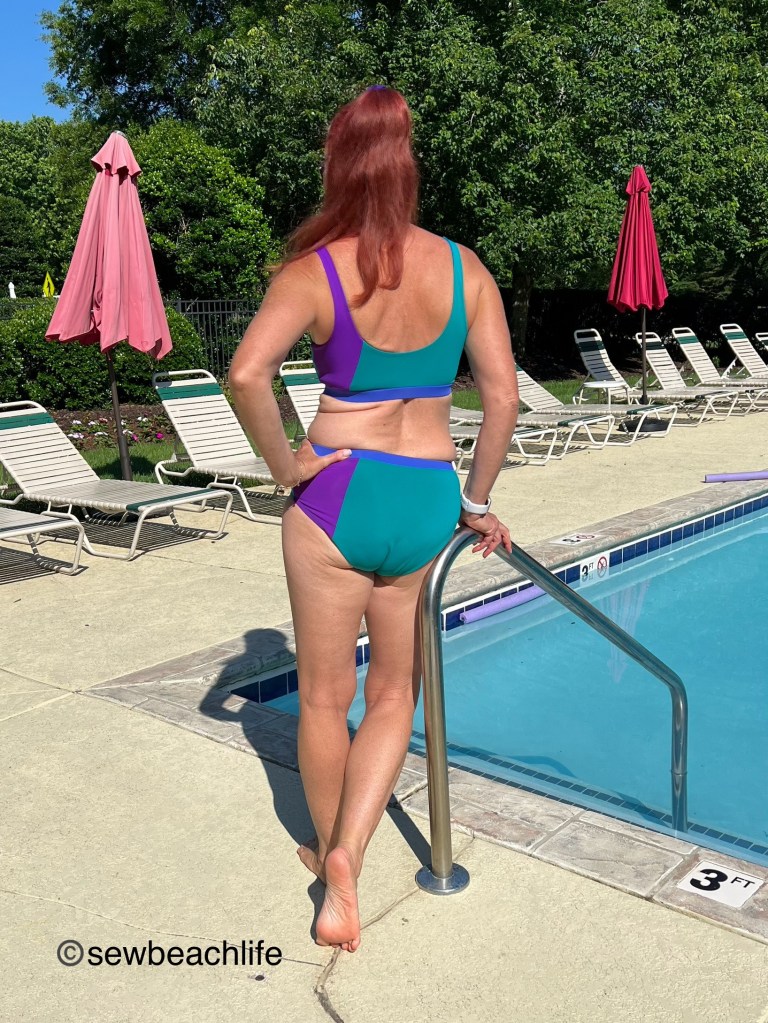
The Tangled swim bottoms have even more color-blocking options than the top! I chose the asymmetrical two-piece color block design for the front and the back, and I love being able to use three fun colors for a nice bright suit. The bottoms have a full coverage and a slightly cheeky back coverage, along with high or low rise options. I used the high rise, elastic waistband option, but there’s also a contour waistband that would make the rise even higher.

I like showing how patterns look while you’re seated too. Because you’re not just going to stand around when you’re out of the water!

I like the lowest back option, and wanted to make the back have the same asymmetrical two piece look as the front and the bottoms. So of course I had to hack it. 😉 I can never just leave a pattern alone.

Don’t you love the way the design carries from the top down to the bottom?

It was super easy to transfer the design from the front to the back. So, my method of tracing patterns is to consolidate the options I plan to use onto one pattern piece if feasible. I knew I was going to make the simple version of the top and bottoms which I did before moving onto the color-blocked versions.

I didn’t bother adding powernet in the front of the green top, which I kind of regret.

Once I had the simple front and back traced, it was super easy to trace the cutting lines for the asymmetrical two piece front right onto my simple front. That way I don’t have smaller pattern pieces floating around in my pattern envelope. I like to use different colored pencils to mark the left side cutting line and the right side cutting line. I also use arrows to ensure that I cut on the proper line so that I have adequate seam allowance! The marked cutting lines should end up 3/4″ apart (3/8″ seam allowance + 3/8″ seam allowance = 3/4″).

To hack the back to have the same asymmetrical two piece look, I simply laid the simple back pattern piece on top of the marked front piece, and traced the left and right cutting lines, again labeling with my colored pencils.

I always mark my pattern pieces with any changes or notes (as you can see, version 2 of the pattern testing lowered the bottom of the armscye by 1/4″) and always mark the grainlines.

I love how the two-piece asymmetrical back hack brings that extra pop of color to the back and side. And that the angled cut of the top flows right down to the angled cut of the bottoms.

Even though this isn’t a super revealing swim suit, I love that it still looks and makes me feel sort of sexy.

GreenStyle is listing the Tangled Swim Top and Tangled Swim Bottoms patterns separately, so if you want to mix and match with any of their other swim tops or bottoms, you can choose the styles and patterns you want to use.

If you’ve never sewn swimwear before, I encourage you to try it. My best tips are to use fresh needles in your sewing machine and/or serger. Use plenty of pins to line up seams. I like to baste my swim lining to the main fabric of the swim bottoms before attaching the waistband or leg elastic. It keeps the fabric smooth and even, and ensures that you won’t have to rip out the elastic because you somehow didn’t catch a layer of fabric.

Speaking of elastic, the amount of stretch can vary from manufacturer to manufacturer. So rather than just looking at the elastic cut chart, I literally wrap the elastic around my waist and leg to choose a comfortable yet snug length. Then I mark that information right on my pattern piece for the next time I want to make it.

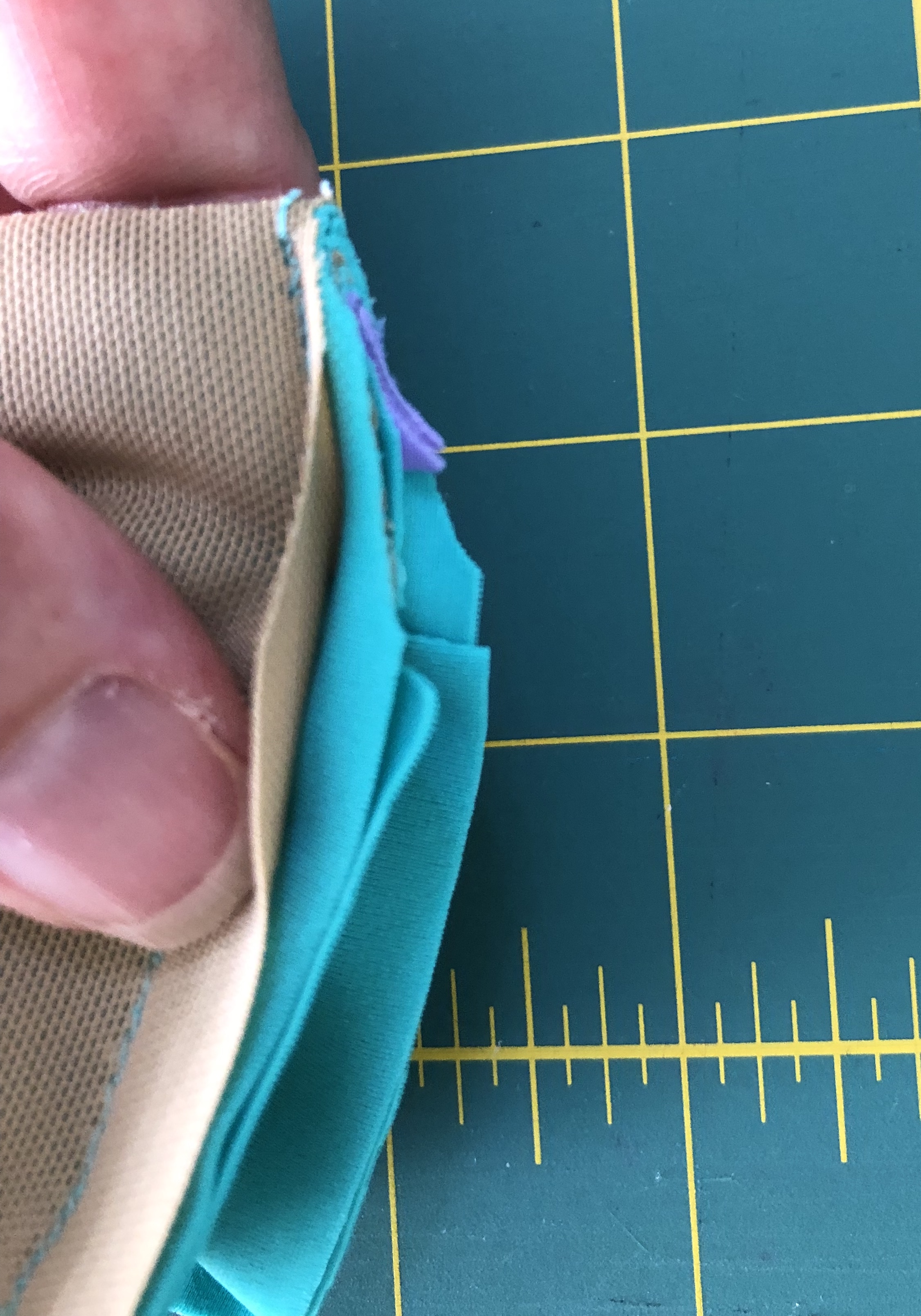
If you’ve ever had leg elastic “flip out” on you, then this next tip will really help you. Once you’ve sewn your leg elastic into a circle, mark the quarter points. I just use a pencil. Then I mark the quarter points of the leg opening with pins. I like to serge on the elastic using a stitch width of M, and a stitch length of 2.25, stretching the elastic so that the mark lines up with the pin. Then I turn the elastic under, and pin in place. Whether you use a coverstitch or a zigzag, be sure to sew along the serged edge, NOT along the fold. This will keep the elastic firmly in place, rather than allowing it to flip out.

I’ve worn my suits in the pool and played in some nice waves in the ocean. Everything stayed in place, even in the big waves. So whether you hit the pool, the lake, the ocean, or a river, the GreenStyle Tangled Swim Top and Bottoms are a fun addition to the season!

The pool photos were taken at a community pool, and I sometimes wonder what other people think when they see me acting silly and posing for the camera. Probably nothing more than they think when I pose at a crowded beach. 🙂 Honestly, I don’t worry about it because A. I’m having fun, and B. There will always be people who look better, or perhaps less fit than me. And we’re all here to enjoy the sunshine, enjoy being near the water, and to have fun! And face it, most people are so caught up in their own lives to even think or worry about what you look like. So get out there in a swimsuit and enjoy life!

The details:

My GreenStyle Tangled Swim Top and Tangled Swim Bottoms were made using nylon/spandex tricot from Phee Fabrics and nylon/spandex sports bra fabric from Porcelynne.

I used 240gsm nylon/spandex powernet from Porcelynne in the front only of my swim top. If you like more compression, you can use it in the back too.

I used swim lining from JoAnn Fabrics. I also love the swim lining from Phee Fabrics, but they don’t have it in stock right now.

I used 3/8″ cotton swim elastic from Sew Sassy, and 1″ knit elastic from Wawak.

Thank you for reading and sharing my love of patterns, sewing, fabric, pattern hacking, and cute swimwear! ❤

The links to GreenStyle may be affiliate links (if I did them properly!) which means that I may earn a few pennies if you use my links without it costing you anything extra. Since this is my blog and represents me, I always give my honest opinion about any patterns, fabric, or supplies that I talk about. I do like knowing whether the time I spend writing posts actually interests people enough that they take a look at the patterns I review, but I write for me. It’s one more creative pursuit that I hope is helpful or interesting to others. I write to share my love of sewing and to encourage others to love it as much as I do! 🙂

The Briny Swim Top

And a photo session with my daughter!

The timing of the new GreenStyle Briny Swim Top pattern test worked out perfectly with a scheduled trip to our daughter and son-in-law’s home. I make matching clothes for my granddaughters all the time, and they love it. They frequently ask to wear their matching dresses, tops, shorts, etc. But I very rarely get to match with my daughter because she lives so far away.

As soon as I saw the tester call, I sent a photo of the line drawing to my daughter and asked her if she wanted a cute new swim top. I knew that it was a style that she would look great in, and she loved the look. So matching swim tops it was!

My daughter is a smaller size than me, and has a smaller cup size, and the size D fits her perfectly! She chose to have the optional skinny strap, and thought that the bright blue nylon/spandex swim that I used as the lining fabric would be a cute contrast against the GreenStyle Align 2 Paradise print main fabric.

Isn’t she a beauty? Let me tell you, her inner beauty far outshines the outer. I am so blessed to have her as a daughter!

The crossed straps in the back highlights the fun contrast of the solid against the print, and the narrow versus wide fixed strap even better.

It’s such a cute pattern! Very on trend, and looks cute whether worn with swim bottoms or shorts. It’s so comfortable that she didn’t take it off after photos, and wore it for the rest of the day. She threw a white sheer mesh top over it, slid on a pair of pants, and wore it out for date night that evening. I should have grabbed a photo of her, but I was trying to give the girls their baths and ready for bed so that she and her husband could get out the door.

As I have a fuller bust, I made the size E with the darted bust option. Since I knew that I would be sewing while visiting, I had to pack up my serger and fabrics and attempt to sew during quiet times. Let me tell you, when you have very active three and five year old granddaughters who want to play all the time, (well, other than when they are asking for food :-)) there is no quiet time! Hahahahahaha! I don’t know how all you Mama’s with little ones do it.

I took the girls on lots of stroller strolls, visits to the playground and pool, played dress-up, built with magna-tiles, played with stuffies, played pet shop (where the girls pretended to be snow leopards, clouded leopards, cheetahs, pink kitties, puppies, etc. and I would “buy” them as my pets. They were super cheap, sometimes $3, and sometimes $5. It was hilarious! I had to pretend to pay for them (with a beep on the imaginary POS system), and could then open the imaginary cage doors (squeak) and go in and play with whatever animals they were being at the time.)

The darted front (FBA) bodice is the right choice for me size wise. Rather than just relying on compression and a bit of shaping, the dart gives more room, support and shaping for a fuller bust. I’d get even more support from the compression of powernet, which is something that I always use in sports bras, workout and swim tops. However, when packing for our road trip, I neglected to put it in my bag of fabric, notions, thread, and sewing supplies. 😦 whomp, whomp.

It’s such a cute top however, that I’ll likely go through the trouble of seam ripping it, and add a layer of powernet to the wrong side of the main fabric so that I can feel more supported when wearing my Briny as a sports bra for roller skating.

I added the optional strap to mine, and with a heavier bust, I chose to make my strap have a finished width of 5/8″, a little wider than than the pattern calls for. Surprisingly though, I think that if using powernet in the top, I would feel comfortable even without the extra strap. I guess I’ll just have to make another one, and check it out. 😉

I think the top looks great worn with my favorite GreenStyle Moxi Shorts bike shorts (the compression under layer to the loose shorts.)

If you ever have the opportunity to make matching clothes with your adult child(ren) and have a photo shoot, I highly recommend that you do it! It’s fun, you get the chance to be awkward and silly posing together, and you’re wrapping your child in a handmade hug. ❤

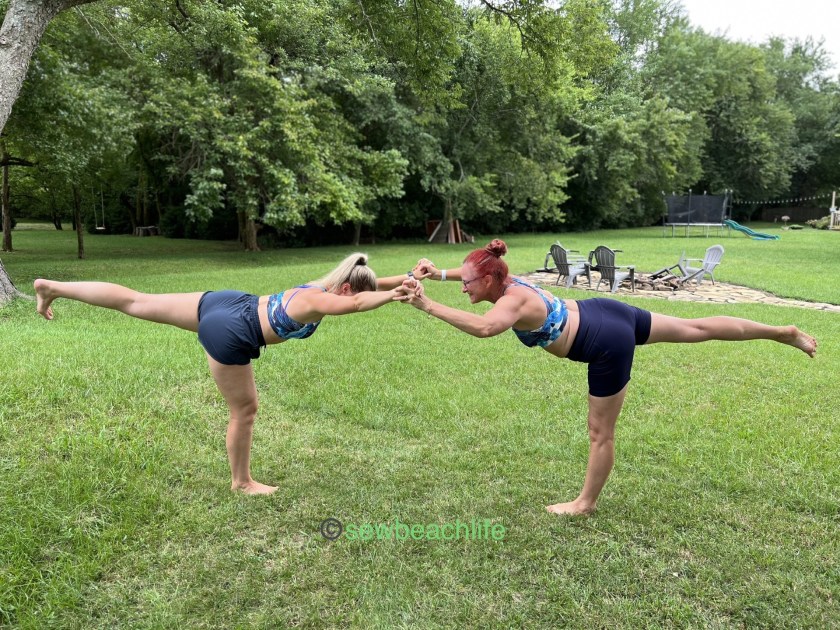
I swear my leg was higher than this! We only did warrior III because she said she couldn’t do a yoga toe hold. I think she can, especially if we held on to each other. 🙂
Hugging my girl in the cute handmade hug I made for her.

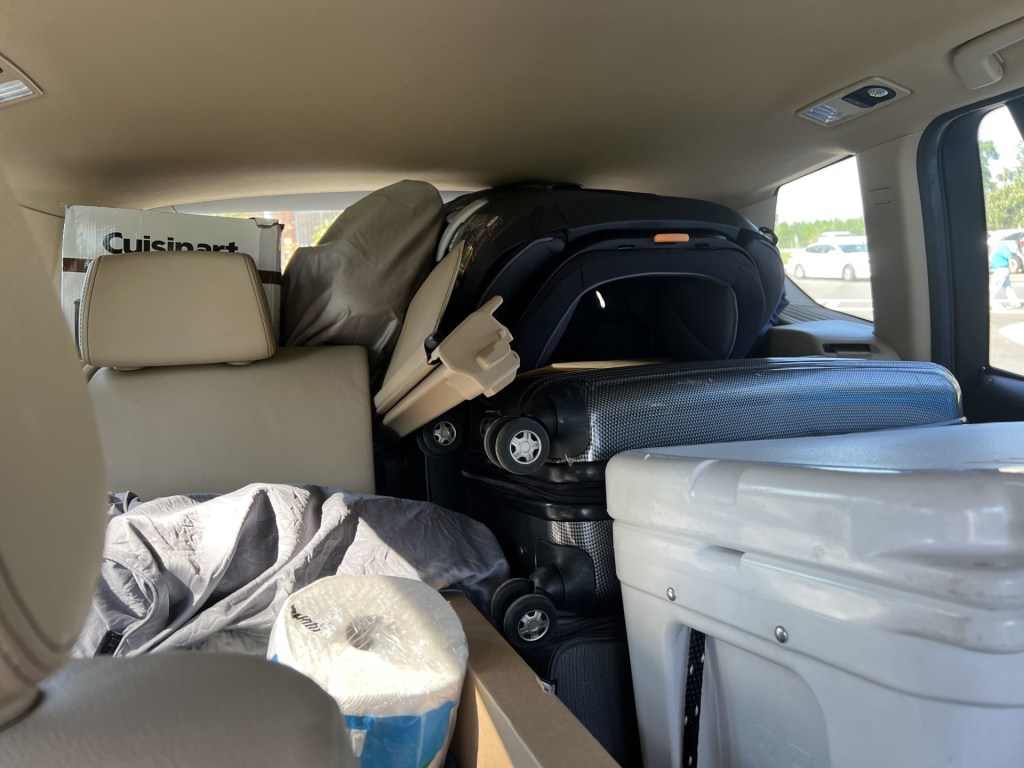
Since I’d never traveled with my sewing before, here are my best tips: pack your serger or sewing machine in it’s original box, so that it can be safely cushioned by the styrofoam and original packing materials. I brought my Babylock Triumph (combination serger and coverstitch machine) with me, and there is no way I would have done it without it being in the original box. Our car was completely full with not only suitcases, our cooler and bin of snacks, our pillows, and a small blanket, but a coffee maker, car seat, and our daughters order from Ikea as she doesn’t have one near her.

It’s a 13 hour drive, so a cooler with water, sliced veggies, and fruit is essential. Especially since I have food allergies, and can’t just stop anywhere and safely eat. My serger was safely tucked in the back, all snug and secure in its box.

Bring all the fabric (double checking that you have powernet if you’re going to need it!), thread in matching colors, elastic, and any sewing notions you may need. You can’t count on whatever local sewing or big box stores to have what you want in stock. Try to have your patterns printed out, and traced in the needed sizes. When you’re doing a pattern test, that’s a little challenging because there is likely going to be an updated version of the pattern before finals. If where you’re staying doesn’t have a printer, check out the local options for printing your patterns. Other than that, just enjoy and go with the flow. Traveling and visiting people you love is fun. And while things may not always work out as planned, enjoy those little moments and memories, and listen for every “Grandma, I love you” and take every snuggle and hug that comes your way.

Thank you for reading and sharing my love of creating, sewing, serging, great patterns, fabric, and making beautiful, well-fitting garments! ❤

The links to Greenstyle may be affiliate links, which means that at no extra cost to you, I may receive a few pennies if you purchase through my link. As always, I only give my honest opinion. After all, it is my blog, which represents me!

Waimea Rashguard & Bottoms And The Stained Glass Effect

Playing with the coverstitch can really elevate and add depth to your garments

Let’s start with the GreenStyle Waimea Rashguard. I never buy or wear raglan sleeve tops because they never seem to fit right. Every time I try on a RTW raglan style, it rides up and chokes me and the sleeves never fit properly. But GreenStyle patterns are so well drafted that I figured I would give it a shot. Wow! Color me impressed! The sleeves are actually shaped to fit your shoulders. Because it fits your shoulders, it doesn’t ride up and cut into your neck.

Had I been making the top as an actual rashguard, I would have followed the pattern precisely, and used the wider neckband. That would give maximum sun protection as the pattern intended. But I like to play with patterns, and make them for the way I plan to use them. So I tried the top on, and the neckline fell right about at the cross on my necklace before adding the band. Since I just wanted a casual top, I cut the front neckline an inch or so deeper than the pattern, and used binding instead. This leaves the neckline more open, which suits my casual wearing perfectly.

I love the cap sleeve option. It makes the perfect summer top whether I throw it on over my swimsuit or pair it with shorts or a skirt.

The (optional) fun curved hourglass design lines on the front and back offer the perfect opportunity for color-blocking and having fun with your coverstitch. I decided to go all out with coverstitching, and tried a new technique. I knew I wanted a variegated look so my top would match whatever bottoms I wanted to pair with it.

When I first bought my machine and took the “get to know your machine” orientation, I recall the instructor mentioning that if you didn’t have variegated thread, you could use two threads in your chain looper to get a more colorful variegated look. We didn’t try it, but apparently I filed this tidbit of information in my head. I’m sure there are places to buy fancy and fun variegated blends, but I tend to buy my thread from wawak.com when they have cones of MaxiLock serger thread on sale. My favorite and most used variegated thread is called tie dye punch. It’s colorful and multicolored, and yet not the traditional red, yellow, blue, which is just too stark for me.

Although tie dye punch is pretty, it doesn’t lean purple and teal enough for me. And that’s when the filed away thought of using multiple threads in my chain looper came back to me. My plan was to accent the top with a reverse triple coverstitch, which means that I would stitch with the top inside out, so the needle threads would show on the inside of the top, and the looper threads would show on the right side of the fabric. Here’s how I set up my machine:

Can you tell I don’t have a dedicated sewing room and sew at my dining table? 🙂

I put the tie dye punch on the chain looper spool, and set the other two cones (MaxiLock teal, and SureLock purple) on the table just below the looper spool. All three threads went through the thread stand and were fed through the chain looper threading path like normal. I used a thread cradle when autofeeding them through the looper, just like you would when using a thicker thread. To get a “stained glass” look, I used black thread in all three needles. I used Babylock curved foot C to make it easier to sew the curved shapes, and played around on fabric scraps to ensure that I liked the look. Glancing at my practice scrap, I’m kind of impressed at the tight curve near the top of the fabric. Using the curve foot (and having the wide bed space between the needles and the machine) really does make it easier to maneuver tight curves!

I love the fun stained glass effect that using multiple threads achieved!

It’s such a fun look, that I had to play with it some more! The Waimea Swim Bottoms got a similar treatment on the pockets. Since I used black nylon spandex tricot for the bottoms, I changed my thread choices a little bit when coverstitching them. They’re still accented with a triple reverse coverstitch, and again I used tie dye punch variegated thread, along with the purple and teal in the looper. But this time instead of using black thread in all three needles. I used black for C1 and C3, and purple in C2, just for an extra punch of color.

It’s so fun to personalize your swimwear!

How fun is it to have pockets on your swim bottoms? If you’re walking the beach you can easily carry a key or credit card and your phone, and not have to worry about carrying a purse. Of course if you’re a Mom or Grandma, your pockets are likely to get filled with little shells and rocks and some snacks! 🙂

As with every swim bottom pattern I make, I personalize the leg line to suit my body. I don’t like a low leg line, as it’s not flattering on my shape. So I put the bottoms on before adding leg elastic, and carefully pin along the joint at the crease line of my legs. I trace the line of the pins onto my pattern piece to mark my preferred finished leg line. Then I add the 3/8″ seam allowance for the elastic, and trim off the excess fabric. It gives me a beautiful leg line every time!

Can you even take swimwear photos without the obligatory hair flip? 😉

Front to back, I love that I challenged myself to try a new style, that I have some new swim bottoms, and that I played around to create a fun stained glass effect coverstitching look that I know I’ll use again!

I think the hourglass design on the back of the rashguard is quite flattering. And it gave me even more opportunity to coverstitch!

Do you need a rashguard or cute raglan top in your life? And really, who doesn’t need swim bottoms with pockets? 😉 The details:

The Waimea Rashguard has cap, half, or long sleeves. There are two cropped lengths with banded bottoms, as well as a regular full length top. It can be colorblocked or just seamed with fun hourglass shaping, or left solid.

The Waimea Swim Bottoms have pockets and a high or low rise, and an elastic or a foldover waistband.

I used rayon spandex for my casual version of the top, and nylon spandex tricot for my swim bottoms. If I were making the top as an actual rashguard, I would have used the nylon spandex tricot for its UV protecting abilities. All fabric was purchased from Phee Fabrics.

GreenStyle also carries fabric, but I haven’t tried it yet.

Links to GreenStyle and the Waimea patterns are affiliate links. This means that at no extra cost to you, I may receive a small commission if you purchase through my link.  As always, I only give my honest opinion.  After all, it is my blog, which represents me!  Thank you for reading and sharing my love of creating, sewing, patterns, fabric, thread, coverstitching, and making beautiful well-fitting garments! ❤

GreenStyle North Shore Swimsuit

And A Strappy Bikini Hack

I was super excited to see that the North Shore Swimsuit is one of the GreenStyle patterns of the month (which means it’s on sale through July 2019).  I’ve been wanting to try the pattern ever since I decided that this is the summer of swimwear sewing.  It is a classic pattern with options for a monokini, or two piece with a deep V or full coverage front, and a halter or U back, in pullover, tie-back, or S-hook closure.  The bottoms can be scoop, low, mid, or high rise.  Whew!  And you can mix and match the options for an entire wardrobe of swimwear.  If you are completely new to sewing swimwear,  there is a great video tutorial series for the GreenStyle North Shore on YouTube, linked here.

For my first version I went with a mid-rise bottom, and a deep-V full cup front with the S-hook U-back.  It turned out great, and is a classic two piece that looks like RTW.  Using Tricot as the main fabric was a no-brainer, as it is a classic swimwear fabric that can withstand lots of use.  As always when sewing a swim top, all of the top pieces were cut out of the Tricot, high quality powernet for support, and swim lining.  For the bottoms, I used powernet in the front only.  It adds a little bit of tummy control, without giving a “muffin top”.

NS purp frontNS purp side

Basting the powernet to your swim fabric makes sewing so much easier.  I don’t know about you, but there’s no way I can keep multiple layers lined up without basting and a bunch of pins!  The pattern has an elastic chart that makes adding the elastic easy, especially if you are new to swimwear sewing and not yet comfortable with just sewing it on by feel.  Definitely follow the directions about sewing the elastic around the legs.  The extra stretch in the back keeps the bottoms sitting properly on your bum, rather than riding up uncomfortably!

NS purp back

Since the first version turned out so well, I decided to have some fun with the pattern, and turn it into a strappy bikini.  I folded down both sides of the deep-V full cup front, shaping it into a curvy triangle.  I used the halter S-hook back, and cut both pattern pieces out in my nylon spandex fabric, swim lining, and powernet.

NS pieces

Baste the powernet to the main fabric, and sew the front and back together at the side seam.  Sew the lining front and back together at the side seam.  Lay the lining on the main fabric wrong sides together and baste.  Knowing that “triangle style tops” don’t normally have a whole lot of support, you need to add support by stretching the elastic tighter to help the top hug your body.

To figure your elastic lengths, measure along the front edge from the top of your triangle down to the center front.  Subtract 3/4″, (because you don’t want elastic in the 3/8″ seam allowances) then multiply by .75.  Exercise your swim elastic before measuring to that length.  Rather than cutting the elastic, just use a pencil to mark your line.  This makes it easier to hold on to the elastic and stretch it while you are sewing.  Use a zig-zag stitch to sew your elastic to the center front, starting 3/8″ from the top, and stretching the elastic so that the marked point ends 3/8″ from the bottom of the center front.  Then repeat the process to measure from the top of your triangle, down under the armscye to the end of the back piece.  Again subtracting the 3/4″ for the seam allowances and multiplying by .75.  Mark the elastic, start sewing 3/8″ from the edge, stretching the elastic to fit and zig-zag, stopping 3/8″ from the other end.

Then fold the edges under enclosing the elastic, clipping it in place.  Topstitch with your zig zag set at 2.5 length and 3.0 width.  The elastic will want to curl up a bit until it is topstitched down.

NS elastic

Then add the underbust band and elastic, and sew on the S-hook as per the pattern tutorial.  Because my bust is apparently more close set than average, I overlap my front pieces 1-1/2″ before attaching to the band.  You may or may not want to overlap depending upon the shape of your bustline.

Now it’s time to make some strappy straps!  Cut two strips of fabric 1-1/2″ wide by 16″ long.  Fold them in half, right sides together and clip in place.  Lay your 3/8″ clear elastic (you can use cotton swim elastic, but the clear elastic makes flatter straps and is listed as chlorine safe) along the cut edge, and carefully zig zag so that your zig goes just off the edge of the elastic and into the center of the fabric, and the zag is completely on the elastic.  Once the strap is completely sewn with the elastic, use a safety pin to turn it right side out.
NS straps

Baste or pin the straps in place, and try on for fit.  On the back, my straps are stitched in place 1-1/2″ from the S-hook.  You may need to cut some length off the straps in order to pull the front up to where it is comfortable.  But better to have extra strap length to cut off, than to have too short of straps!

Since I made a sexy top, I decided to make the bottoms a little sexier by cutting them about halfway between mid-rise and scoop bottom.  To finish the top of the bottoms, I zig-zagged elastic along the top edge at a 1:1 ratio to keep the top snug, but not tight.  Top stitch just like you do the elastic around the legs or swim top.  The scoop shaping is flattering and comfortable, even on a 50+ year old Grandma! 🙂  At least my husband certainly thinks so! 😉

NS frontNS back.jpg

While I probably wouldn’t run in this bikini, let’s be honest- I don’t run!  (Hence the jiggly bits that would make me feel uncomfortable while running.)  Hahaha!  But I definitely feel comfortable and supported while walking the beach and playing in the waves.

All of my fabric came from Phee Fabrics, the Tricot, powernet, and swim lining, as did the matte palm nylon spandex print.  Sadly, this particular print is no longer available, which is why I’ve been hoarding it, and was so excited to play with this pattern.  There are however, so many pretty colors of Tricot and a couple of stripe prints to choose from.

Never be afraid to try hacking a pattern!  Even if it doesn’t turn out exactly like you envisioned, you always learn something from the experience.  I’m contemplating double straps next, maybe criss-crossing a set.  It’s another opportunity to add a pop of color and create a new look.  It’s just sew much fun to play with patterns! 😉

*This post may contain affiliate links.  This means that at no extra cost to you, I may receive a small commission if you purchase through my links.  As always, I only give my honest opinion.  After all, it is my blog, which represents me!  Thank you for reading and sharing my love of sewing, patterns, fabric, and pattern hacking. 😉

Swimwear Shenanigans and Escapades

Hacking The 5oo4 Shenanigans And Escapade Into Fun Swimwear

Since I’ve decided that this is going to be the summer for swimwear sewing, I’m having fun combining and hacking my patterns to make some fun suits!  I like using all the fun colors of Tricot from Phee Fabrics, and always use their Powernet in my swimwear, bras and workout wear for extra support.

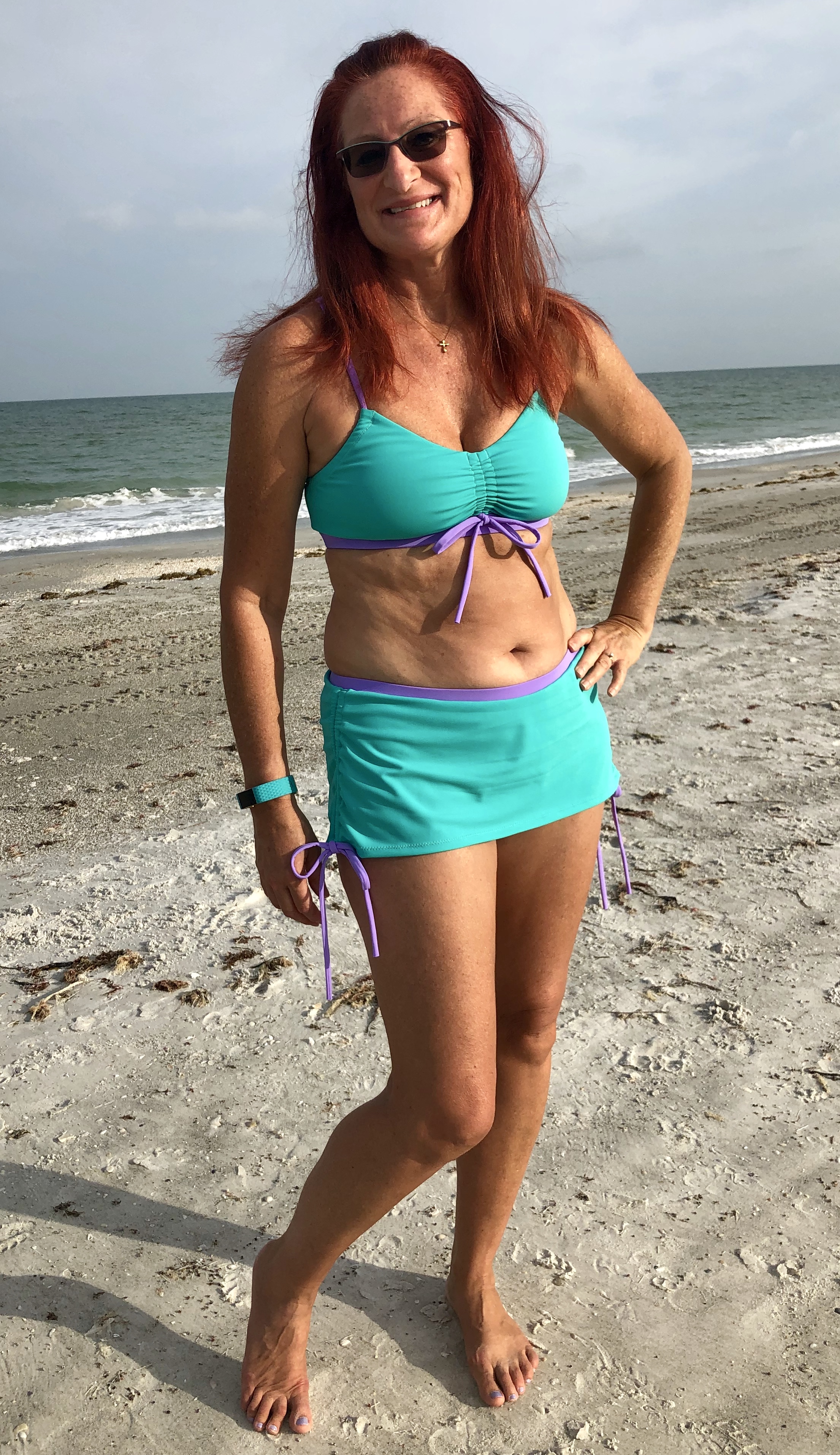
The 5 Out Of 4 Shenanigans Skort seemed like the perfect basis for a swim skirt.  Since the Escapade Top and Dress pattern has a drawstring front, I thought it would be fun to add drawstrings on the sides of the Shenanigans.  That way my booty could be covered while walking out to the beach, then I can shorten the skirt as much as I want while playing on the beach.

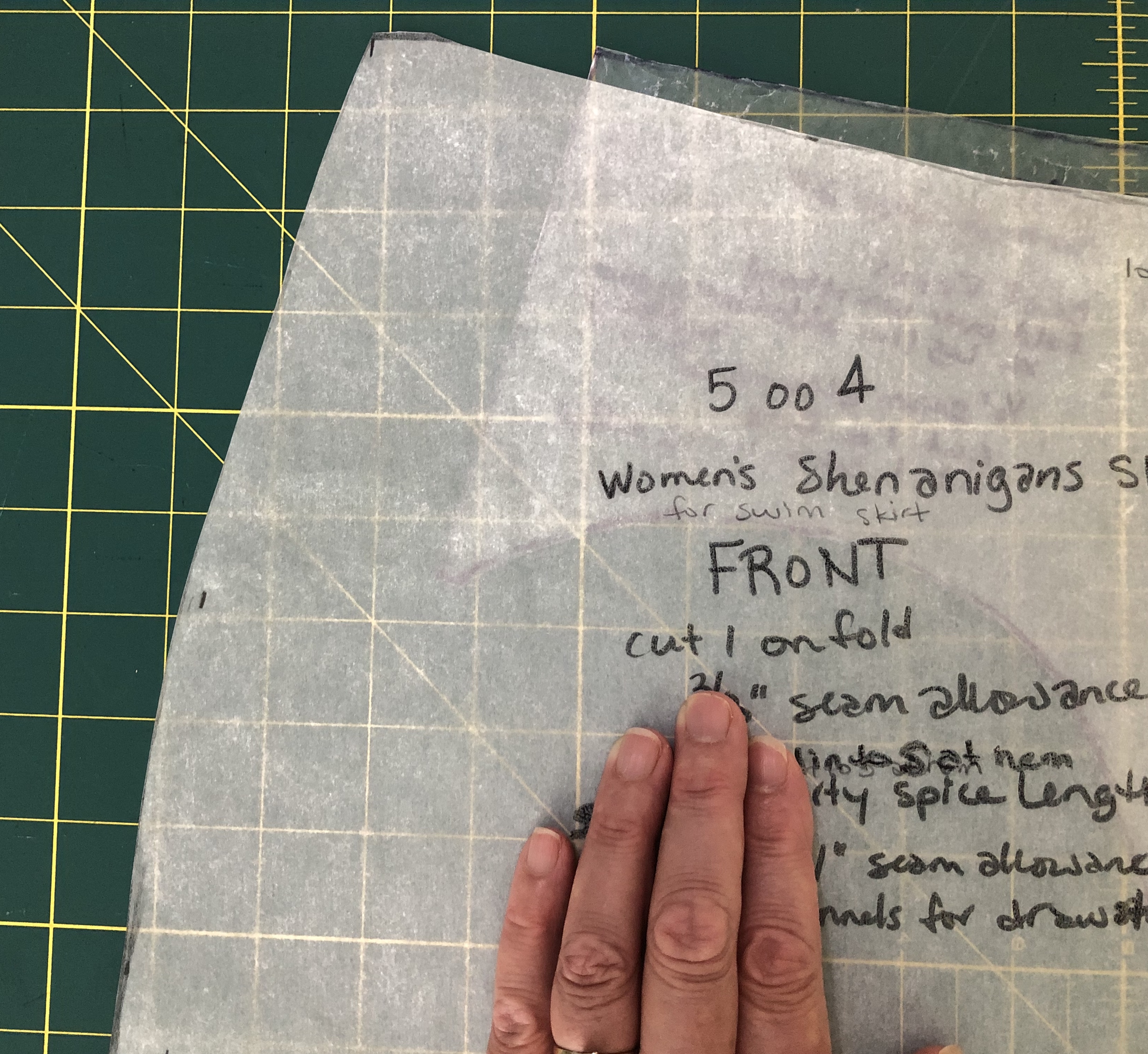
You can use the shorts included with the pattern, or your favorite briefs pattern for underneath.  If you use a different pattern for the briefs, make them first, without sewing the waistband.  Since my brief pattern has a lower rise, I traced the Sporty Spice length in my measured size for the skirt, and cut on the low rise line.  I didn’t want the sides to flare out too much, so I curved the side seam of the bottom of the skirt front in to the next smaller size.  When I lay the skirt front pattern on top of the brief pattern, you can see that the front waistline curve is the same, and that it’s a couple of inches wider than the brief.

Shen pattern FYou need that extra width to make your drawstring casing, and for your skirt to have a little bit of ease.  The skirt back should also match the curve of your briefs and have the same extra width.  Because I’m tall and have a booty, I added a little extra length to the center back of my skirt, tapering up to the side length.  It’s just enough to cover my bum when the skirt isn’t gathered up on the sides.  Sew the skirt front and back right sides together with a 1″ seam.  Make drawstrings by cutting four 1-1/2″ wide strips of fabric twice as long as the side seam of your skirt.  Fold each strip right sides together and using a stretch stitch sew with a 3/8″ seam allowance.  Use a safety pin or bodkin to turn the strips right side out.

Shen ties

Fold the skirt side seam allowances under 3/8″ and pin in place.  Stitch in place using a 1/2″ seam allowance to form the casings for your drawstrings.

Shen casingFold the bottom hem under 1/2″ and use a zig zig or other stretch stitch to hem.  On the right side of your skirt, make a small horizontal slit in each casing, about 3/8″ above the hem.  Thread a drawstring in each casing and tack the drawstring in place at the top.

Shen insert tiesAlign the center front, center back, and side seams of your brief and skirt and pin or clip in place.   Try it on to ensure everything feels comfortable and lines up nicely.  This is your opportunity to trim the rise a little bit if needed for better alignment.   Easing the skirt to fit the brief, baste them together.  Then sew on your waistband and elastic and you’ve got a new swim skirt!

I’ve hacked the 5oo4 Escapade into a workout top before, so I knew it would make a great bikini top.  I thought it would be cute to have a little cut-out in the back, although due to changes I made after basting the side seams and trying it on, the cut-out is smaller than I’d originally planned.  I used Tricot as the main and lining fabric, with a layer of powernet basted to my main fabric so that it will end up sandwiched between the layers.  (Following the pattern tutorial and basting it to the lining fabric will save you from having to snip through two layers when making your opening for the drawstring!)

Because adding an underbust band to accomplish the cut-out added length to the top, I ended up shortening and altering my front and back pattern pieces to show a little more skin.  I wanted the back bodice to end up 3″ high, so my pattern piece ended up 3-3/4″ high, with a 3/8″ seam allowance at the top and bottom.  (I did not have my strap drawstring go through the bodice back.  If you want yours to go all the way through, add 3/8″ to the height, since the top will be folded under 3/4″ to form the casing per the pattern tutorial.)  Simply fold up the bottom corner of your pattern piece along the center back fold line to get the triangular cut-out.

Esc cutout back

I cut the front bodice on the C/D cutline, because according to the measurement chart, that’s where I should cut.  I definitely need the extra length in the center front, but not so much at the sides.  So I ended up tapering my bodice height starting 3-1/2″ away from the center front angling up to the necessary side height of 4-1/8″ to match up to my bodice back.

Esc front angle

To make my straps, I followed this blogpost from Emerald Erin.  Basically, you cut your fabric four times the width of your elastic, (in this case 1-1/2″ wide).  Fold the straps in half right sides together.  Place the 3/8″ elastic flush with the cut edges, then zig-zag the elastic, right at the inner edge of the elastic.  Then turn your straps right side out.  Take your time when stitching on the elastic, and the straps will end up nice and flat.

Esc strap elasticSew the bodice front per the pattern tutorial until you reach the point where you are supposed to sew the front to the back at the side seams.  This is when I tacked my straps at the side seams, rather than having one long strap run through the entire top of the bodice.  Note: in the photo below, I had not yet made the tapered cut at the bottom sides of my top.

Esc bodice front

Lay the bodice backs right sides together, and stitch along the top using a 3/8″ seam allowance.  Stitch along the triangle cut-out.  Sew elastic to these seam allowances, keeping the elastic taut, but not pulling on it.  This will give these seams stability, and help keep the top of your suit in place.  It might seem intimidating to sew elastic, but it’s not as scary as you may think.  In fact, 5 Out Of 4 Patterns has several blog post videos showing how to add elastic in their Sewing School series.  In the photo below, you can see where I added the elastic.  Note: The bottom of the back hadn’t been trimmed to it’s shorter height yet.

Esc back elasticYou’ll need to poke one side of the back through the narrow space at center back to turn the back right sides out.  Then it’s time to sew your side seams.  I hate bulky side seams, and with the straps, and elastic, and layers of fabric and powernet the seam could get bulky!  So I do it a little differently than you may have seen.  Since the front strap casing is folded down at the top front, my normal method of sewing the main front to main back, and lining front to lining back, lining up the top seam isn’t going to work.

So I folded the back bodice over the front bodice, aligning the seam with the top edge of the front bodice, making sure that the main fabric front matched up with the main fabric back, and the two lining fabrics were together.  Stitch down 3/4″ until reaching the casing stitch line.  Then pin the main fabric front to the main fabric back and the lining front to the lining back and stitch each of the pinned seams together.

Esc side topEsc side pin

Then clip the seam allowances so that you can press them open.  I also clip the top corner at an angle to help reduce the bulk.  Repeat these steps on the other side seam.

Esc side clip

Cut a band the same width as your bikini top, adding in a seam allowance.  If you use 3/4″ elastic, the band should be 2-1/4″ high (twice the width of the elastic plus the seam allowance).  Sew the short ends of your band together, and aligning the seam with one of the side seams, place the band over the bodice right sides together.  Pin the band to the bodice bottom, then stitch.

Use pins to mark the center front and back, along with the quarter points.  Overlapping the ends of your elastic 1″, zig zag  together, then mark the quarter points with pins.  With the band still folded up on the bodice, pin the elastic to the seam allowance, aligning the quarter point pins.  The edge of the elastic should line up with the seamline, and hang down below the bikini top.  Then wrap the band down around the elastic and overlapping up to the inside and pin in place.  Stitch around the bodice bottom using a zig zag set at 2.5 stitch length and 3.0 stitch width.  At the triangle cut-out opening, stitch across the band at the top and trim away the excess fabric.

You can either tie the straps at the neck halter style, or have someone help you pin them in a comfortable spot and tack the straps in place, cutting off the excess strap length.  Now you have a cute new swimsuit!  I love being able to adjust the drawstrings to make the skirt as short or long, and the top as high or low as I want.

ShenEsc frontShenEsc down front

Because it’s boring and awkward to try and look sexy, I decided to have fun doing cartwheels instead.  🙂

ShenEsc cart frontShenEsc cart back

Being able to laugh at yourself and act silly keeps you young, right? 😉  There is no need to be afraid of sewing swimwear.  Have fun with it and mash and hack away!  It’s just another pattern and some colorful fabric, customized to fit YOU!  Does sewing your own swimwear give you super powers?  Maybe not.  But it does give you the confidence to see if you can still do cartwheels!  So sew away and then hit the pool, lake, or beach.


*This post may contain affiliate links.  This means that at no extra cost to you, I may receive a small commission if you purchase through my links.  As always, I only give my honest opinion.  After all, it is my blog, which represents me!  Thank you for reading and sharing my love of sewing, patterns, fabric, and pattern hacking. 😉


Stitch Upon A Time Water Faery Twist & Swim Top

Swimsuit And Workout Tank With Pockets Hack

Summer has arrived, so it’s about time for me to get started on sewing up some swimwear!  When the Stitch Upon A Time Water Faery swim patterns were released, I eyed them closely, but put off buying a pattern because I couldn’t decide which one to buy.  The Retro One Piece has a dress option, which I love the look of!  But I never wear one piece swimsuits.  I finally settled on the Twist & Swim Top because I knew I would wear the sexy yet modest top and could play around with the pattern.

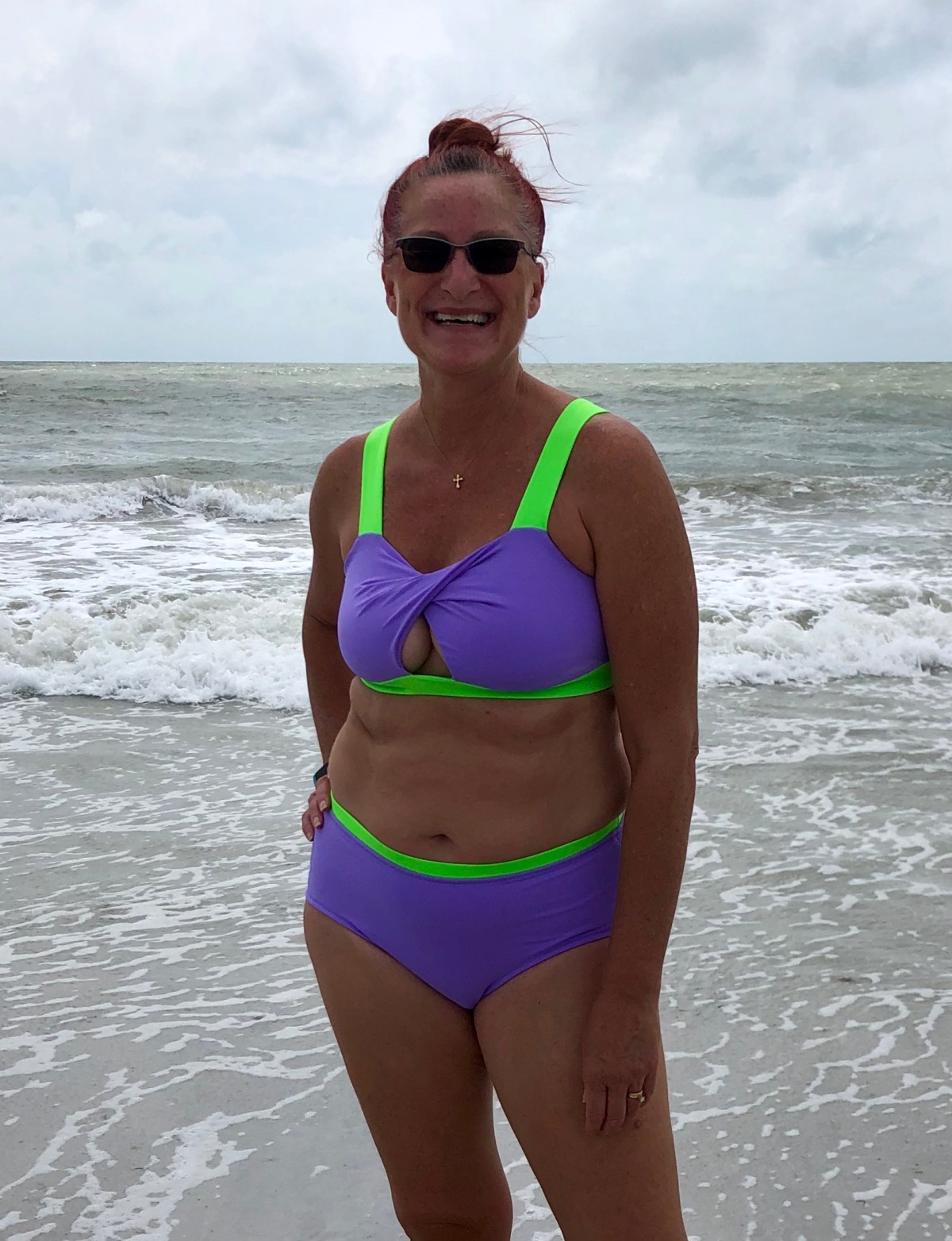
The swim top has the option of a plain or twisted front.  Since I was making the fun twisted front, I decided to follow the pattern exactly for my first version to see how it fit.  I made my measured size, using the green extended cut line for the bodice, since I have the noted 4.5″+ difference between bust and under bust, and followed the tutorial.  As I’ve come to expect from Stitch Upon A Time Patterns, the tutorial is well written, with lots of photos to help you visualize each step.  The elastic measurements are perfect, exactly the right length for support and comfort.

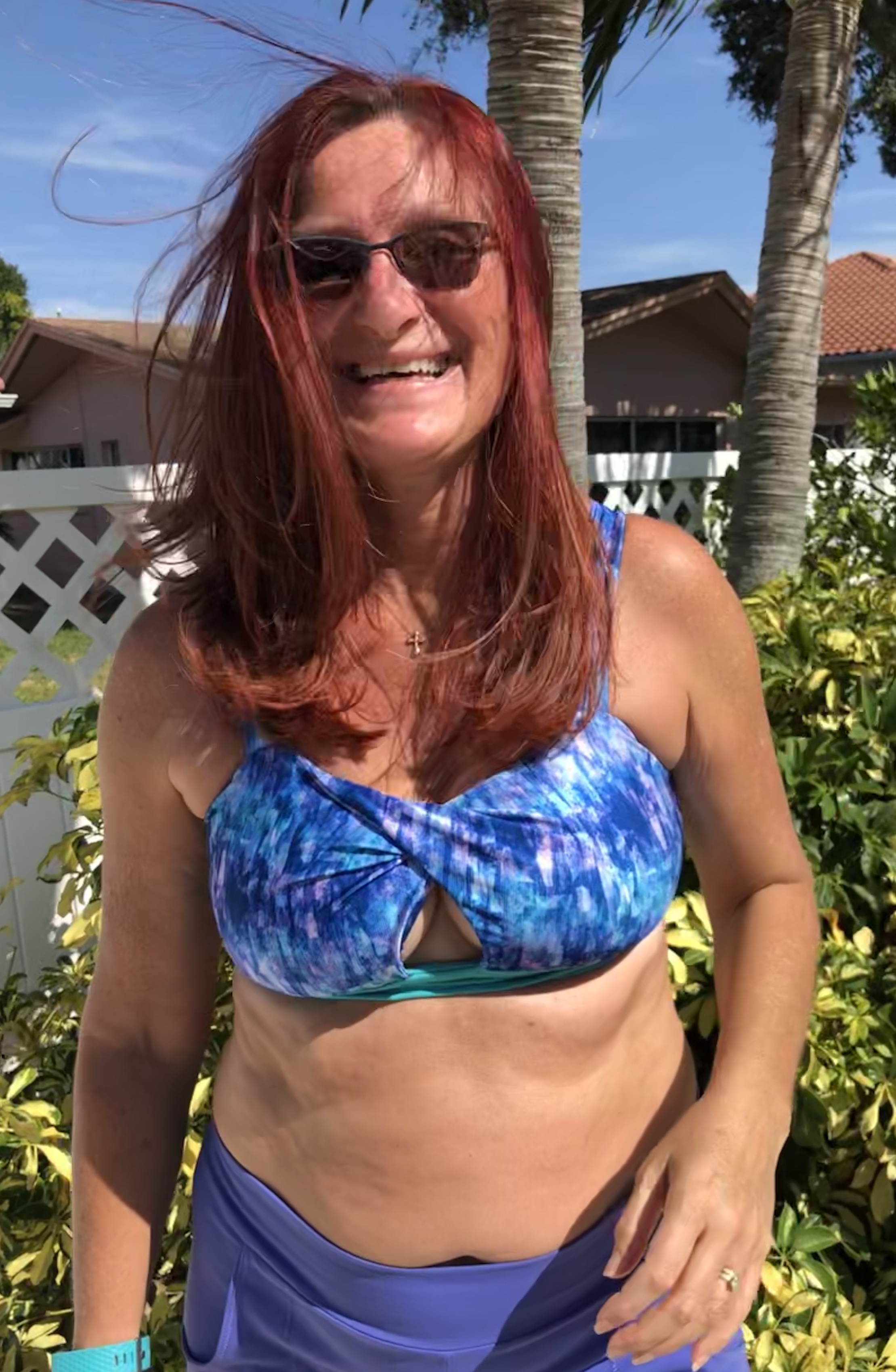
I had some swim fabric from JoAnn’s in my stash that was left over from a project I made last year.  There wasn’t quite enough fabric to make the straps the recommended width, so I made them as wide as possible, but had to omit the gathering on the straps.  As experience has taught me when making bras or tops that need support, I used powernet in the front and back bodice pieces, as well as the straps.  The resulting top is cute, and works great for walks on the beach, but had one small problem.

Knowing that my shoulder to bust apex measurement is longer than average, I should have taken that into account and lengthened the straps.  Since the straps are too short for my body, the top cuts into my armpits a bit.  Because the top is held firmly in place under the bust in front, the back is pulled forward and up, which keeps the back from laying properly.  Fortunately, it’s a simple fix.
TT p frontTT p back

I just added an inch to the strap length before cutting out my next version.  This time I used Tricot from Phee Fabrics.  I think the hardest part was narrowing down which colors to use, since it’s available in so many pretty colors!  Because I liked the way the narrower straps turned out, I decided to cut them at 3.5″ wide again.  I also decided to play around with the bottom band construction, to use one piece of 1.25″ wide elastic in the band, rather than elastic at the top and bottom seams of the band.

I made the top as directed until I got to the band.  I sewed the bands right sides together, along the bottom edge.  I marked the band at the midpoint, then marked the quarter point by folding one end over and 1/2″ past the center pin, to account for the 1/2″ seam allowance.  I also placed pins on either side of my center front pin to mark the V placement.  I stitched between the two outer pins, using a 3/8″ seam allowance.  (Note: I used a 3/8″ seam allowance on the top and bottom seams of my band so that I could use  1.25″ sport elastic.  You can also stick to the 1/2″ seam allowance and use 1″ wide elastic.)
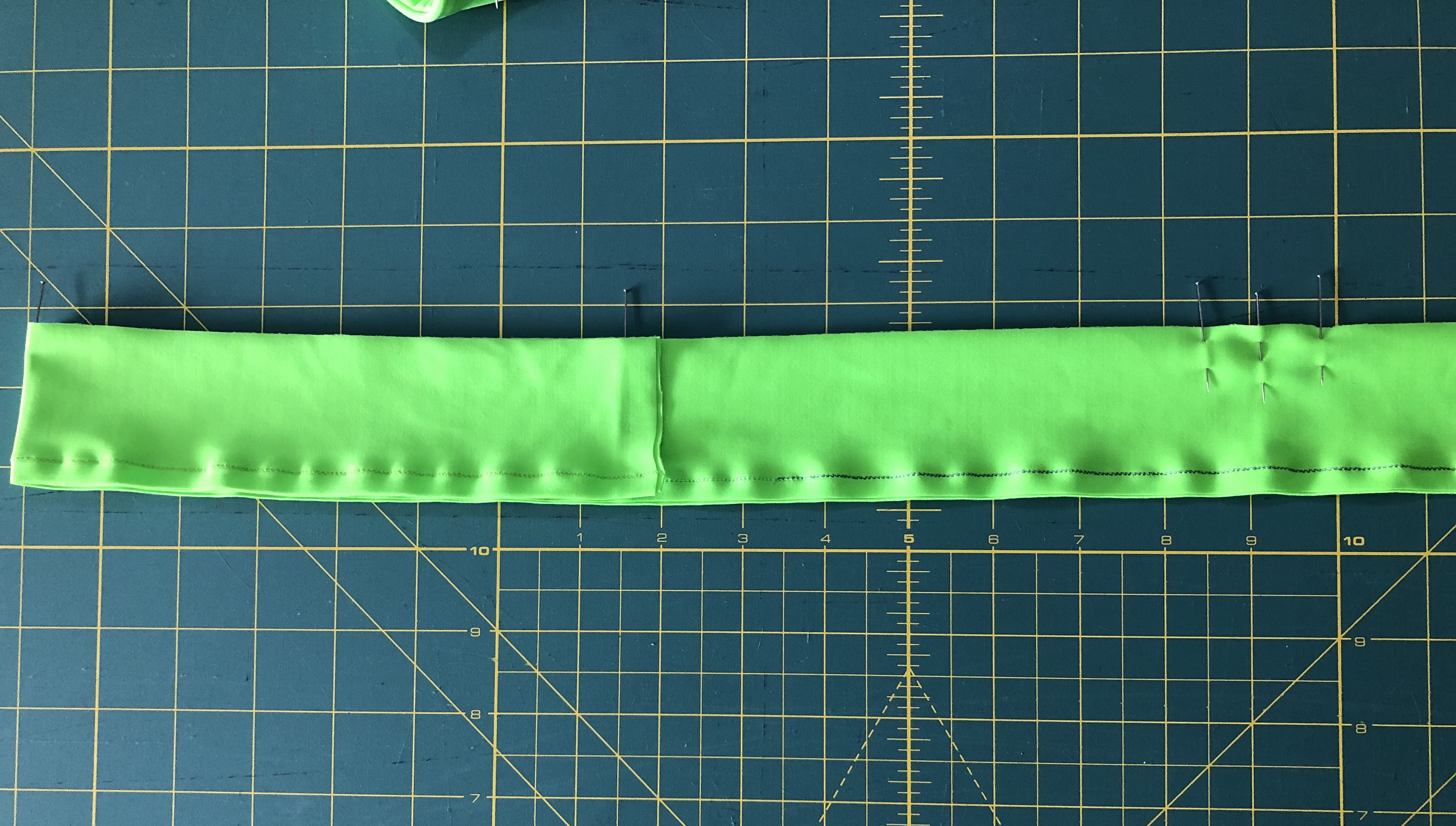
TT band pin

Then I carefully cut down to, but not through the stitching at both ends of this V stitching, and turned the band right sides out.  Because I would need an opening to thread my elastic through the band after I attached it to the bodice, I had to carefully plan out stitching the short ends together.  Placing the short ends right sides together, I stitched from one side for 1/2″.  Then I stitched from the other side to just past the bottom seam.  This left me enough opening to thread my elastic through, but ensured that the side seam was completely sewn on the outer side.

TT band end

I turned the band right side out and basted the long edges together.  When sewing the band and bodice together, make sure that the opening for the elastic ends up on the inside of your top!

TT band

Then I matched up the center front, center back, and the quarter points of the band and bodice, right sides together.  Keep in mind that the quarter points may not exactly line up with the side seams, especially when you use the extended bodice cut lines.  Stitch the band and bodice together and insert the elastic.  Use the recommended underbust elastic length, and overlap and stitch the ends of the elastic together.  You can stitch the opening on the inside of the band closed if you want, but since tricot doesn’t fray, I didn’t bother.

Yay!  I had a perfectly fitting swim top!  Now for some bottoms.  I’ve owned the Scrundlewear 2.0 pattern for months, but had never made a pair.  Since everybody seems to love Scrundies, I figured they would make great swim bottoms.  I cut on the foldover waistband line, tapering in at the top following the side seam cutline to give me a high waisted look.  The front height was great, but the back was too high.  I tapered from 1-5/8″ down at center back over to the height of the front side seam.

The legs felt too low, so while wearing the bottom, I carefully pinned where I wanted the leg line to end.  I added in the 3/8″ seam allowance I was going to use for turning my swim elastic under, marked my pattern, and cut off the excess fabric.  The photo below shows how much fabric I cut off compared to my new higher leg cut line.

Scrundies leg

I also cut a front and back out of swim lining.  And as you can see, the swim lining from Phee Fabrics is nothing like the stuff I’ve bought from JoAnn’s.  It’s soft and lays smoothly.  The edges don’t curl up, and it’s super easy to sew with!  I also cut a front piece out of powernet.  Hello tummy control!  Not only is powernet great for bras and swim tops, it works fabulously to smooth out the tummy and hold everything in place.  Baste the powernet to the fabric front, and sew the front and back together at the side and bottom seams.  Sew the swim lining front and back together as well.  Place the swim lining layer inside the fabric layer wrong sides together, and baste at the leg and waist openings. Using a zig zag stitch, sew the elastic on the inside of the leg openings with the elastic lined up with the edge of the fabric.  Turn the fabric under and top stitch using a zig zag with the stitch length set to 2.5, and the stitch width set to 3.0.  This will give you a professional, even finish.

I used a strip of 2″ wide fabric to make my waistband.  I sewed the two short ends right sides together, then layered the swim bottoms and waistband, right sides together, with 3/4″ knit elastic on top.  I stitched through all three layers, using a 1/4″ seam allowance.  This was easier than anticipated, since all three layers were the same length.  I didn’t have to worry about stretching or pulling.  I flipped the waistband open, and carefully folded the waistband fabric around to the inside and pinned it in place.  Using the same zig zag settings, I topstitched the fabric in place just below the waistband.

scrundiesMy Scrundie swim bottoms were a success, and I have a cute new swimsuit!  I love that it’s modest enough, while still being sexy.  My husband definitely approves of my creation!

TT suit frontTT suit back

Since I seem to think that every bra or swim top can be made into a workout top, read the 5oo4 Escapade Experiment, Hack At It, and the GreenStyle Power Sports Bra Workout Top Hack as proof of my workout top obsession! 🙂  I decided to make the Water Faery Twist Top into a workout top too.  I made the Twist & Swim Top out of Tricot, per directions (with the narrower and longer straps out of Supplex) through to basting the completed bodice layers together along the bottom.  Then I got to work on the tank portion.  Supplex is my absolute favorite fabric for workout wear, so that’s what I used for the tank.  The pattern includes a tankini option, but since I was making a workout top rather than a swim top, I didn’t want the negative ease that the swim top has (to keep the tank from floating up while in the water).

If you have a well fitting tank pattern, you can use that, or you can just trace the tankini piece wider, with a gentle slope down to the bottom, rather than with the inwardly shaped waist curve of the original.  I thought it would be fun to color block a stripe down the center back, and add some pockets to the front for practicality and a pop of color.  I cut a strip of tricot 4.5″ wide by the length of the center back tank piece.  Then I folded my tank pattern piece in 1.5″ at the center back.  That way, when I cut out the two back halves (not on the fold), I would be missing 3″ from the center back.  Sewing the strip to each of the back pieces right sides together, with a 3/8″ seam allowance meant that the color-blocked back ended up the same size as my tank pattern piece.
TT wo back stripeI cut out two 4-3/4″ x 7-1/2″ rectangles for my front pockets.  I wanted them to be hidden seam pockets like the one I did on the GreenStyle Jillian Tank.  I laid the pocket pieces on the tank front and marked the 3/8″ seam line at the top and bottom of the pocket with a pin.  I flipped the pocket toward the center, and with right sides together, pinned the pocket to the tank, then stitched 3/8″ in from the pocket edge.
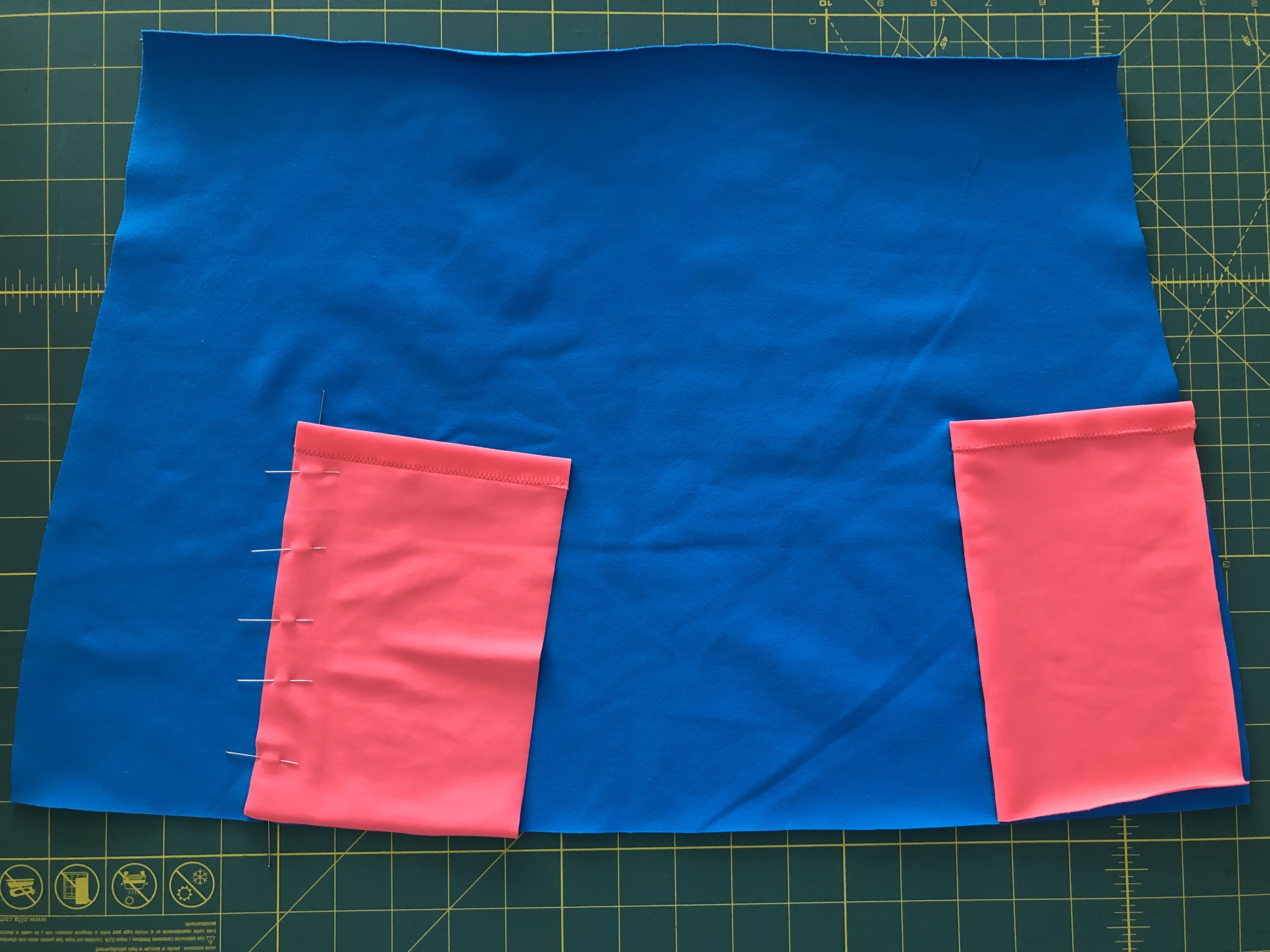
TT wo pocket pinI flipped the pockets back to the outside edges after stitching and basted them in place.

TT wo pockets.jpgAt this point, I should have been able to sew the tank front and back together, and sewn the bodice to the tank.  But I had made a couple of rookie errors. 😦  The first was that I had made the tank too wide at the top.  This was easily remedied by angling the tank in at the top so that it was the same width as the bodice (and the original tankini pattern piece.)  The second error was not considering the fact that I am tall, and should have added an inch to the length of the tank.  The problem was remedied easily enough by adding a band.  I cut out the band pieces, and sewed them onto the bodice per the pattern tutorial, except using a 3/8″ seam allowance, and spacing my bodice front center V only 1/2″ apart.  I don’t want to show too much skin at yoga class!

Because the 1.25″ wide sport elastic had worked so well on my swim top, I decided to use it for my workout top as well.  With the bands still folded up on the bodice, I used pins to mark the quarter points on the top, and a pencil to mark the quarter points on the elastic, and stretching to fit, stitched the elastic to the seam allowance.  I had the elastic lined up with the stitching line, and hanging down below the bodice.  Then I folded the inner band down, and stitched the elastic to the band.

TT wo elasticI brought the outer band down and basted it in place before attaching the tank portion.  I sewed on the tank, hemmed the bottom, and I’ve got a cute new workout top!
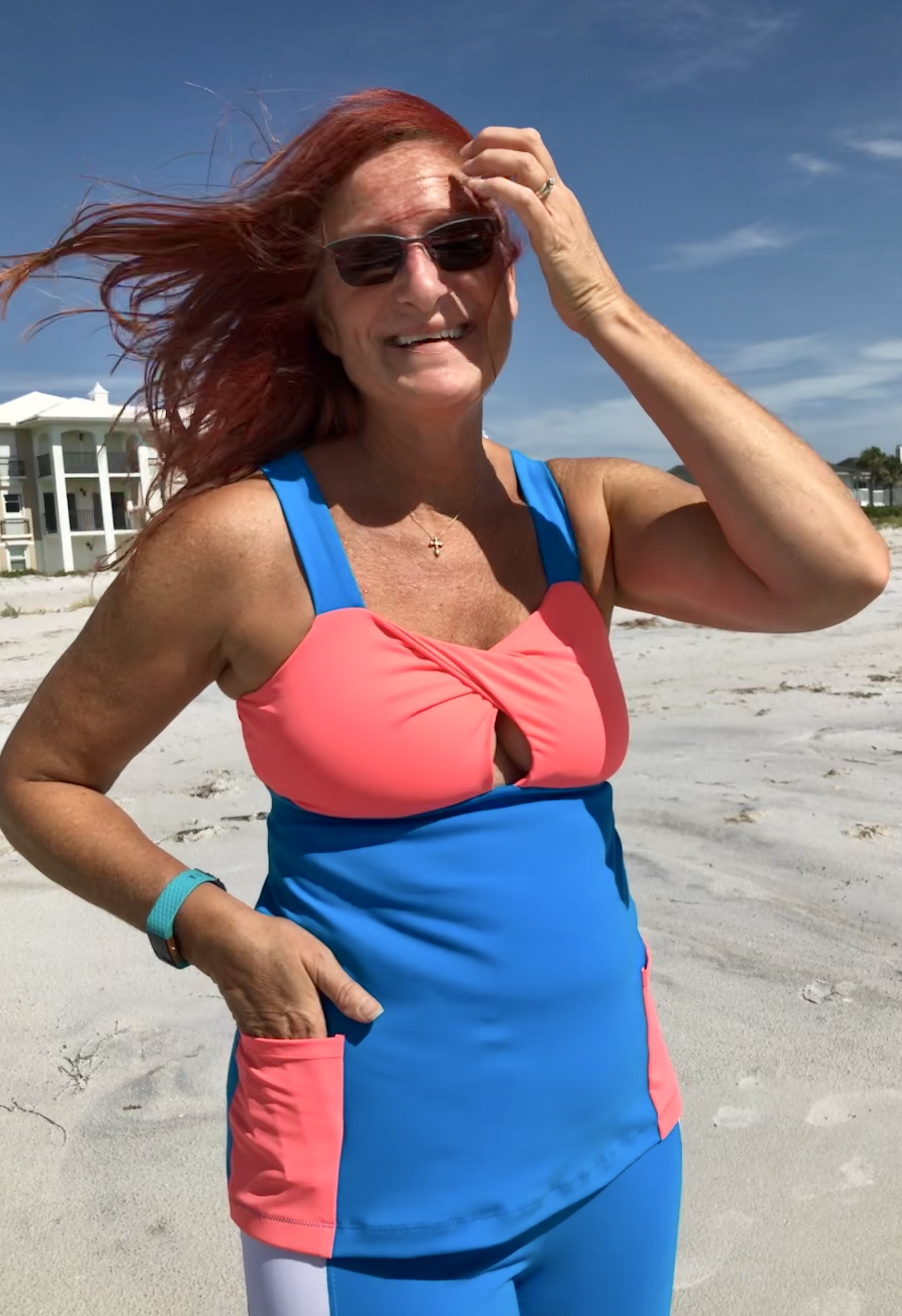
TT wo frontTT wo back

Everything stayed perfectly in place during a sweaty Vinyassa Flow class that included inversions.  Everyone in the lobby when I walked into the yoga studio commented on my top.  None of them could believe that I made it, including the instructor, who knows how to sew.  I went for a walk later in the evening, and the pockets worked great to hold my phone and house key.  It looks like I’ve got a great new swimwear and workout top pattern to add into my rotation!


*This post may contain affiliate links.  This means that at no extra cost to you, I may receive a small commission if you purchase through my links.  As always, I only give my honest opinion.  After all, it is my blog, which represents me!  Thank you for reading and sharing my love of sewing, patterns, fabric, and pattern hacking. 😉