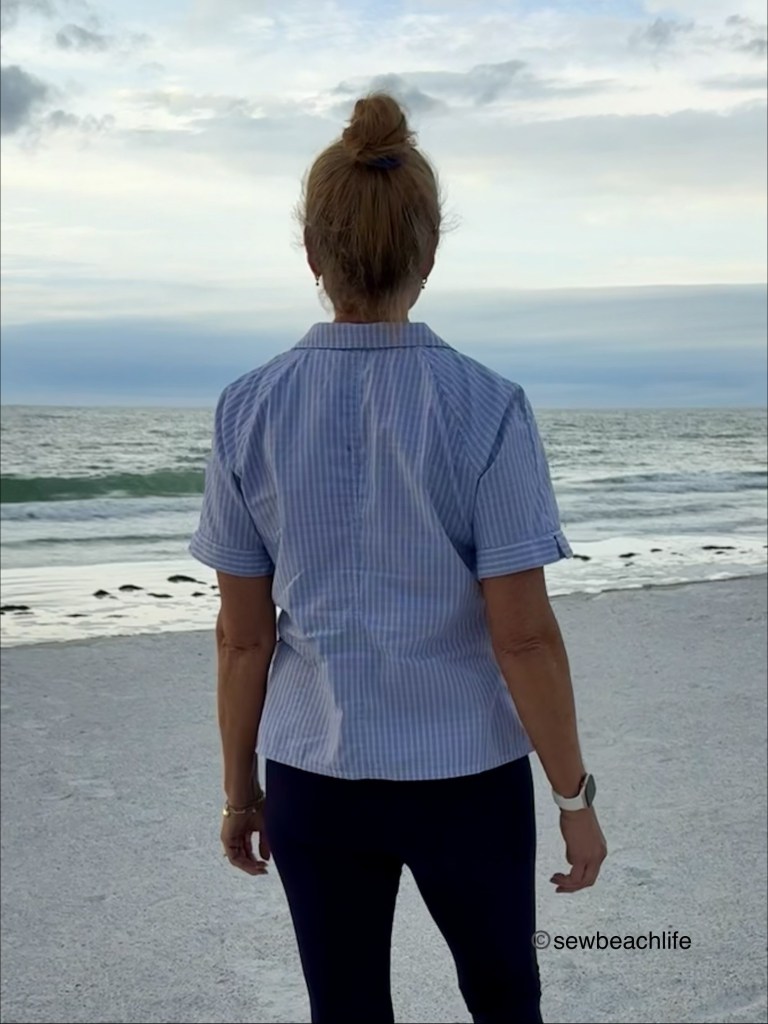
Delphi Sports Bra

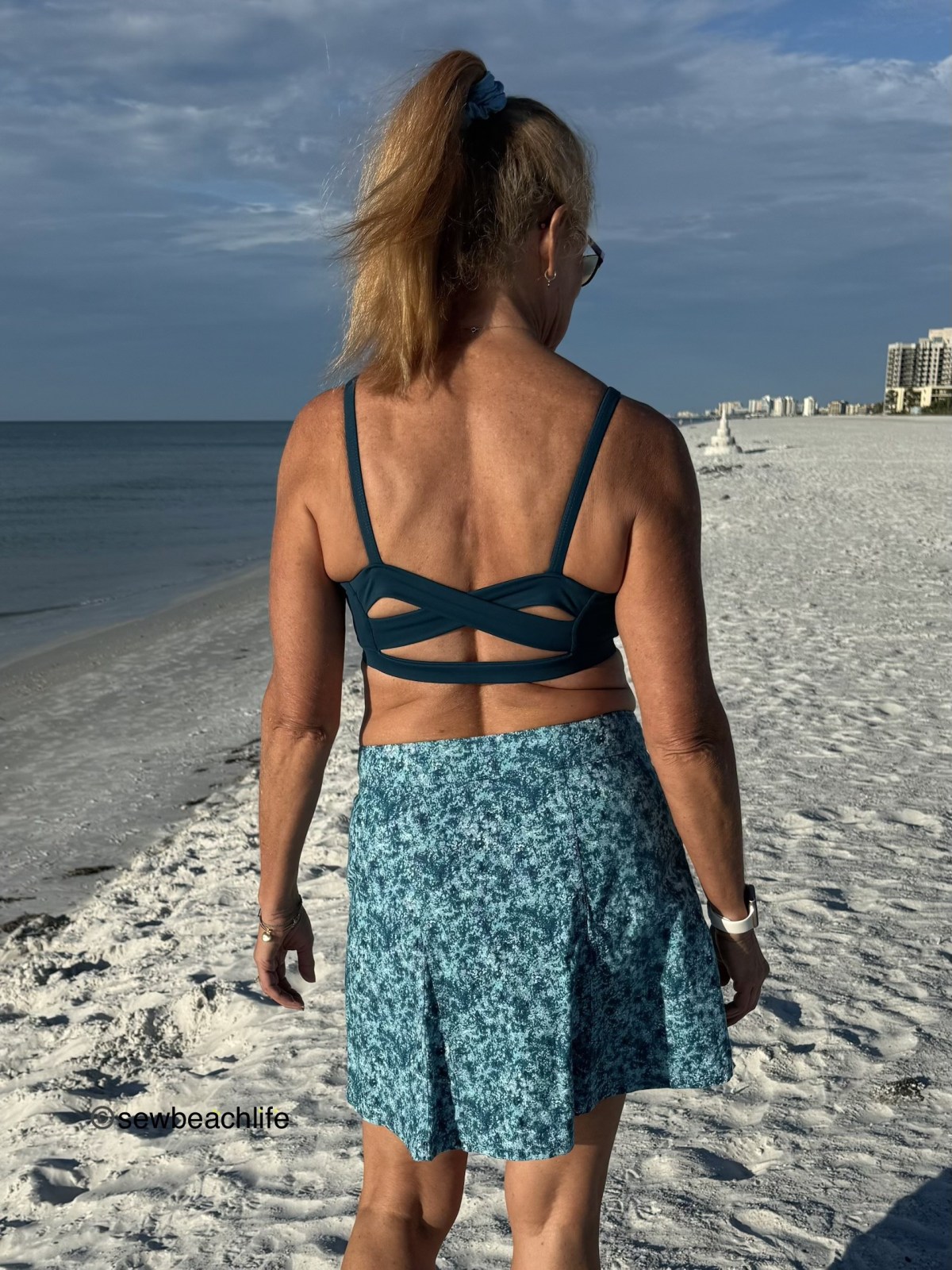
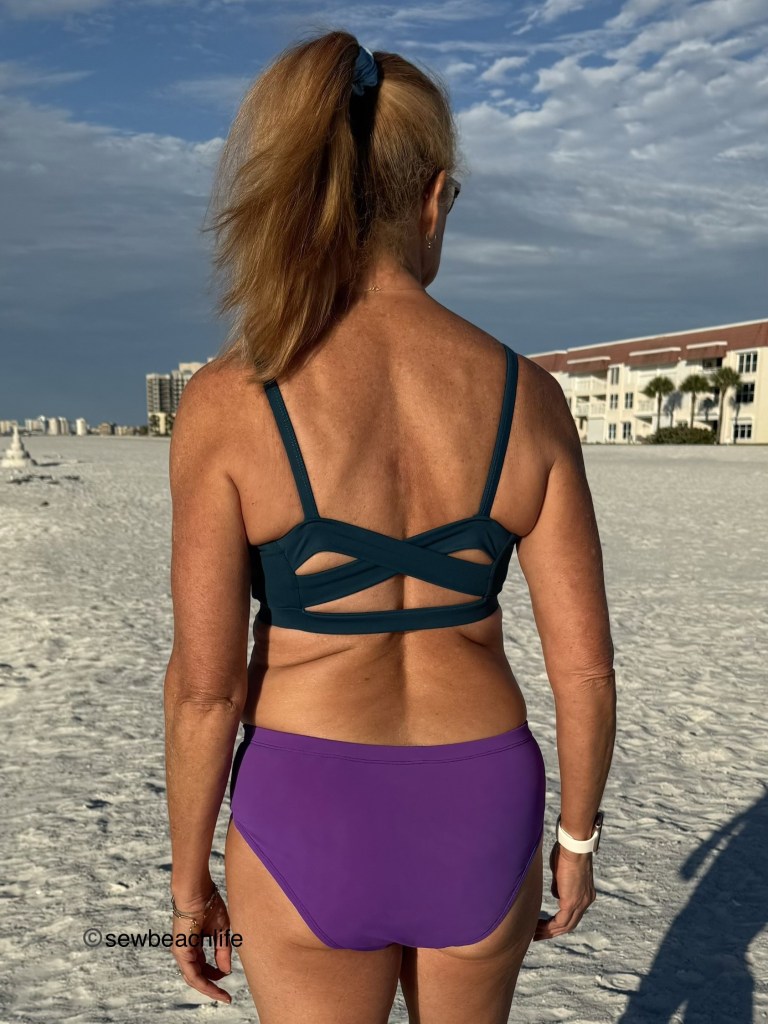
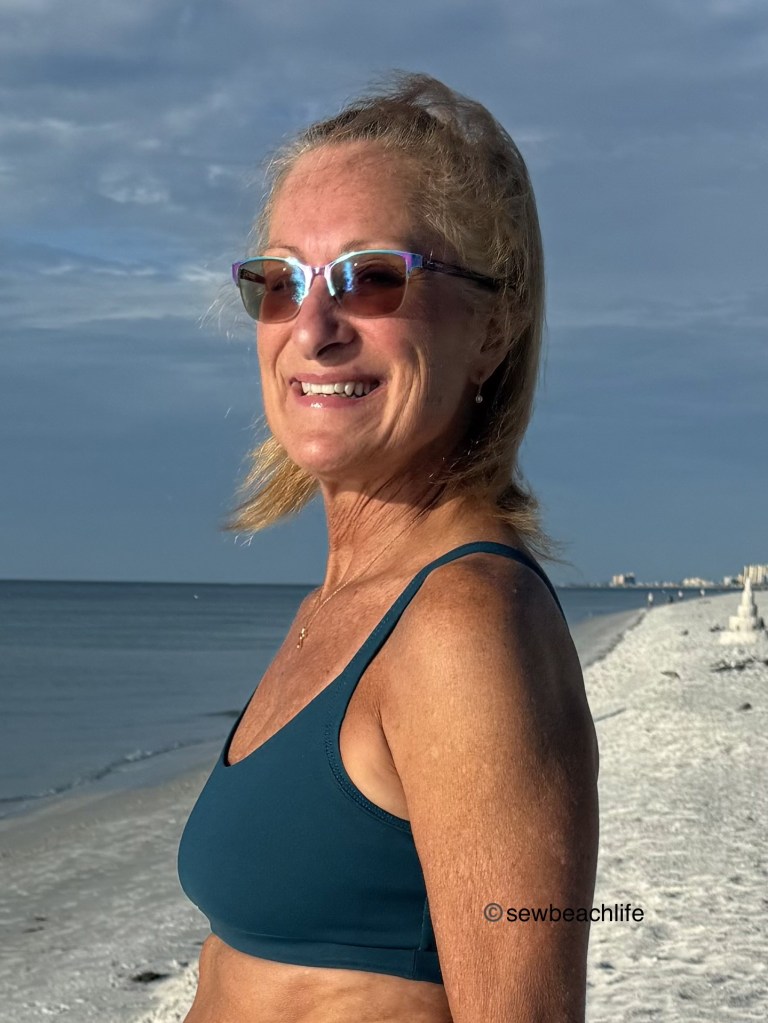
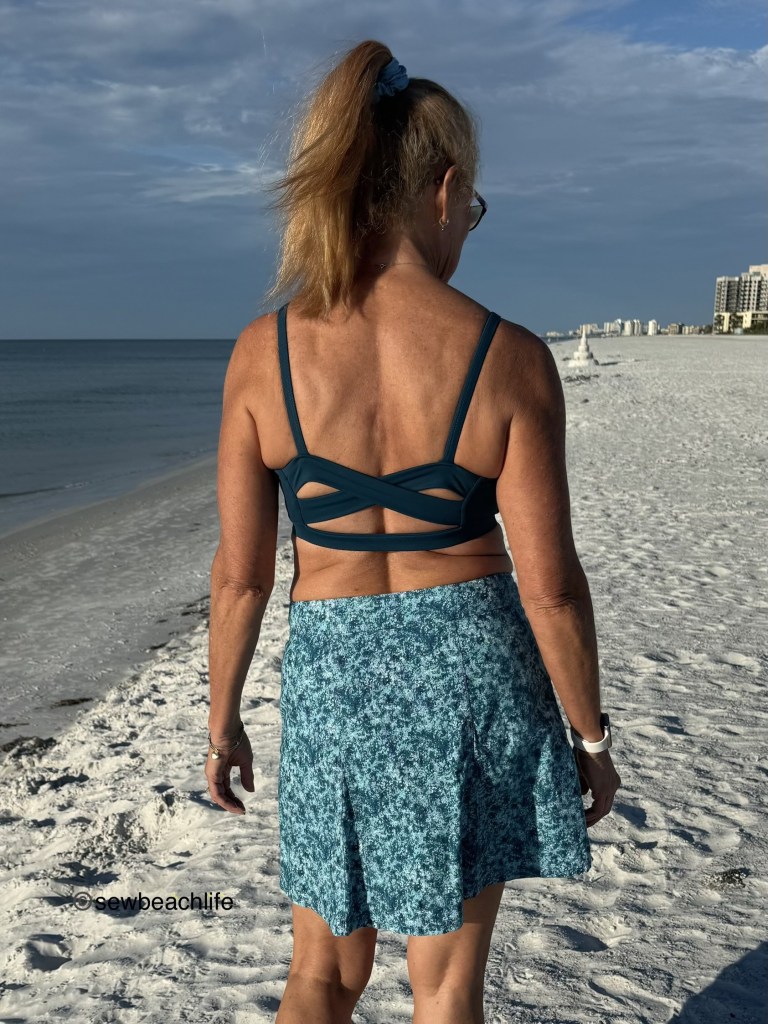
Who can resist a fun new sports bra? Especially with options for a super cute infinity, twist, or simple back design. I am all over trying new sports bra patterns, and the infinity strap design is just so unique and fun.

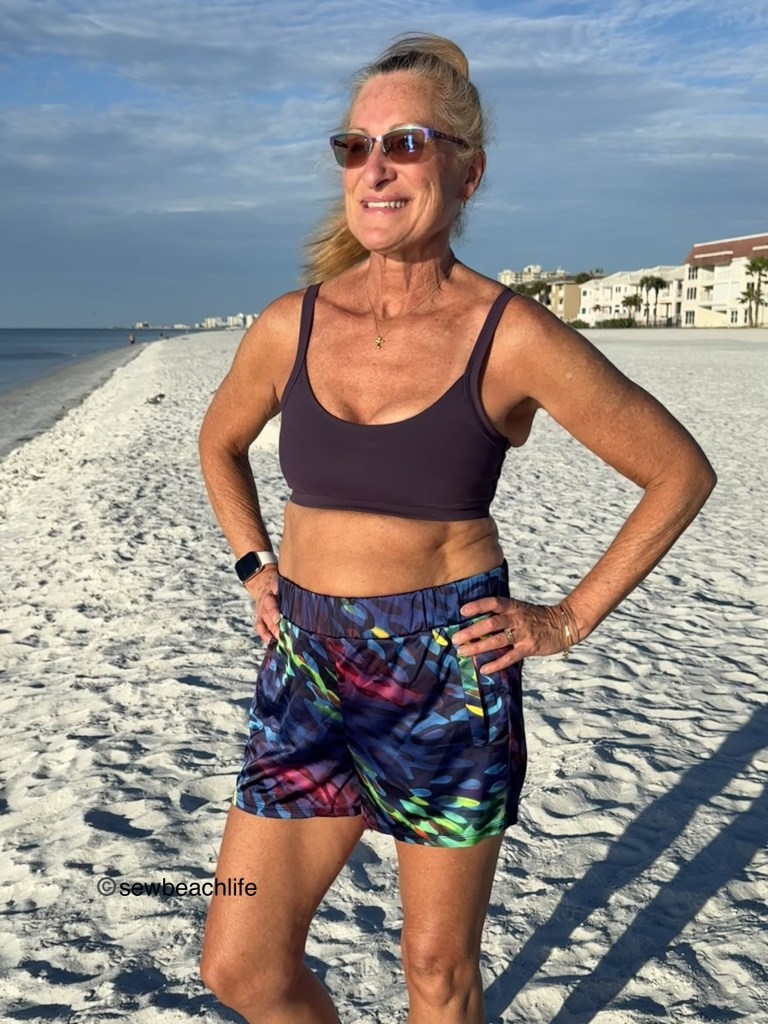
I don’t limit myself when it comes to wearing sports bras. They get worn to the gym, as a swim top at the beach and in the pool, and for everyday wear. They also get worn with shorts when I skate around my neighborhood, because that is #floridalife. πŸ™‚

The Delphi Sports Bra pattern calls for athletic fabric. I used nylon/spandex Supplex and nylon/spandex Align 2 for my two bras. You could add powernet if you wanted, but I found that the compression and firmer rebound of Supplex and Align 2 were adequate for me. (For reference, I wear and buy a size 32D bra at Soma.)

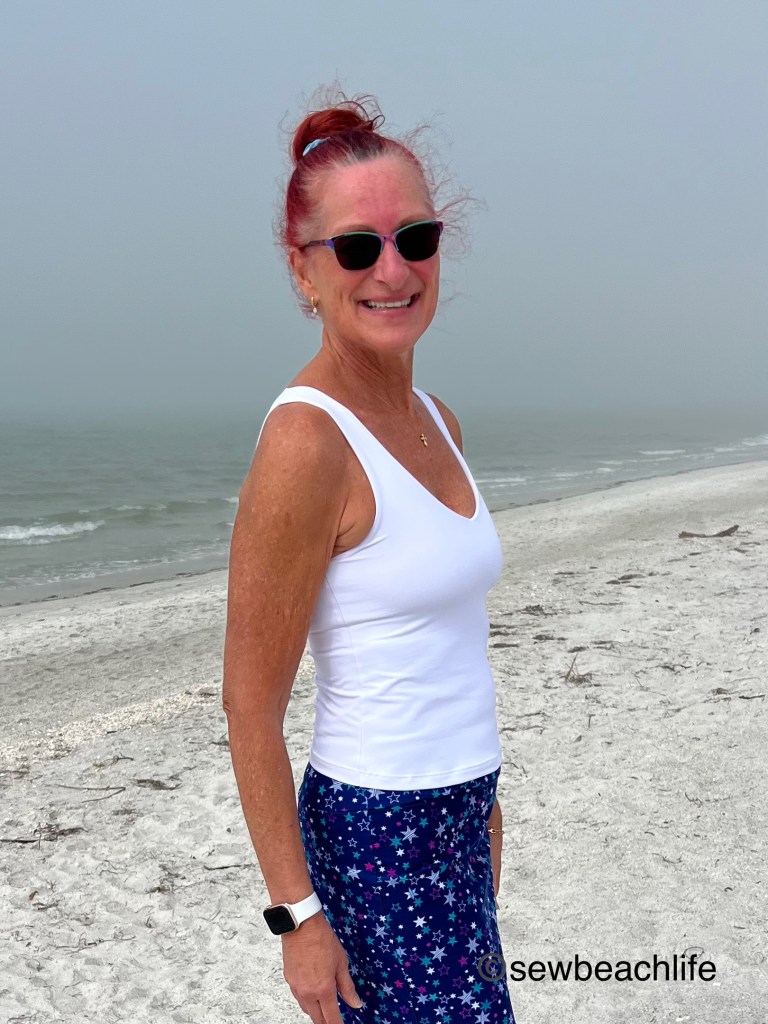
I wore one of my freshly made bras all day yesterday and it was super comfortable. The straps stay in place, and the neckline depth is perfect. It’s high enough to be supportive, but low enough to not show under a scoop or V-neck top.

You can use 3/8″ or 1/2″ elastic in the straps. Although the pattern calls for 1-1/2″ or 2″ elastic in the band, because I am rather short-waisted (which seems weird for a tall girl, right?) I chose to use 1″ elastic in my band. Of course that meant adjusting my band height to 2-7/8″, but I love being able to personalize a pattern to fit my body. That’s one of the reasons that I sew my own clothes.

Greenstyle has once again nailed it on a fun, great-fitting, well-designed pattern with the Delphi Sports Bra. It doesn’t take a huge amount of fabric, and can be worn with shorts, skirts, leggings, and under your favorite top. Sizing ranges from 32″ to 61″ at the full bust. If you need it, there are 2″ and 4″ full bust adjustment pattern pieces for the front.

The details:

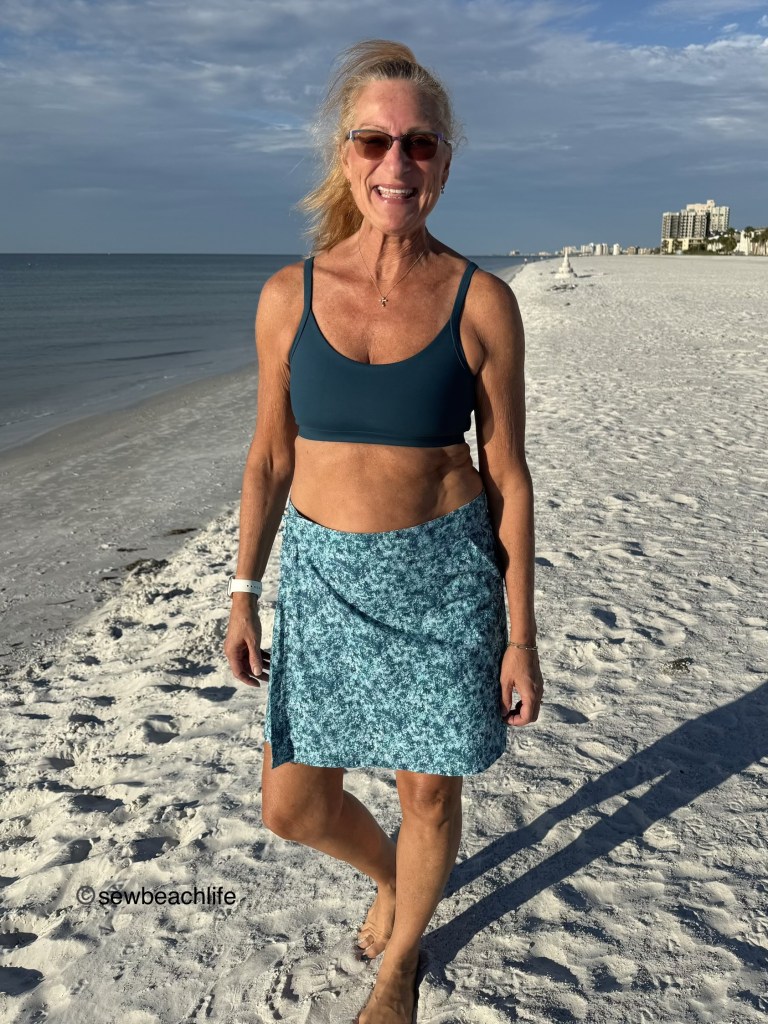
The Delphi Sports Bra pattern is one of the many awesome patterns by Greenstyle. I had some plum Supplex from Phee Fabrics in my stash for the first Delphi Bra I made. The teal Align 2 for my second bra was purchased from Greenstyle a while back. Although this particular color is no longer available, they have lots of pretty colors in stock. I also recommend the Signature fabric line, which is another high quality nylon/spandex athletic fabric.

For reference, I made a size C1 with the plum supplex. For the second bra, I again used size C1, but cut the front in size B2 width (keeping the C1 length), which feels more comfortable for my shoulder width and at the armscye. I dislike anything being too close in the armscye, and this combination works perfectly for me.

I can’t remember which pattern I used for the swim bottoms, but the Delphi Sports Bra is also shown worn with the Windward Shorts and Tidal Skirt, blogged here and here.

I purchased my 1/2″ and 1″ knit elastic at Wawak, along with the Maxi-Lock serger thread. There are steps in the pattern that I highly recommend using your sewing machine to stitch, such as the side seams, and attaching the back infinity straps. It’s also important to trim those seams to reduce bulk and help them lay more smoothly when turned out to the right side. I drive a Bernina sewing machine and LOVE it! Other seams and the cover-stitching on the straps were done on my Babylock Triumph, which I also love.

I cannot stress strongly enough how much easier and more fun it is to sew when you use high quality patterns, fabrics, and machines. It isn’t that you can’t sew with a cheaper machine, because I sewed for decades on much, much less expensive machines. But once I had saved enough money to purchase my current machines, I really feel like the quality of my work, and ease of sewing (due to less frustration with machine capacity, bobbin struggles, lack of foot height, and motor strength) has greatly improved.

Thank you for reading and sharing my love of patterns, sewing, fabric, and cute sports bras! The links to GreenStyle may be affiliate links (if I did them properly!) which means that I may earn a few pennies if you use my links without it costing you anything extra. Since this is my blog and represents me, I always give my honest opinion about any patterns, fabric, or supplies that I talk about. I do like knowing whether the time I spend writing posts actually interests people enough that they take a look at the patterns I review, but I write for me. It’s one more creative pursuit that I hope is helpful or interesting to others. I write to share my love of sewing and to encourage others to love it as much as I do! ❀

Trying Something New – Sewing A Sydney Bag

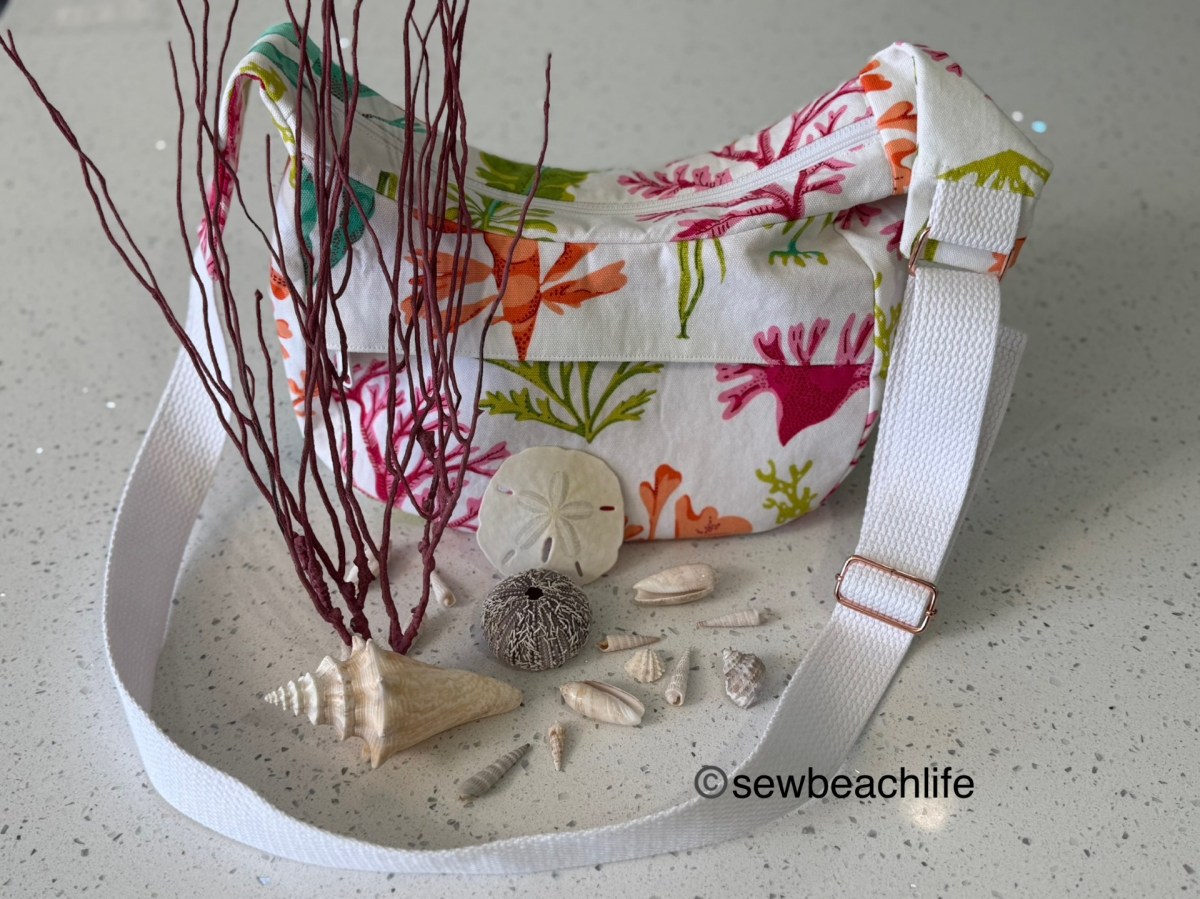
I like to challenge myself once in a while by making something totally different than what I usually sew. Greenstyle was testing the new Sydney Bag, so I signed up to test it. I’ve never made a “real” bag before. I’ve made a few lined tote bags, just making up my own patterns. But they were simple rectangles with pockets. Here was a real pattern with zippers, inner and outer pockets, and an adjustable strap.

I felt a bit intimidated, simply because it was so completely different than what I was familiar with. Don’t let the number of pattern pieces scare you. It just seems like a lot because there are outer main fabric, inner lining, and interfacing pieces.

No matter how many layers there were, I knew that my Bernina would have no problem sewing them all. It is truly the most fabulous sewing machine I have ever owned. If you’re ready to move beyond a basic model sewing machine, I recommend going to your local Bernina dealer and checking them out. It’s like driving a luxury car, once you’ve driven one, you can never go back to a “basic” model! πŸ˜‰

The Sydney Bag tutorial walks you through every step whether you’re a beginner bag-maker like me, or you’ve made dozens of bags. There are two sizes: small and medium, I chose small for both of my bags, but I’m here to tell you that they are not tiny. They’re just the perfect size to hold all the things.

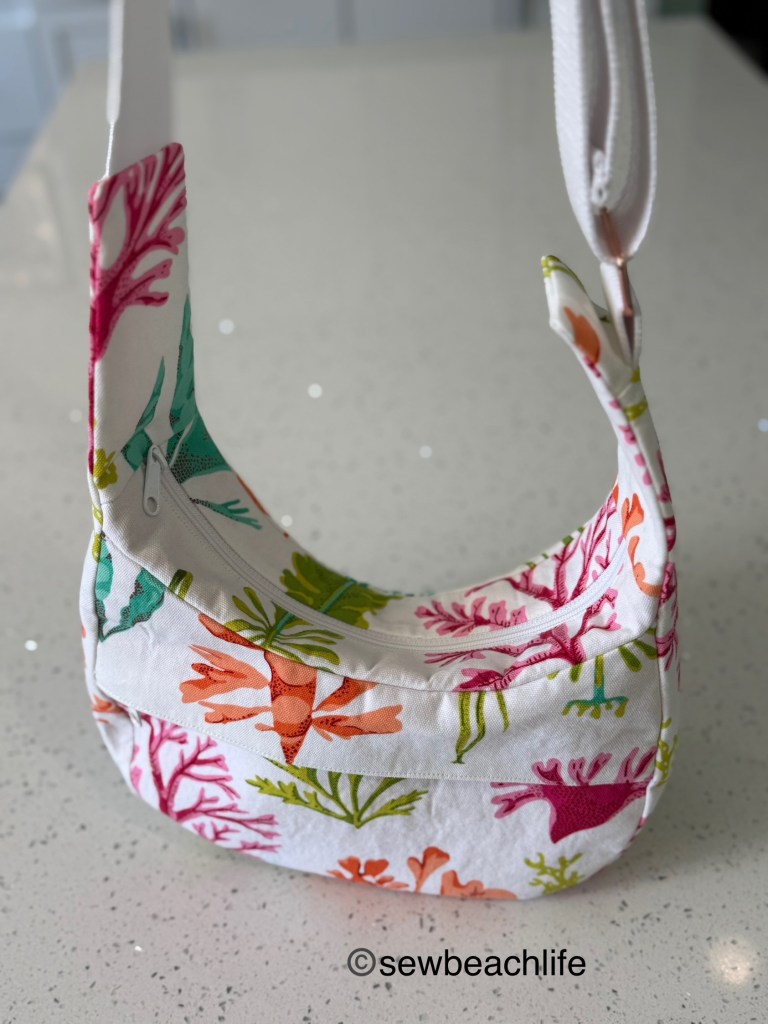
The shape is fun, and gives you so much space for all the things.

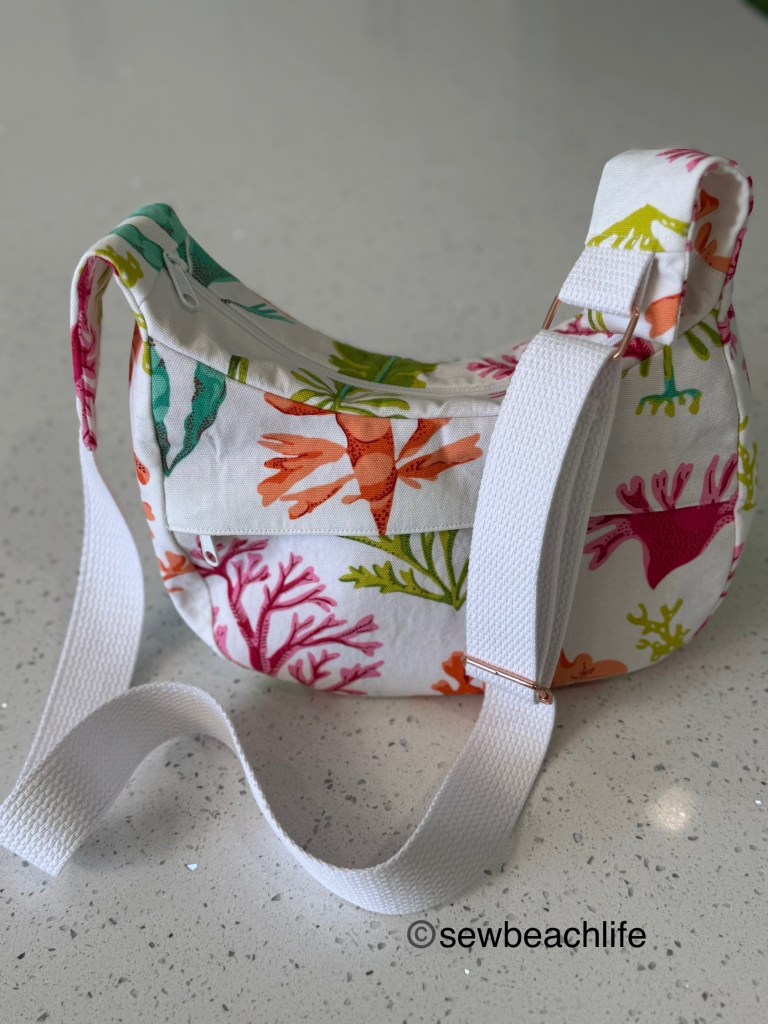
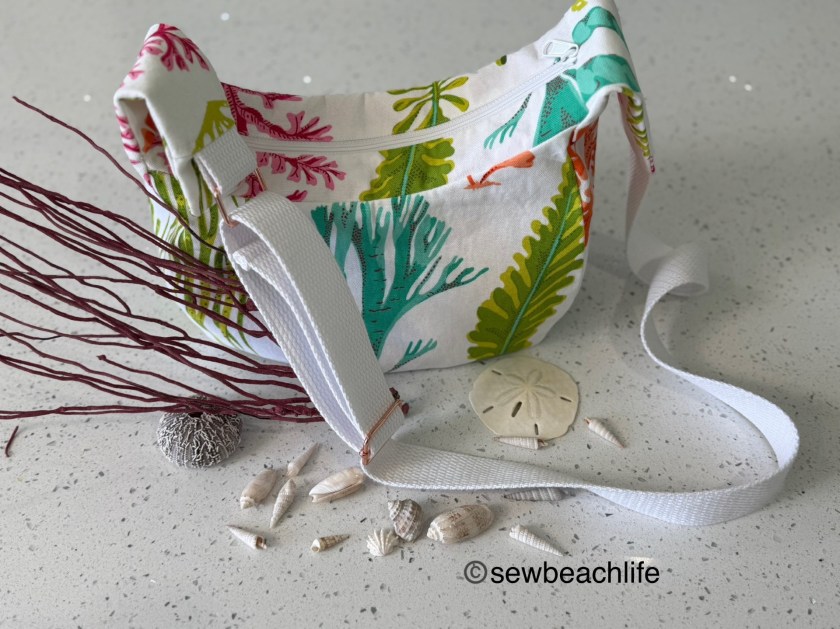
I used upholstery fabric for the main outer pieces of both my Sydney Bags, and quilting cotton for the lining. The pattern calls for 1-1/2″ wide webbing for the strap. You can get polypropelene webbing in all manner of colors, but I don’t care for the “plastic like” feel of of polypropelene, so I used cotton webbing. I also ordered nylon webbing in black for future bags. It feels similar to the cotton webbing.

Something to keep in mind about cotton and nylon webbing is that you will need to turn the raw edge under twice and stitch it. Whereas you can simply melt the edges of polypropelene. The pattern calls for a yard and a half of webbing for the strap, and I used it on the coral print bag. Even when worn as a crossbody bag by this tall girl, it is longer than necessary. So when I made the leaf print bag, I made it 9″ shorter.

Cutting the webbing 9″ shorter than the pattern called for still gave me plenty of length to wear the bag as a cross-body.

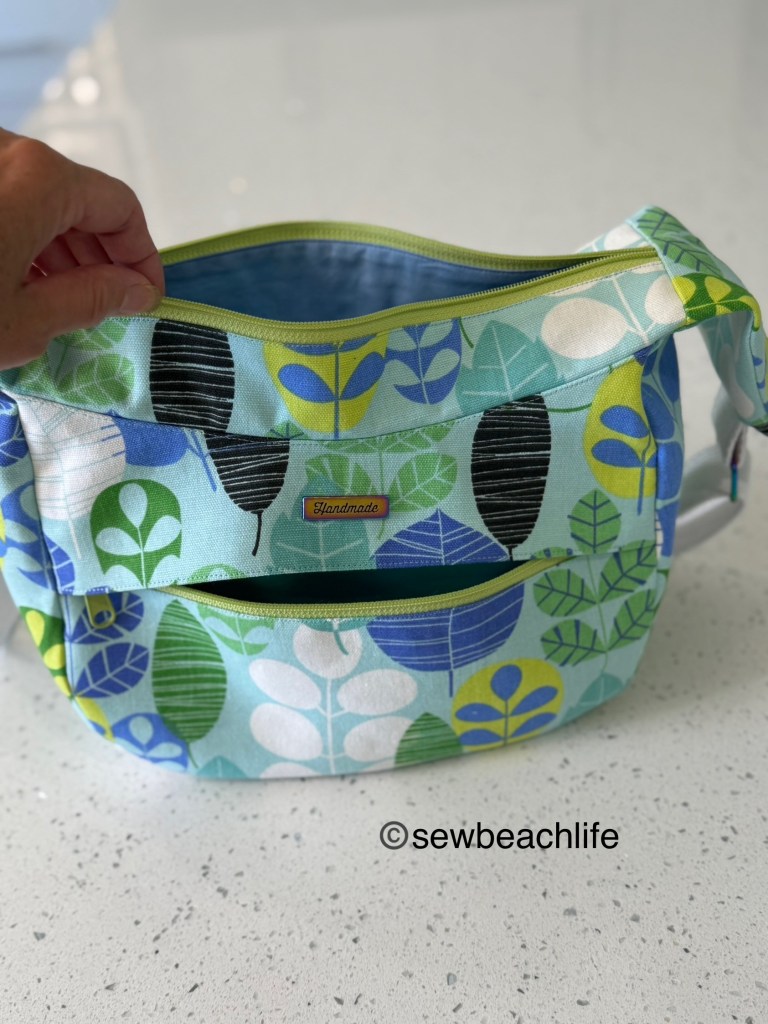
Along with the zipped exterior pocket, there’s an internal pocket. The pattern calls for stitching the internal pocket down the center, making two pockets. I went rogue and added another line of stitching 1-1/2″ from the center line to make a space for a pen or pencil. I don’t like having to dig around when I need a pen, and just adding a second line of stitching customized the pocket for my needs.

My pen stays perfectly in place, and is easy to access.

The pattern calls for the zipper pulls to be on the left when you are looking at the exterior pocket. And I followed the tutorial on my first bag.

Zipper pulls are on the left when closed.

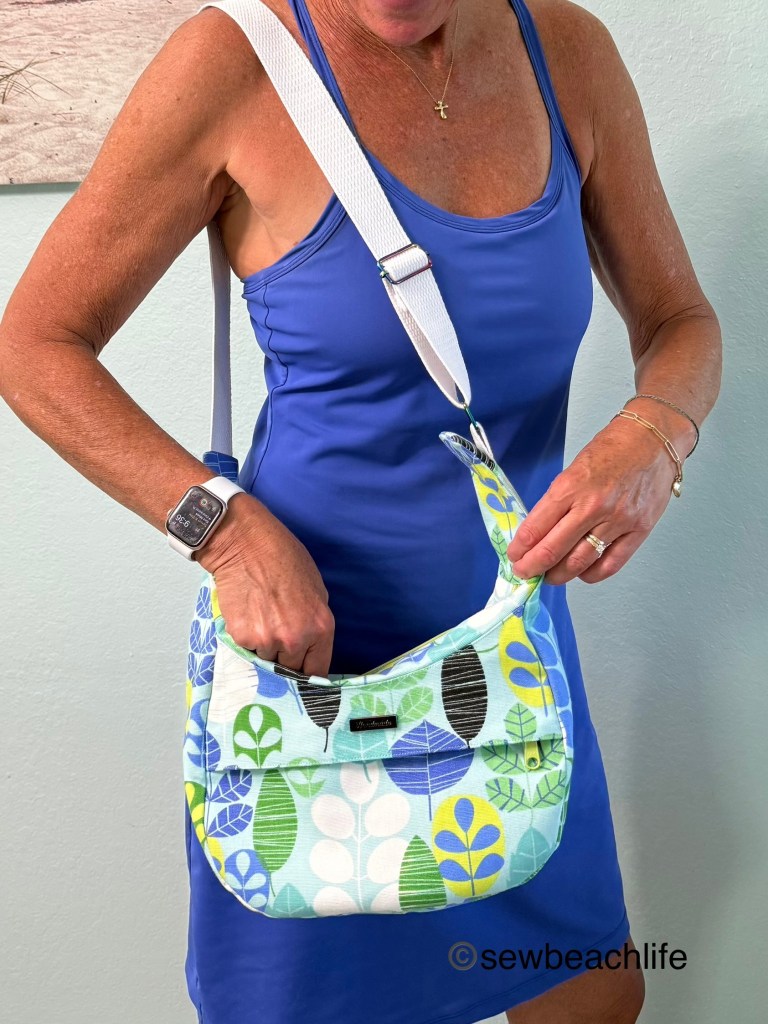
When I carry a bag, I like the strap adjustment to be in the front for security sake. I also like my zipper pulls to the front for the same reason. Since I carry my bags over my right shoulder, this means I like my zipper pulls on the right hand side.

When making the leaf print bag, I simply reversed the direction the pull end of the zipper was facing when following the tutorial. This means I pull the zippers from the front to the back when opening while carrying. Either way works fine, just pay attention during construction if you plan to switch it around like I did.

You can fit so much stuff in the Sydney bag. I’ll be traveling next month and I’m excited that I’ll have no problem carrying my phone, wallet, tissues, lens wipes for my glasses, lip balm, lip gloss, a ponytail holder, hand sanitizer, hand lotion, a book, gluten and dairy free snacks, and a water bottle, leaving my hands free to lug a suitcase and perhaps hold my cardigan if I get too warm while waiting in line at the airport.

I finished up my first bag while my daughter, son-in-law, and granddaughters were visiting. My daughter and granddaughters liked it, and the eldest granddaughter wanted to pose holding it.

She doesn’t need to carry a purse yet, but doesn’t she look adorable?

One of the funnest parts of sewing is choosing fabrics and notions. If you’re already a bag-maker, you probably have several sources for fun hardware. I wanted a quick turn-around and knew that Wawak ships quickly. So I ordered my zippers and hardware from them. I love the fun rose gold rectangle ring and adjustable slider buckle on the coral print bag. I went with simple white zippers so that the fabric and hardware would stand out.

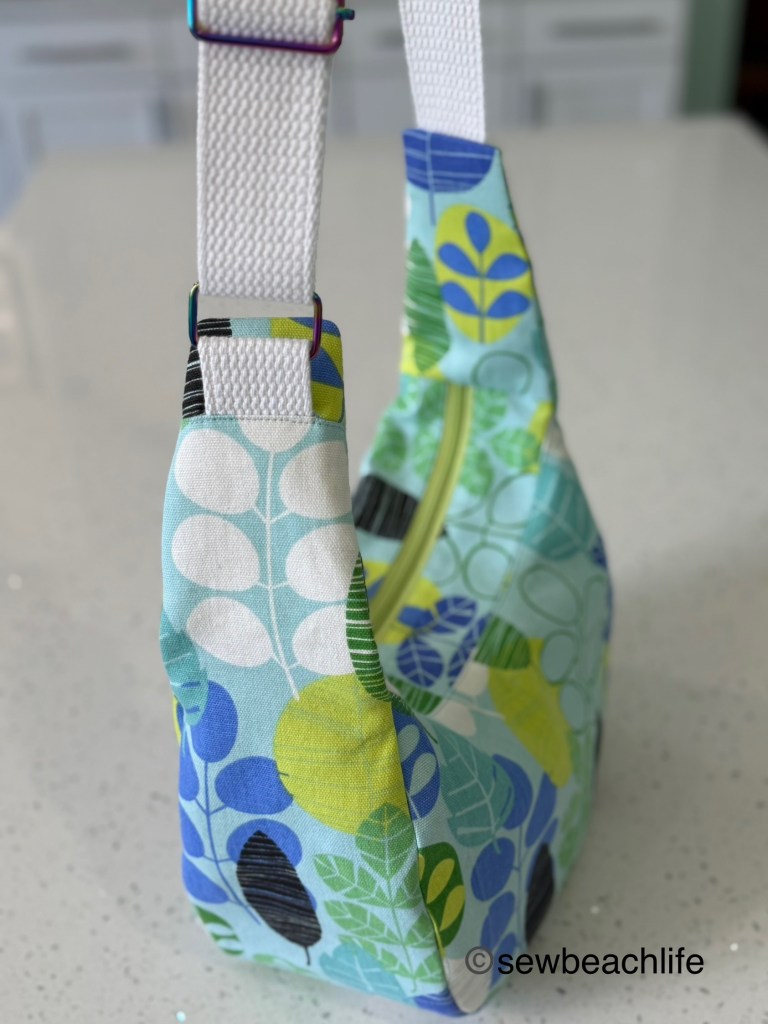
I went for a pop of color and used light green zippers on the second bag. I love the rainbow finished hardware and think it’s so cool how the colors change from purple, blue, and turquoise to pink, green, and rose gold. So I used a rainbow rectangle ring and adjustable slider buckle on the leaf print bag, as well as adding a cute rainbow finish “Handmade” label bar tag to the upper pocket flap.

I took my time centering it on the upper flap to ensure that it wouldn’t be in the way of any stitching. Speaking of stitching, I love how close I can get to the edge when top-stitching just by adjusting the needle position on my machine. It’s those added features that make a high end machine so helpful when sewing.

Don’t get me wrong, you can make this bag on even the most basic machine. I’ve sewn many, many garments and a couple of tote bags on my inexpensive Brother machine. I’m just still excited about having a nice machine even though it’s been a year and a half since I got it. My best tips are to use a fresh needle in the proper size for your fabric (I went with a size 90/14 needle since my fabric was thicker and a bit stiff) and to follow the tutorial, looking at the illustrations carefully if you get confused. They are very helpful.

My final tip is this: DON’T BE AFRAID TO CHALLENGE YOURSELF AND TRY SOMETHING NEW AND DIFFERENT! My second bag went much more quickly than the first because I felt confident in what I was doing. I’ve sewn literally hundreds of garments, so it’s weird that I let myself feel intimidated about sewing a bag pattern. It’s like anything else, the more you do it, the better you get at it. I absolutely will make this pattern again, and won’t be afraid to tackle other bag patterns.

The bottom gusset can be cut as one piece or two. The two-piece option is perfect when your fabric print is directional. All the leaves are upright using the two-piece method.

The details:

The new Sydney Bag pattern from Greenstyle is great! Both my bags were made with upholstery fabric and quilting cotton from my stash. All hardware and notions were purchased from Wawak. (Don’t forget to order washable basting tape, as it’s a big help when installing zippers!)

The blue dress I’m wearing is the Savannah Dress, which you can read more about here.

The links to GreenStyle may be affiliate links (if I did them properly!) which means that I may earn a few pennies if you use my links to purchase, without it costing you anything extra. Since this is my blog and represents me, I always give my honest opinion about any patterns or supplies that I talk about. I hope that the time I spend writing posts and sharing sewing tips interests people enough that they take a look at the patterns I review. I write to share my love of sewing, patterns, fabric, and supplies, and hope that it encourages others to love sewing as much as I do! ❀ Try something new and maybe challenge yourself a little bit today.

Tidal Skirt Love

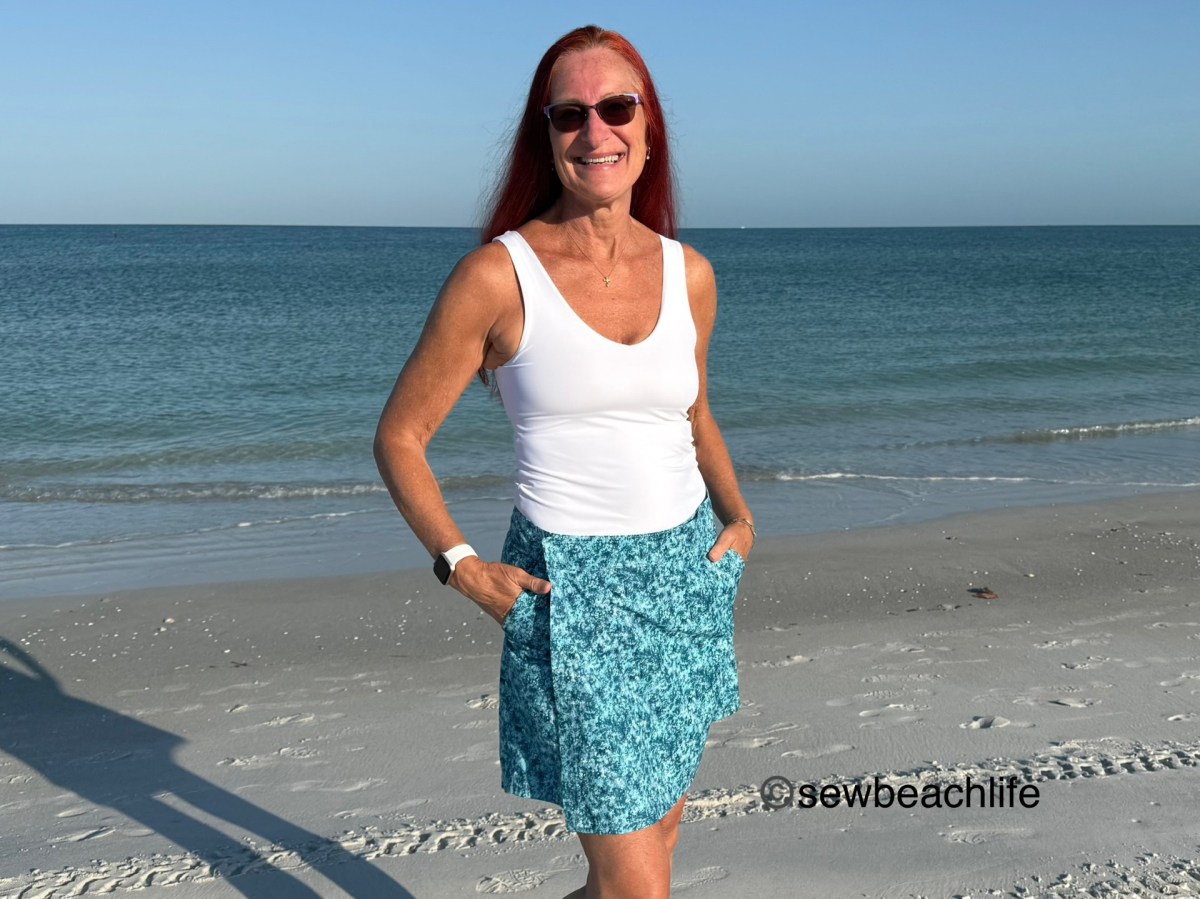
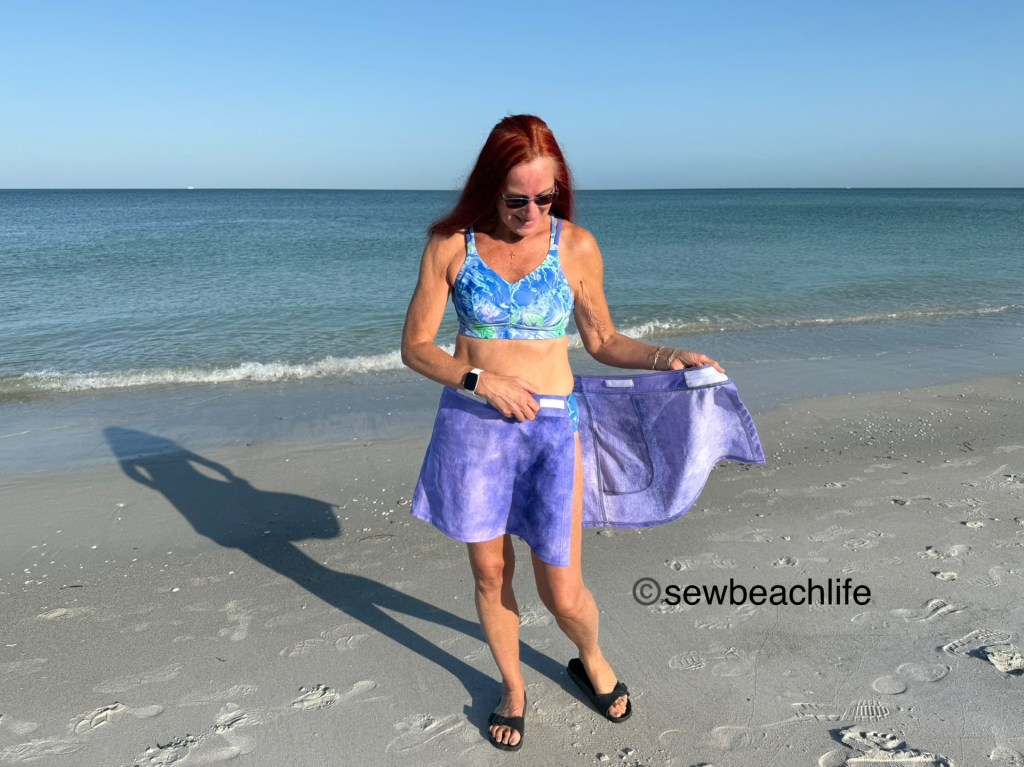
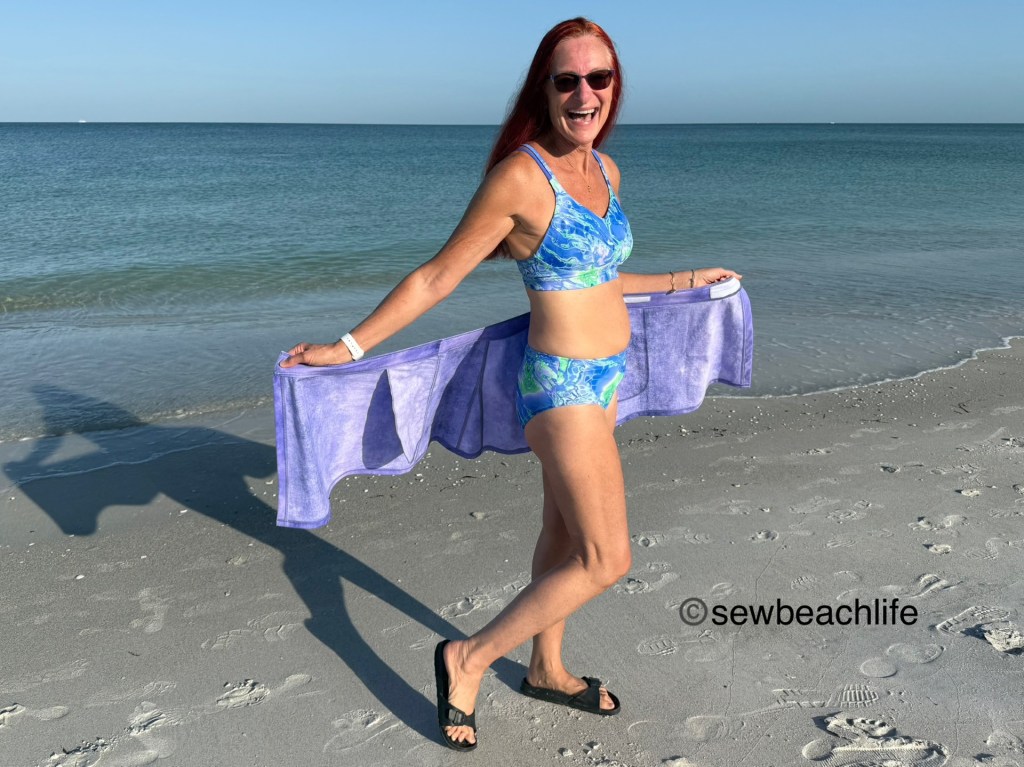
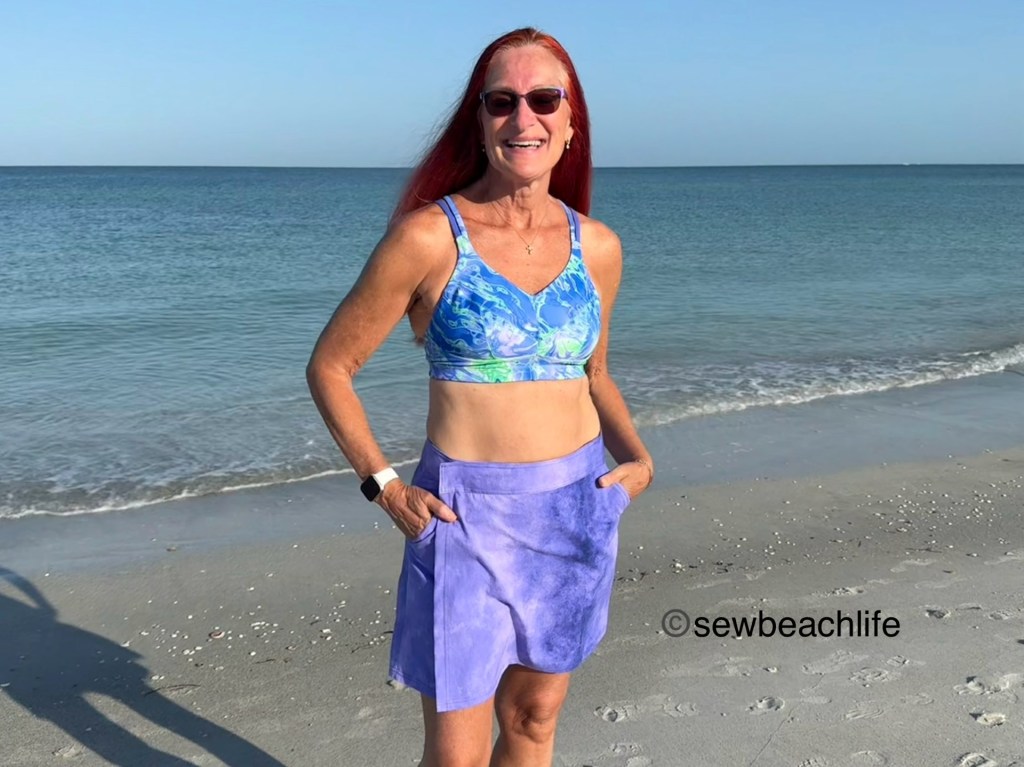
Who doesn’t love a pattern with multiple uses and lots of options? While originally designed as a swim cover up (like the Ripskirt Hawaii), I wear my Tidal skirts for daily use. With 14″, 16″ or 18″ length options, you can go as short as you dare! The pockets are deep enough to safely hold your phone or stash your cards, ID, or a house key.

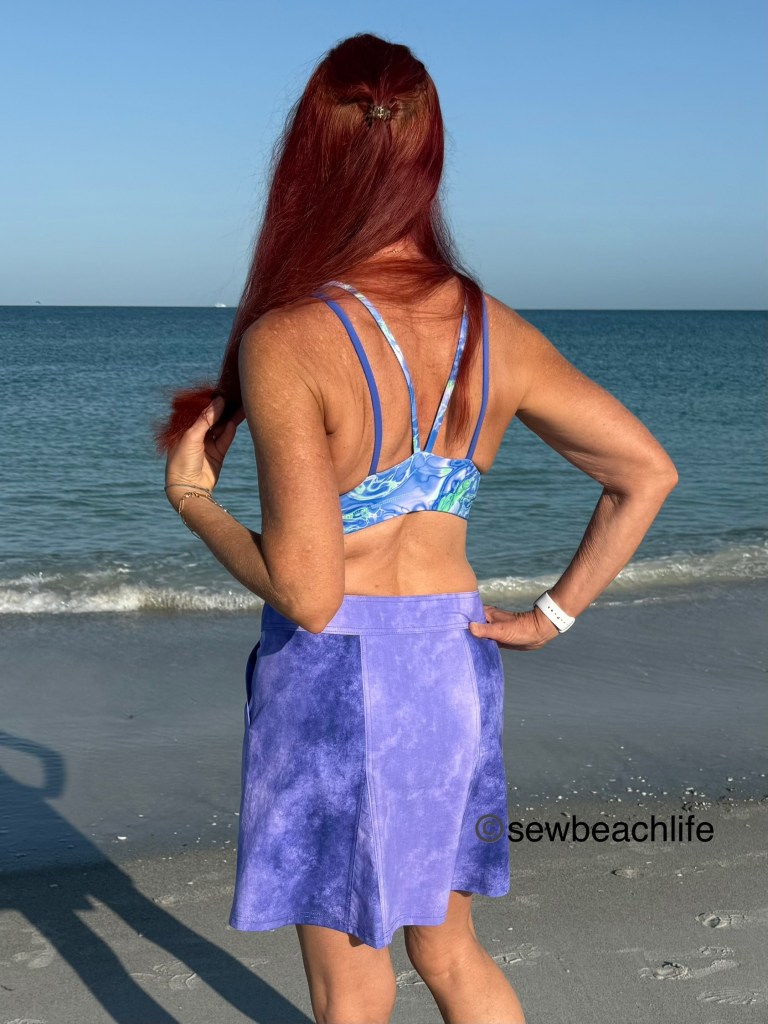
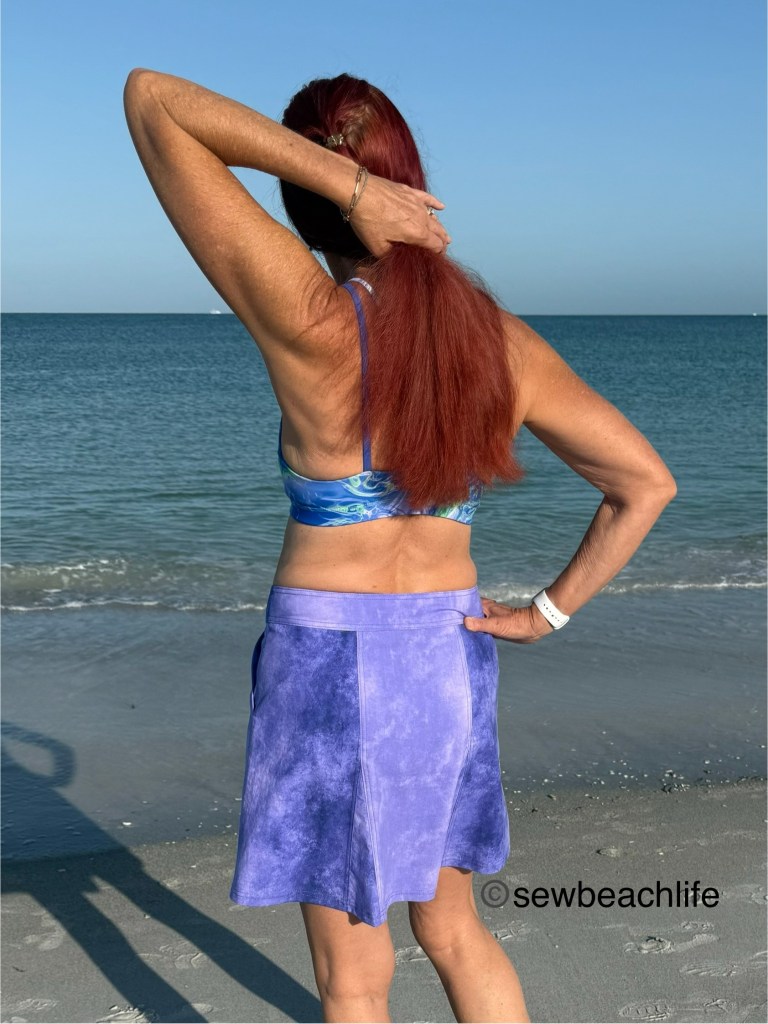
It’s a fun wrap skirt with godets in the back and a contoured waistband for a perfect fit. The pattern tutorial calls for Velcro closures, but you could use buttons or snaps if you prefer. I chose Velcro, and found Sleek & Thin sew on low profile fastener at Michael’s. It truly is sleek and thin, and is so soft that you could use it for children’s clothing. Even the “hook” side of this variety of hook and loop fastener isn’t scratchy at all. I was surprised and impressed at how different it is from the industrial version.

It’s easy to put on or take off the skirt:

And just like that, you’re ready to lounge in the sun, or go for a swim! You’ve got modesty for walking to the beach or pool, and can quickly prep for beach time. It’s simple to slip back on if you’re going out to dinner or walking the neighborhood.

I love the clean finish on the inside of these woven skirts, which is achieved by serging the raw edges of the seams, and top-stitching with a coverstitch. I chose to sew each 3/8″ seam with my sewing machine, then serge the raw edge with a stitch length of 2-2.25 and a stitch width of M without cutting off any of the seam allowance. The seams were pressed in the appropriate directions as per the pattern tutorial, and top-stitched with a wide coverstitch.

I generally use a narrow coverstitch with the needles in C2 and C3 when hemming or wanting a subtle look. But with the fun angles and seams of the Tidal Skirt, I wanted to try the bolder look of a wide coverstitch (with needles in C1 and C3) and accented every single seam!

See how carefully I mirrored each pattern piece on the ombre fabric? I love how the wide coverstitch really pops on all of the seams!

Here are a few tips to make sewing the Tidal Skirt even easier:

When attaching the inner pocket to the outer pocket, I find it helpful to slide my quilting ruler between the pocket pieces and the skirt so that when pinning the curved section of the pocket pieces I can’t accidentally pin into the skirt front.

Ignore the glare of the overhead light fixture reflecting in my ruler, but smile with me at the knowledge that I have a nice bright light fixture to help me see to sew.

To help “tame” the curves when pressing up the hem of the skirt or the bottom of the inner waistband, turn the differential on your serger up to 1.3 (or even 1.5 depending on how deep the curve) and serge the raw edge of the fabric. This will slightly gather it so that when it’s pressed up, the fabric will lay smoothly.

See how smoothly the pressed up hem lays?

The pattern tutorial has you attach the Velcro by sewing through both layers of the waistband. It’s the simplest way to do so. But the perfectionist in me didn’t want to see those stitch lines on the outer waistband. I wanted the Velcro completely hidden. As per the tutorial I attached the outer waistband to the skirt. Then I attached the inner waistband to the outer waistband along the top seam, but I did not sew the short sides at that time. I tried the skirt on, and carefully marked where the Velcro needed to go with pins. (The pattern piece has markings, but it’s always good to try on and adjust placement if needed.) I folded the waistband open so that I could attach the Velcro through the single layer of either the inner or outer waistband. At that point I folded the waistband back down right sides together and stitched the two short edges. Then it’s back to the tutorial and turning right sides out, pressing, and stitching in the ditch.

*Note: it is very important that you top-stitch or coverstitch all the way around your waistband if you use my method to attach the Velcro as it adds the needed stability.

The Tidal Skirt pattern by Greenstyle uses their new, updated size chart that includes sizes A1 through M3 with waist measurements from 24″-53″ and hips from 33″-62″ so it’s very size inclusive.

The details:

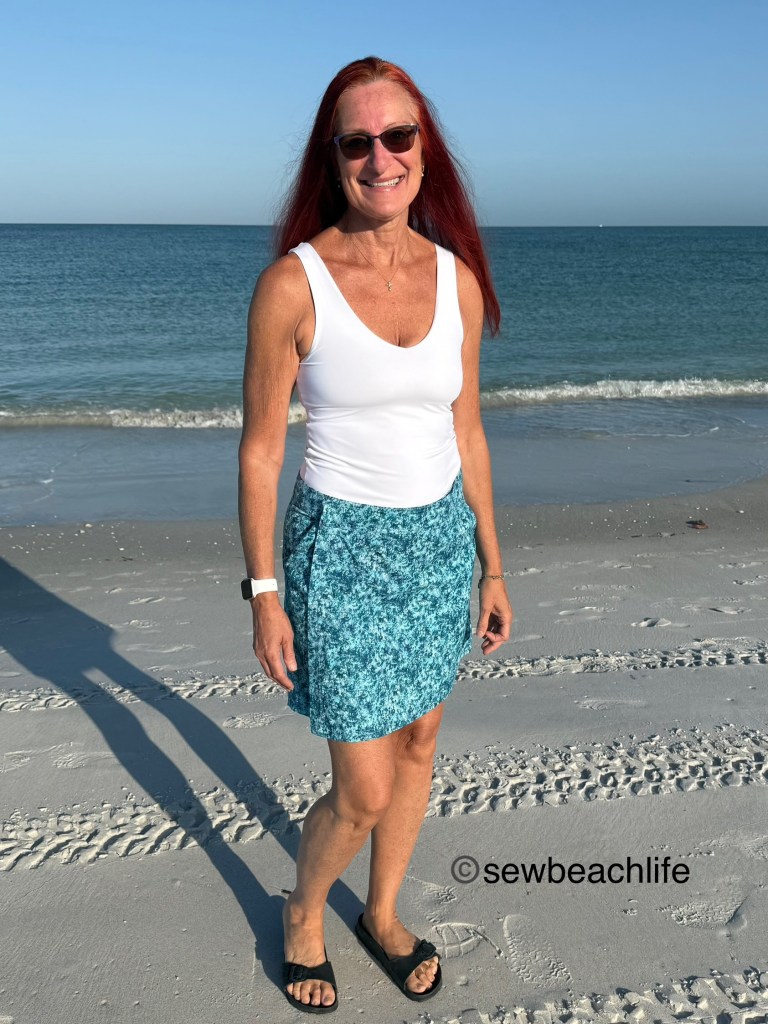
I made size D1 and love that the Tidal Skirt can be made with quilting cotton. I don’t own many woven garment patterns that recommend quilting cotton, so this is a great way to use a fun print or some fabric that’s been languishing in your stash for far, far too long…

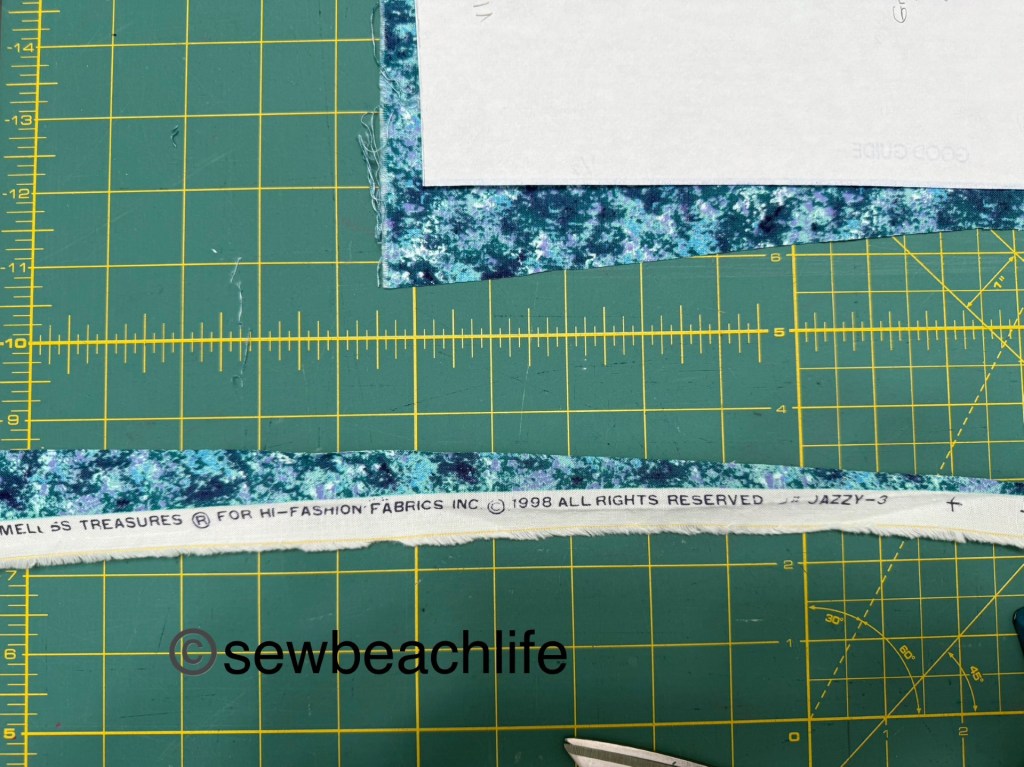
This teal print may be 27 years old, but it worked perfectly for this pattern!

There is a bit of purple in the teal print, so I chose to accent it by coverstitching with MaxiLock thread from Wawak in orchid. I wore my teal skirt with a Bobby Brami, which you can read more about here.

The purple ombre cotton print came from my local(ish) quilt and sewing machine shop in Tampa a couple of years ago. I used Sergin’ General from Superior Threads in periwinkle to serge and coverstitch it. I wore my purple skirt with a slightly hacked Endurance Sports Bra (made with Greenstyle fabric), which you can read more about here. I’ve also worn it with an Azure Tank, shared here.

The links to GreenStyle may be affiliate links (if I did them properly!) which means that I may earn a few pennies if you use my links to purchase, without it costing you anything extra. Since this is my blog and represents me, I always give my honest opinion about any patterns, fabric, or supplies that I talk about. I hope that the time I spend writing posts and sharing sewing tips interests people enough that they take a look at the patterns I review. I write to share my love of sewing, patterns, and fabric, and hope that it encourages others to love sewing as much as I do! ❀

Bobby and Billie

From Lounge Wear to All Day Wear to Workout Wear

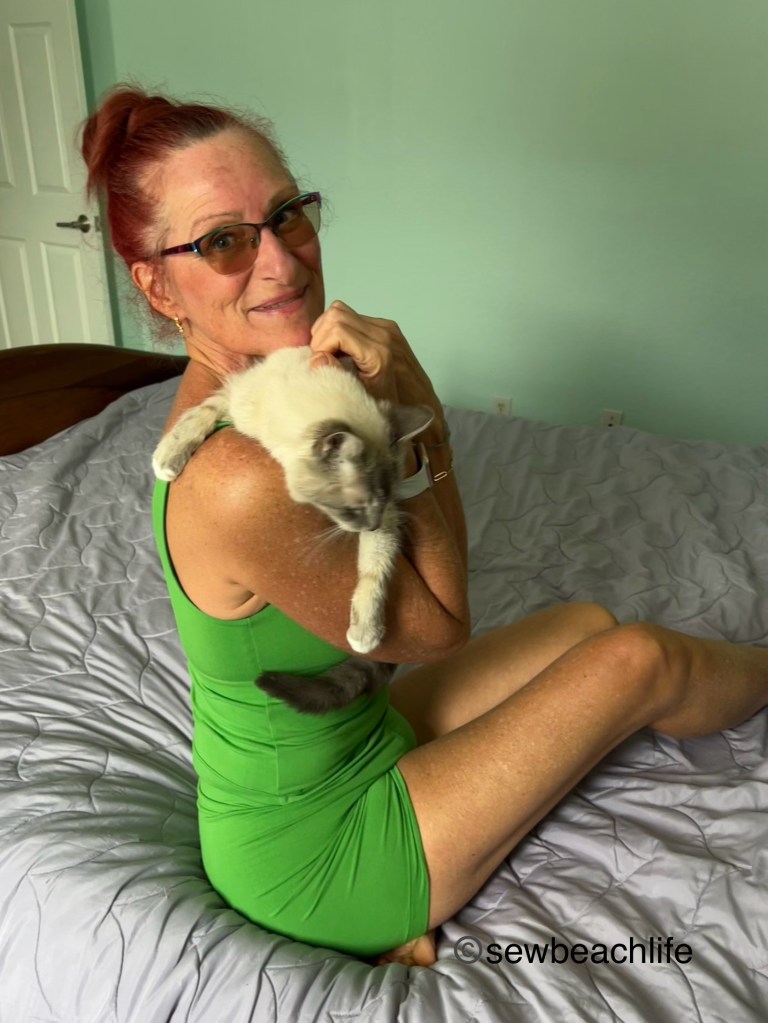
I love versatile patterns, and the new Bobby Brami pattern from GreenStyle does not disappoint! It makes for super comfortable pajamas when paired with the Billie Shorts. You can lounge all day, clean house, sew, read, do laundry, and snuggle your cat, all while feeling cozy, yet cool.

I love the way he curls his tail around me when I hold him. He loves being held up on my shoulder like a baby.

I interrupted his nap for some kitty snuggles.

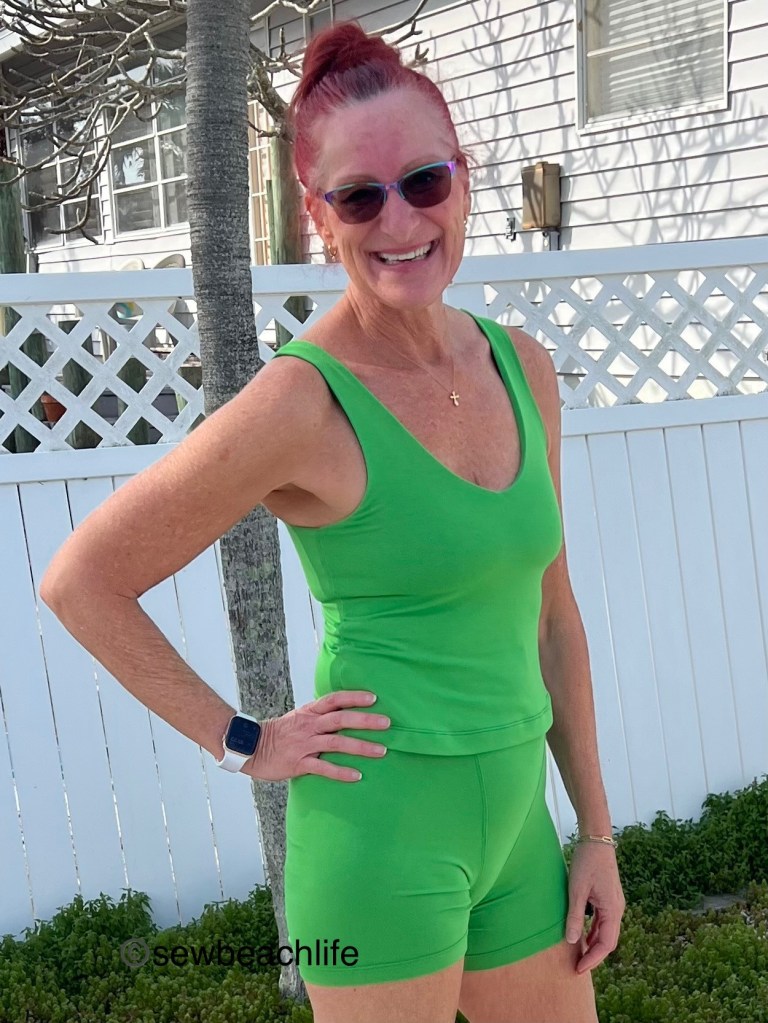
But the Bobby Brami isn’t just for lounging. I wear mine out and about while running errands, taking a walk on the beach, and while skating. Fabric choice makes a little bit of difference on which top I’ll choose. All of my Bobby Brami shelf bras are made with high quality nylon/spandex swim or athletic knit. I didn’t even bother using power knit as an additional layer, because the shape of the pattern pieces gives me adequate support. The coral floral print and bright green main layer (and Billie Shorts) sets are rayon/spandex. They are soft and cozy.

It’s been chilly here in Florida, but it finally warmed up enough for me to skate again. When it finally hit the mid sixties, I wore the coral floral Bobby with some Moxi bike shorts to skate.

Some of the side streets have been repaved and they are so much smoother and nicer to skate on.
You’ve just got to pause and have some fun when you get to the top of a little bridge!

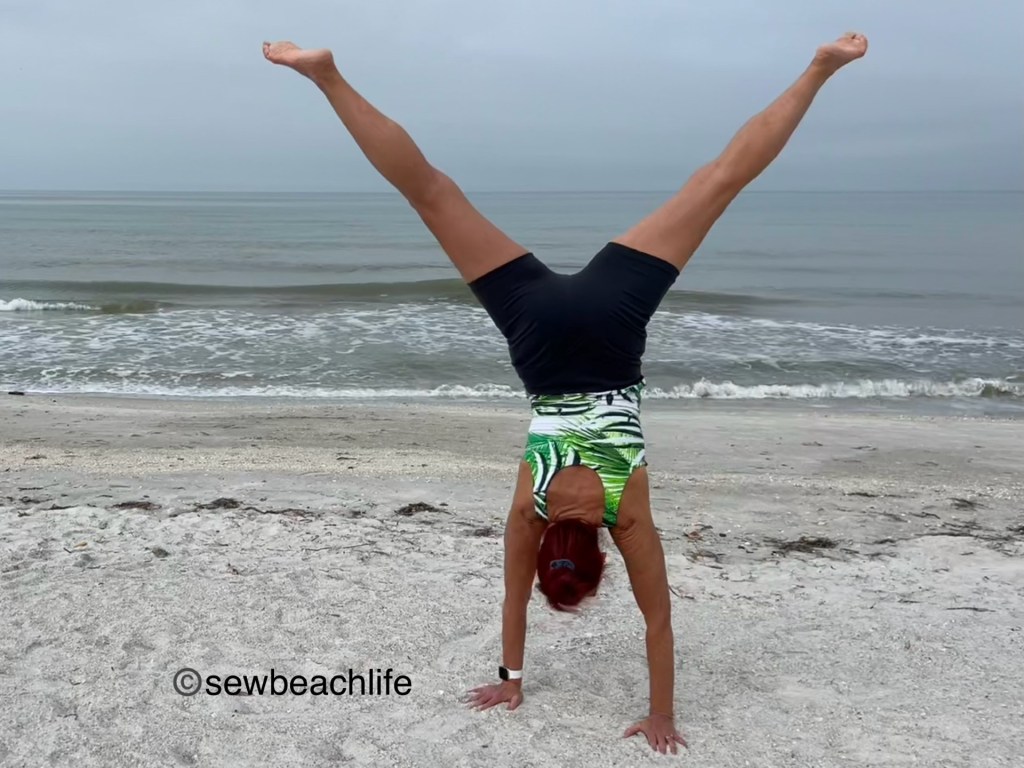
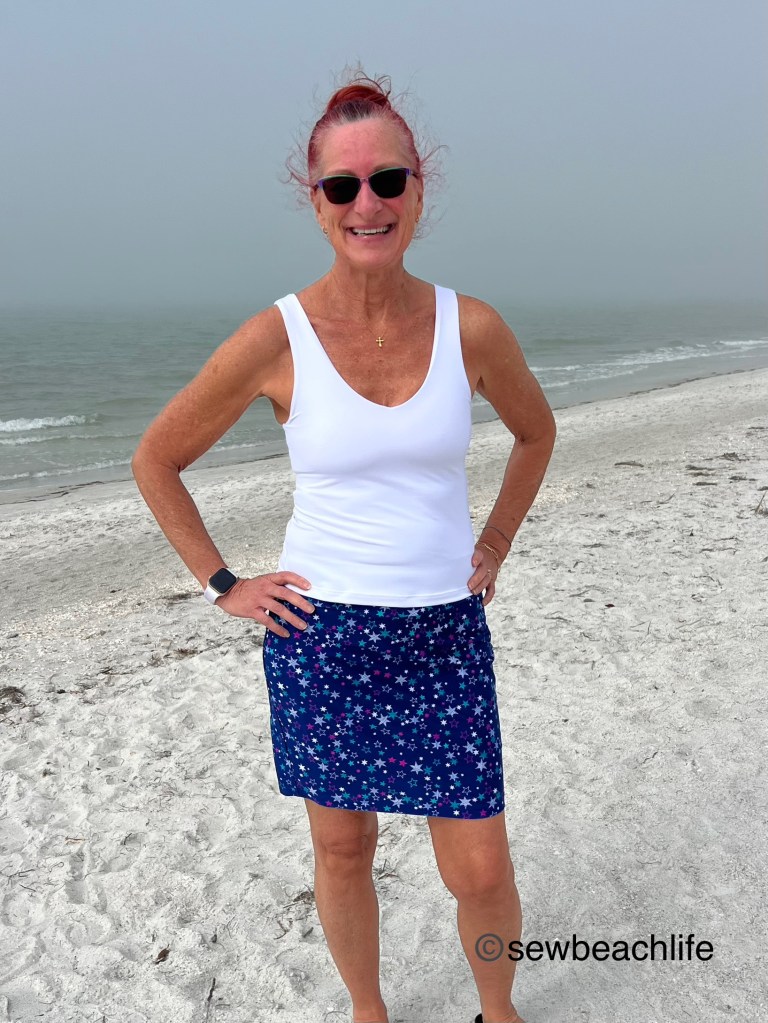
As much as I love rayon/spandex, I’m unlikely to wear it while doing a sweaty workout. On those 90 degree days, I’ll reach for the nylon/spandex athletic fabric tops, like my palm leaf print or solid white versions.

When pattern testing, I like to take fresh measurements just to make sure I’m choosing the correct size(s). Garments fit best when you start with your upper bust measurement to get a good fit at the shoulders. Then you can grade for the full bust, waist, and hips. My upper bust is a size D, and my full bust is on the outer edge of D. My waist and hips are size F. So my pattern is graded from D to F starting below the bust. After making the first test version, I realized that my bust projection made the front of my top a smidge too short. But I don’t measure into or need the +2″ or +4″ FBA front pattern pieces. What I do need is a little bit of extra length at the center front. So I reshaped the hem similar to the hem on the FBA front of the Azure top shared here. Adding 3/4″ at center front, gently curving up to nothing at the sides made a world of difference.

See how evenly the hem sits? It’s the same length all around instead of riding up in the front.

I upcycled the pretty palm leaf print fabric from a now too large tunic top (shared here) for my third Bobby Brami. Because it has a higher percentage of spandex and would be more form-fitting and less drapey, I experimented with adding 1/2″ to the length of both the (previously adjusted) front and back of the top. I’m super happy with the results!

This top is so comfortable and supportive, I don’t even have to think about adjusting or pulling on it. Carefree clothing is the best!
The slim fit of the pattern and quality of the nylon/spandex fabric kept the top firmly in place even when doing cartwheels.

All four of my Bobby Brami’s have the V-neck front, U-back, and are the (longest) high hip length. Some may think that’s boring, but I like what I like! πŸ˜‰ There are a lot of options: high neck, U-neck, and V-neck fronts; and high neck, U-neck, and V-neck backs, which can be mixed and matched; along with bra length, waist crop, and high hip lengths. They can be worn with shorts, leggings, and skirts, like the Paseo Skirt shared here.

I love the just the right amount of coverage of the soft V-neck.

The Billie Shorts have three length options from boy shorts to the longest length, which is what I made. There’s also a lengthen/shorten line if you need to adjust the rise.

I like the longer length, and if you’re someone who experiences “chub rub”, I can foresee these being made in a nylon/spandex to be both smoothing and to protect the inner thighs. I know someone who would probably really appreciate if I made her a pair or two, as this is the style that she likes, and struggles to find in her size. Speaking of size, these patterns come in sizes B-M, which range from a full bust of 30″-61″ and a hip of 32″-62″.

If you choose to make Billie Shorts as a smoothing layer to wear under scrubs or clothes, you’ll be happy to note that there is a liner pattern piece that should be made out of cotton/spandex, bamboo/spandex, rayon/spandex or other breathable fiber. Alternatively, you could just cut a second center front piece so that the full center is lined.

A freshly sewn burrito rolled main top and shelf bra may not look like much before it’s pressed, but when it’s done, you can’t help but admire the clean finish!

One of the sewing techniques used on the Bobby Brami is the burrito roll. Don’t let the idea of it intimidate you. It really is just rolling from one side over to the other armscye, wrapping the right sides around the rolled up fabric, and pinning, then sewing them together. When you pull the fabric out after stitching, it’s amazing to see the clean finish of your garment.

Have I mentioned lately that I love the coverstitch feature on my Triumph? It makes hemming and finishing elastic bra and waistbands so quick and easy!

Though it is a rather soft V (due to the negative ease of the pattern) the V-neck does come to a point. It can be tricky to navigate exactly where to stop and pivot your fabric. I like to use a disappearing fabric marker to mark the center line of my V. Then I can stitch, keep the needle down, and pivot to stitch the other side of the V. I use a lightning bolt stitch for this, as this is a knit garment with a bit of compression. Once I’ve stitched the V, I clip down to but not through the stitching line. Then I can easily serge the neckline while adding the clear elastic to the seam. Once serged, I very carefully snip the elastic at the center of the V, trying not to snip any thread. This will help the fabric lay smoother at the V. I generally use my seam ripper to do this, as the tiny point can easily get in there to do the job.

It was easy to tell the front from the back at a glance as I made V-front and U-backs on my Bobby Brami’s. But I’m making a U-back and front for my daughter, as she prefers a slightly higher cut at the bust. To make life easier, I put a clip at the center back of the main and shelf bra pieces. A simple tip that can make things faster, easier, and avoid confusion when sewing.

Although the tutorial calls for adding clear elastic at both the neck and armscyes, I cannot stand anything tight or constricting in any way in my armpits. So I used clear elastic only on the neckline seam, feel like I have great support, and don’t feel the need for it around the arms.

Good support and a flattering fit? Yes, please!

I’m super happy with my new makes and will continue to get so much use out of them! It was nice to wear a new top to yoga class on Saturday because I do seem to be running out of workout wear and get tired of wearing the same five outfits week after week. I’m in love with these new patterns!

I had intended to add a video of my backbend to wide legged forward fold to headstand and back to wide legged forward fold, but WordPress wants me to upgrade (and pay more for) a premium plan in order to add videos. Lame. So no videos for me. 😦 But check out my new Liforme yoga mat! I bought the XL length during their holiday sale and love it! My previous Liforme mat lasted me for six plus years of doing yoga 3, 4, or 5 times a week.

The details: Greenstyle just released the Bobby Brami and Billie Shorts patterns.

The bright green rayon/spandex, and palm frond print nylon/spandex were from Phee Fabrics.

The coral floral rayon/spandex was given to me by my daughter, no clue where it came from.

The white nylon/spandex double brushed jersey athletic knit was from Porcelynne. As was some of the nylon/spandex swim type fabric used for the shelf bras.

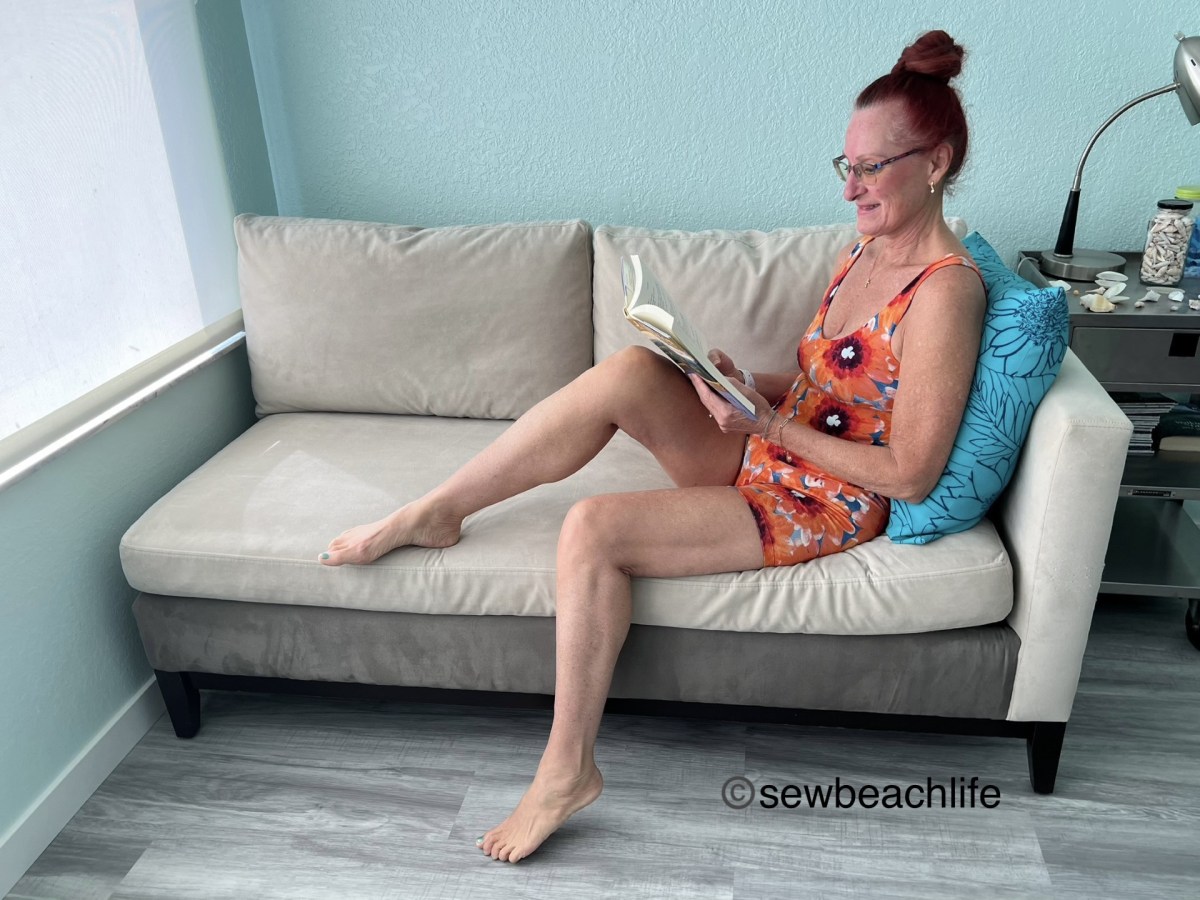
I can’t be the only one that curls their legs up when sitting, right? πŸ™‚
I love his sweet kitty face!
This is a summer uniform for me!

The links to GreenStyle may be affiliate links (if I did them properly!) which means that I may earn a few pennies if you use my links without it costing you anything extra. Since this is my blog and represents me, I always give my honest opinion about any patterns, fabric, or supplies that I talk about. I hope that the time I spend writing posts and sharing sewing tips interests people enough that they take a look at the patterns I review. I write to share my love of sewing, patterns, and fabric, and hope that it encourages others to love sewing as much as I do! ❀

Going With The Wind

The GreenStyle Windward Shorts

I’ve been waiting for these shorts for over a year! Volunteering to pre-test them last year, and loving them even back then. The pattern was put on hold until this year, when shorts season rolled around again. One of the things that makes GreenStyle patterns fit so well, is the fact that they are truly put through the test. Comments and fit photos submitted by the testers are taken into consideration, and the pattern gets tweaked again and again to perfect the fit.

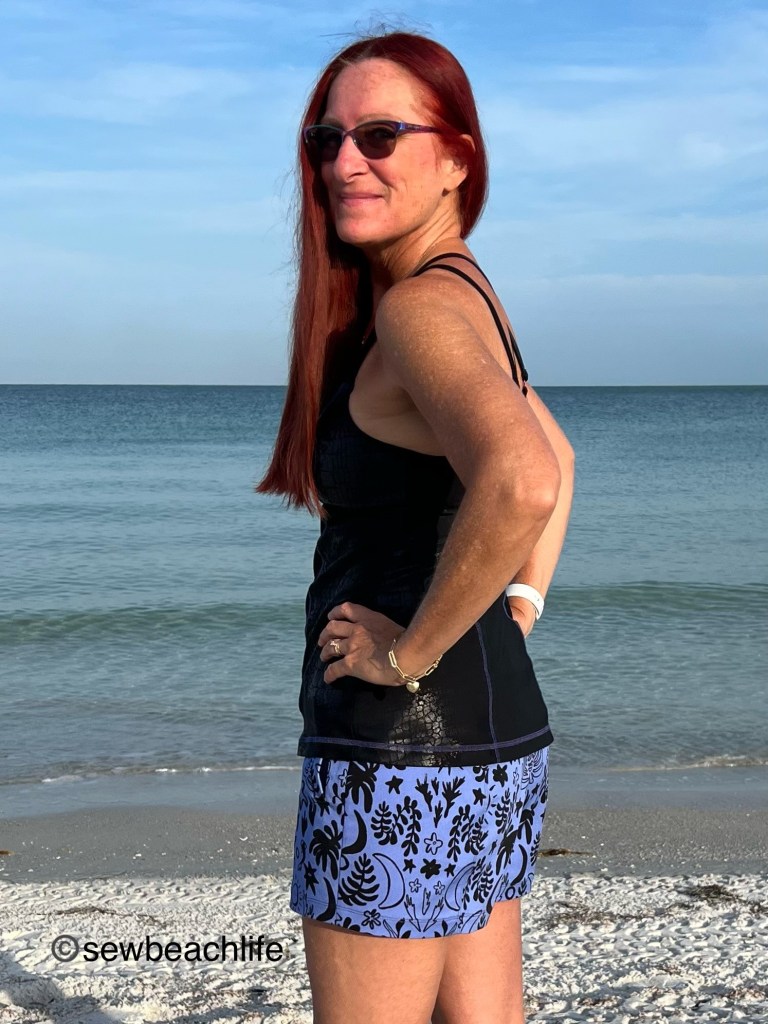
With curved back seams to fit smoothly over the bum (with an optional fuller bum cut line), and welt pockets (with optional zipper) the Windward Shorts are flattering and practical. I tend to wear a lot of athletic wear style of shorts. I probably have seven pair of Moxi compression layer shorts that I wear all the time. But my dress shorts options are severely limited. As in I didn’t have any until the Windward Shorts came along!

I love being able to add another category of clothing into my life. There are occasions that require a slightly dressier look, and now I’ve got something that fits the bill.

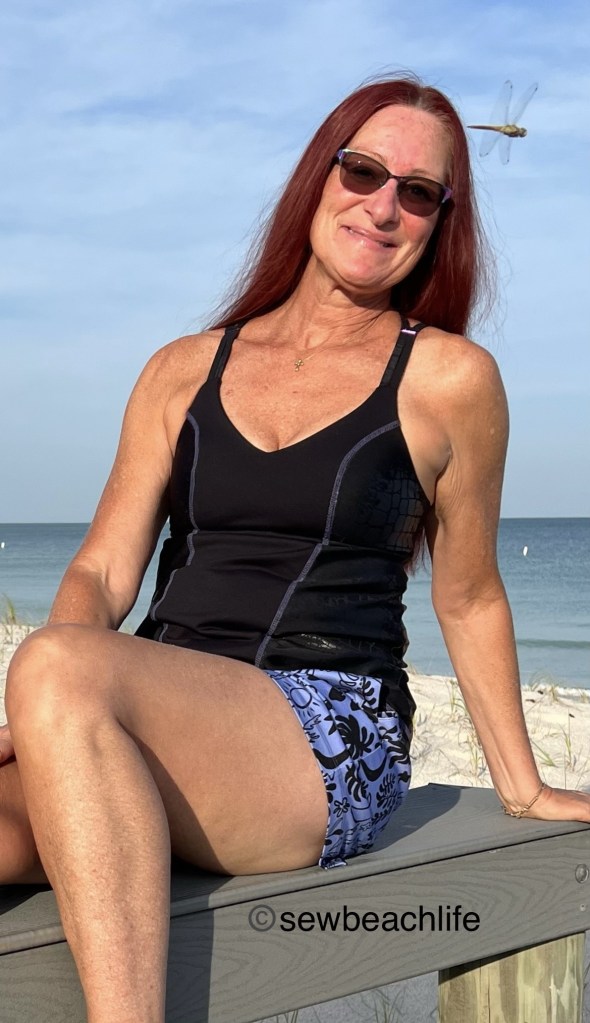
I thought it was so cool that my husband caught this shot of the dragonfly zooming by my head!

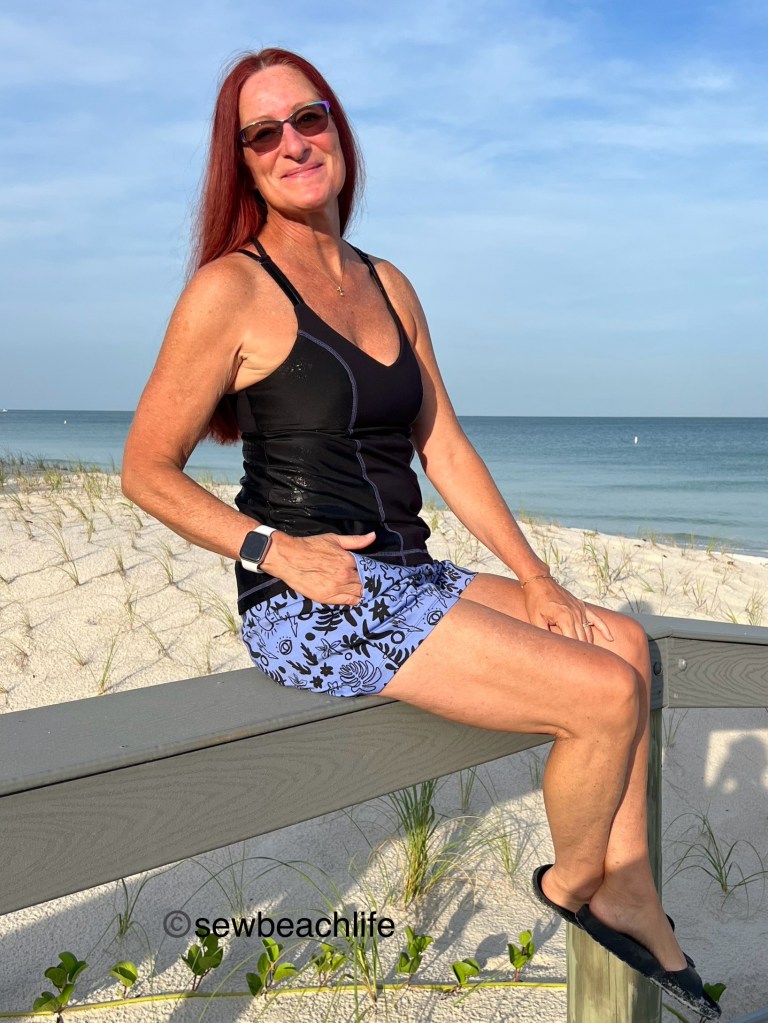
The pattern is designed for stretch woven fabrics, so that inherently leads to a dressier look. Stretch wovens can be made of different materials (all of which contain a small percentage of spandex, which is what gives them that little bit of stretch.) The periwinkle stretch cotton twill from Mood Fabrics is a heavier, crisper fabric, which gives a different look than say a polyester blend that is thinner and a bit drapier.

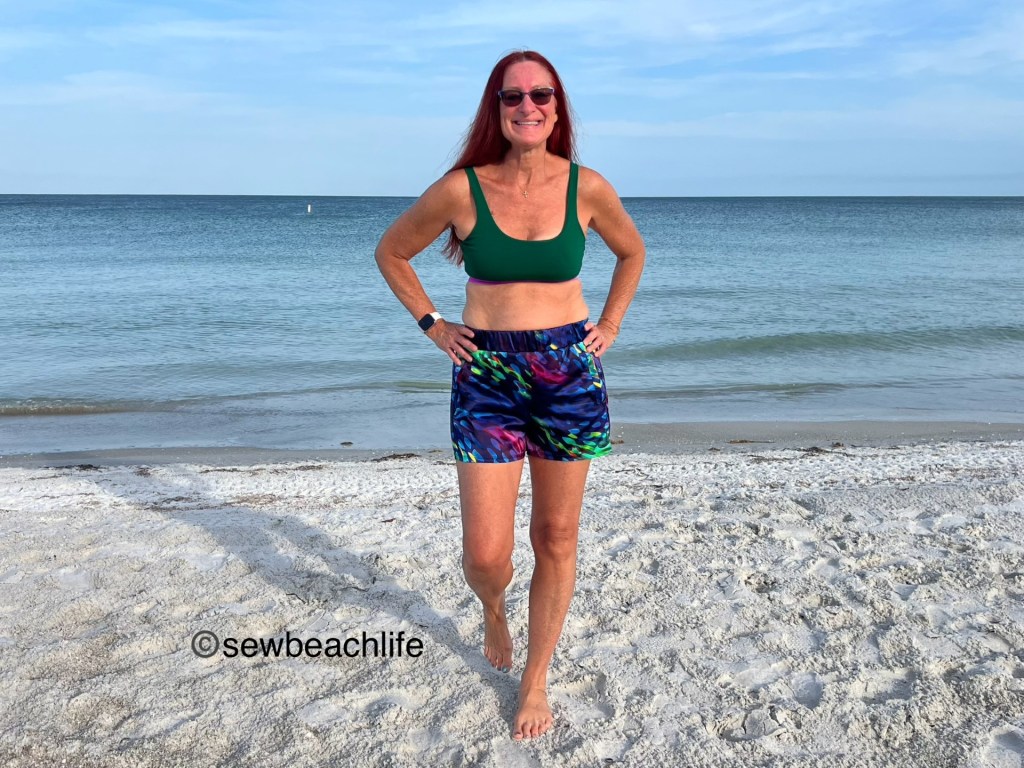
I also made a pair out of stretch charmeuse from JoAnn Fabrics. The softer drape makes them look a bit more form fitting.

I love that the pattern accommodates a wide variety of stretch woven fabrics and looks great in all of them. A unique design feature is that there is no inseam, which makes the shorts very comfortable for people bothered by inner leg seams. The welt pockets are generously sized, so even my large phone fits perfectly. Since it’s anchored in the top and side seams, the pocket lays smoothly, and stays in place.

As a tall girl, I chose the high rise with the 2″ elastic waistband for both my makes. (I actually made a third pair, but didn’t photograph them.) There is a mid rise, and an options for 3″ wide elastic too. With 2″, 3″, and 4″ inseams, you’ve definitely got choices!

I love that there are no zippers or buttons to deal with (other than the optional zipper on the welt pockets) so the shorts are a quick sew and easy to wear.

I hope you’ll flip for these shorts like I did!

I love that I’m not afraid to still do a cartwheel. And I probably did 10 or 15 of them before my husband actually caught a shot with my legs up in the air and his finger not in the frame! πŸ™‚

As a note of encouragement, don’t let the idea of welt pockets scare you. The tutorial is easy to follow and makes a fancy detail simple to accomplish. And face it, all shorts need pockets!

The waistband is comfortable, and makes the shorts easy to wear.

The details:

The GreenStyle Windward Shorts pattern includes sizes B-M, which covers hip measurements from 32″ to 62″.

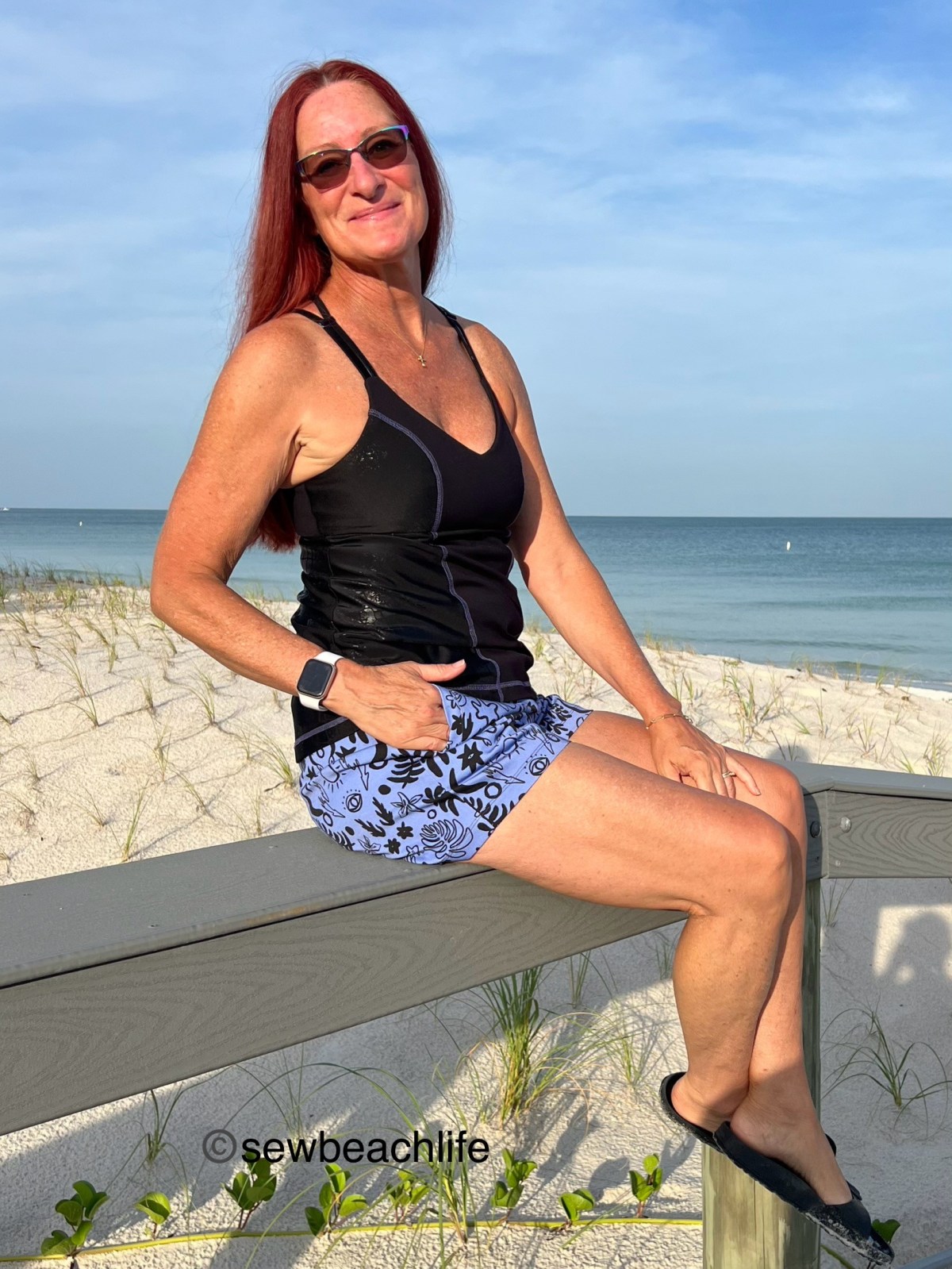
The periwinkle fabric is stretch cotton twill from Mood Fabrics. I wore it with a Power Sports Bra that I hacked into a workout top made of black spandex and black snakeskin yogi fabric from GreenStyle. You can read more about the hack here.

The brushstroke print is a stretch charmeuse from JoAnn Fabrics. They were worn with one of my Tangled Swim Tops, blogged here.

Thank you for reading and sharing my love of patterns, sewing, fabric, and cute shorts with large pockets! ❀

The links to GreenStyle may be affiliate links (if I did them properly!) which means that I may earn a few pennies if you use my links without it costing you anything extra. Since this is my blog and represents me, I always give my honest opinion about any patterns, fabric, or supplies that I talk about. I do like knowing whether the time I spend writing posts actually interests people enough that they take a look at the patterns I review, but I write for me. It’s one more creative pursuit that I hope is helpful or interesting to others. I write to share my love of sewing and to encourage others to love it as much as I do! πŸ™‚